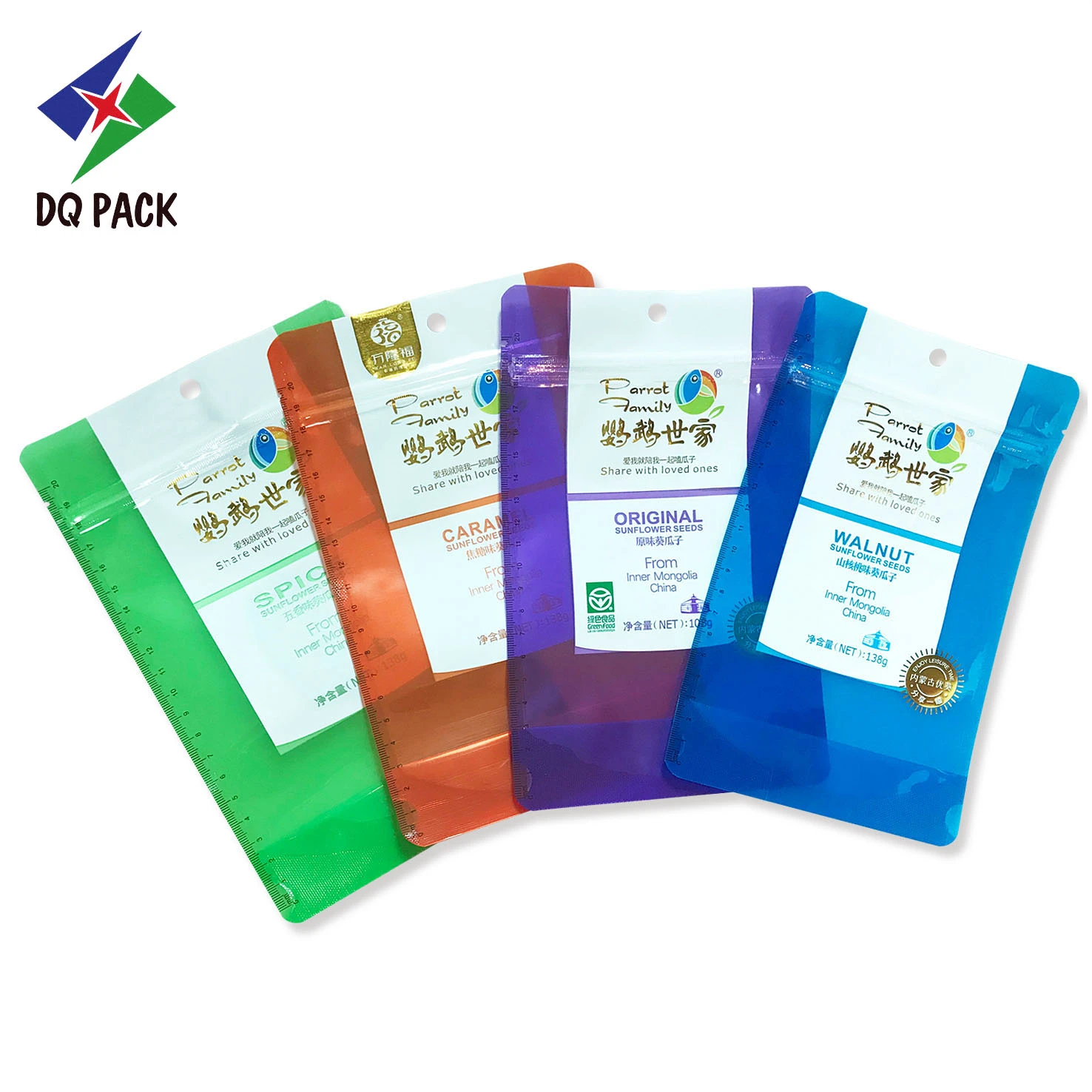


Selecting the right spout pouch manufacturer is not a purchasing decision — it is a technical risk decision. Spout pouches combine multi-layer films, precision sealing, injection-molded fitments, and high-speed production. If specifications are vague at the RFQ stage, problems surface later as leaks, delamination, migration failures, or costly delays.
DQ Pack, a leading Hersteller von kundenspezifischen flexiblen Verpackungen, suggested that you should ask the following five questions before placing your order. Each one converts uncertainty into measurable criteria and protects your brand from preventable failures.
Why Asking the Right Questions Matters
Spout pouches are structurally complex. They must deliver:
- Controlled barrier performance (oxygen and moisture)
- Strong and consistent seals
- Secure spout welding
- Compatibility with hot-fill, cold-fill, or retort processes
- Regulatory compliance for food contact
Misalignment between your product requirements and your spout pouch manufacturer‘s capabilities results in production downtime, rejected batches, or product recalls. The five question categories below create clarity before production begins.
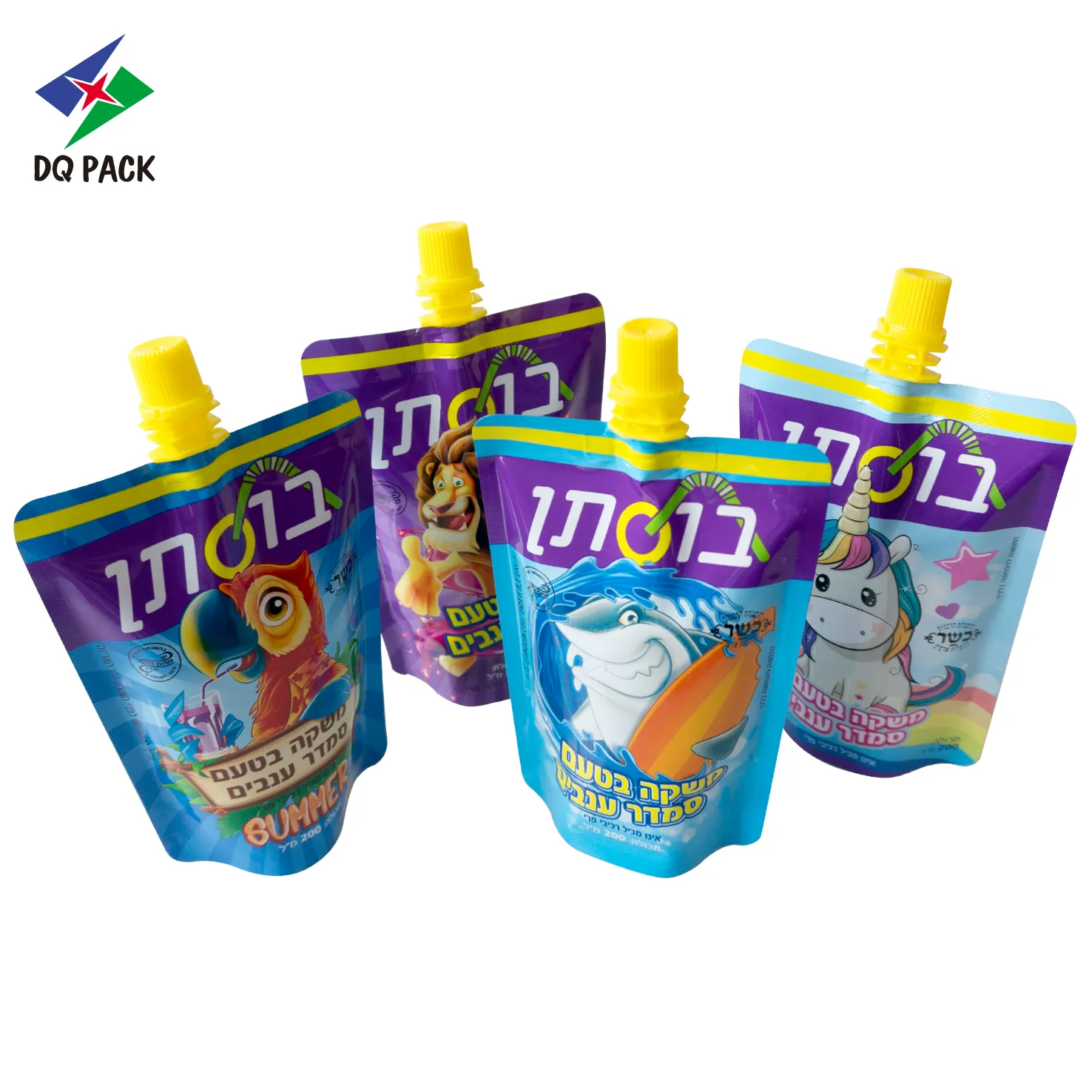
Q1 — What Are Your Material Options and Structure Recommendations?
Start with materials. The structure determines shelf life, durability, and compliance.
Ask the flexible packaging manufacturer to confirm available film types:
- PE, PET, NY (Nylon)
- EVOH barrier layers
- Aluminum foil laminates
- Mono-material or recyclable structures
- High-barrier coated films
Do not accept generic answers like “high barrier” or “food grade.” Request technical data:
- MVTR (Moisture Vapor Transmission Rate)
- OTR (Oxygen Transmission Rate)
- Puncture and tear resistance values
- Food-contact compliance documentation (FDA, EU 10/2011, etc.)
A competent spout pouch manufacturer should recommend a structure based on your product type:
| Product Category | Recommended Structure | Strategic Logic |
| Liquid Beverages | PET / NY / PE | Flexibility & Strength. NY prevents transit punctures. |
| Semi-liquid Sauces | PET / VMPET / PE | Oxidation Control. VMPET blocks light/oxygen at low cost. |
| Baby Food | PET / AL / NY / RCPP | Total Barrier. AL/RCPP for 100% safety & retort stability. |
| Hot-fill Applications | PET / NY / RCPP | Thermal Resistance. RCPP prevents seal failure at $95^\circ\text{C}$. |
| High-acid / Oil-based | PET / AL / NY / Spec. PE | Chemical Integrity. Special resins prevent acid delamination. |
Ask for a written justification explaining why a specific laminate structure is recommended. Decisions should be data-driven, not marketing-driven.
Q2 — How Do You Ensure Quality and Consistency?
Quality systems separate reliable spout pouch manufacturers from trading companies.
Verify certifications:
- ISO 9001
- HACCP or food safety management systems
- BRC (if applicable)
- Compliance documentation for global markets
Then, examine the testing capability. Does the spout pouch manufacturer perform in-house testing or rely entirely on third-party labs?
Key tests to confirm:
- Barrier testing (MVTR / OTR)
- Seal strength (ASTM F88)
- Burst and leak testing
- Spout weld strength testing
- Migration testing
- Organoleptic evaluation
Request information about:
- Batch traceability systems
- Retention sample policy
- Incoming Quality Control (IQC)
- In-Process Quality Control (IPQC)
- Outgoing Quality Control (OQC)
Consistency is not achieved by inspection alone — it requires controlled processes at every stage.
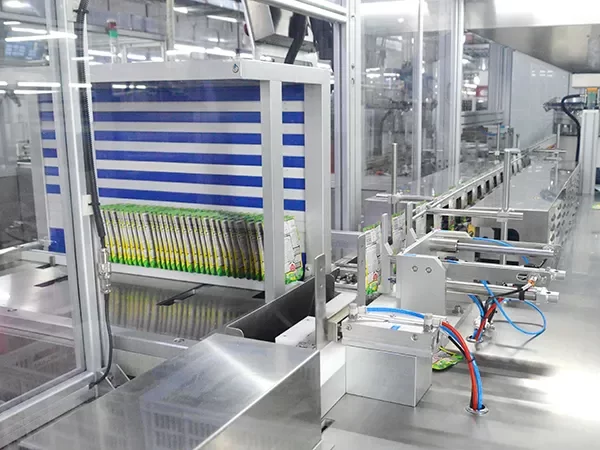
Q3 — What Are Your Production Capabilities and Customization Limits?
Not all manufacturers can produce complex spouted structures at scale, but a custom Hersteller flexibler Verpackungen like DQ Pack.
Ask about:
- Maximum and minimum pouch sizes
- Available spout diameters and fitment styles
- Printing capability (number of colors, water-based ink options, matte/gloss effects)
- Registration control precision
Clarify available features:
- Zippers
- Tear notches
- Windows
- Shaped pouches
- Reinforcement patches
Then assess equipment capacity:
- Number of lamination lines
- Gravure or flexographic printing presses
- High-speed spout welding machines
- Monthly production output
A qualified spout pouch manufacturer should clearly define Minimum Order Quantities (MOQs) for:
- Custom film structures
- Custom spout molds
- Special finishes
If customization exceeds technical capability, you will experience delays or inconsistent quality.
Q4 — What Are Your Lead Times, Pricing Structure, and Hidden Costs?
Price transparency prevents procurement disputes. And the faster lead time makes sure you won’t miss the sales window.
Request a detailed cost breakdown:
- Film material cost
- Printing plates and color charges
- Spouts and caps
- Tooling or die costs
- Reinforcement patches
- Testing and certification fees
Clarify typical lead times:
- First-time custom order
- Repeat production
- Reprint orders
Identify hidden or add-on costs:
- Sampling fees
- Pre-production proofs
- Expedited production charges
- Storage fees
A professional spout pouch manufacturer should explain cost drivers clearly, including how volume impacts price tiers. Economies of scale should be visible and structured.

Q5 — What After-Sales Service and Technical Support Do You Provide?
Manufacturing issues do not end at shipment. Choose DQ Pack, and you will be supported by our expert teams all along the way.
Ask about:
- Dedicated project managers
- Response time commitments
- Technical support during pre-press and design
- Assistance during filling line trials
Post-order support should include:
- Root cause analysis for defects
- Corrective action reports
- Continuous improvement tracking
- Re-order optimization
Strong R&D engagement is another differentiator. An experienced spout pouch manufacturer with an R&D department can:
- Assist with prototype iterations
- Recommend regulatory updates
- Suggest new barrier technologies
- Provide recyclable or mono-material solutions
Sustainability consulting is increasingly important for brands seeking compliance and environmental alignment.

Bonus Questions for Risk Mitigation
Beyond the core five, consider these additional safeguards:
- What is your change-control procedure for raw material substitutions?
- What warranty coverage applies to seal or weld failures?
- Do you conduct transport and stacking simulations?
- What documentation will be delivered with each shipment (DoC, SDS, compliance packs)?
Risk mitigation should be contractually documented, not verbally promised.
Conclusion: Turning Questions Into Specifications
These questions are not conversational tools — they are specification builders.
The answers should translate into:
- Written material structure approval
- Defined performance thresholds
- Documented quality standards
- Clear commercial terms
- Agreed validation procedures
Selecting a spout pouch manufacturer without structured technical questioning increases exposure to leakage, shelf-life failure, compliance risks, and brand damage.
Before issuing your RFQ, prepare a formal checklist based on these five categories. The more precise your questions, the more predictable your production outcome.
Packaging success is not accidental — it is engineered through disciplined supplier evaluation.
Über DQ Pack

DQ Pack ist ein Hersteller von kundenspezifischen flexiblen Verpackungen specializing in high-performance spout pouches for food and beverage brands worldwide. We integrate film lamination, precision printing, and automated spout welding under controlled quality systems to ensure stable barrier performance, seal integrity, and batch consistency.
With testing for MVTR, OTR, seal strength, and migration compliance, DQ Pack delivers production backed by documented data. Serving global B2B clients, we provide Individuelle Lösungen für Ausgießerbeutel, including structured design, fitment customization, and technical support aligned with filling processes and regulatory requirements.