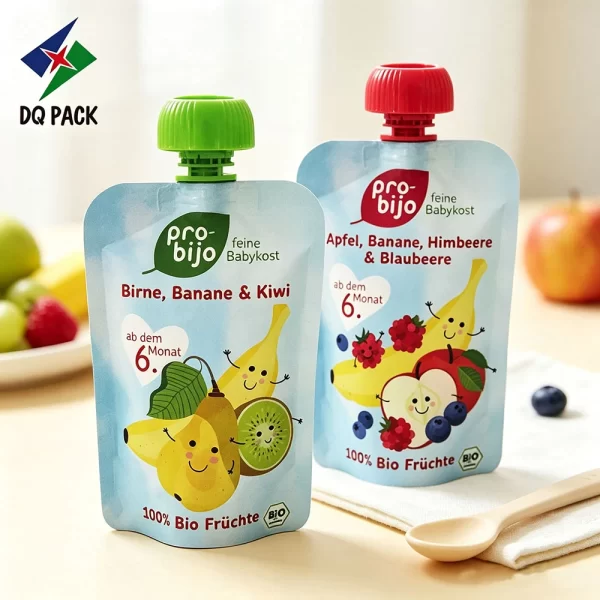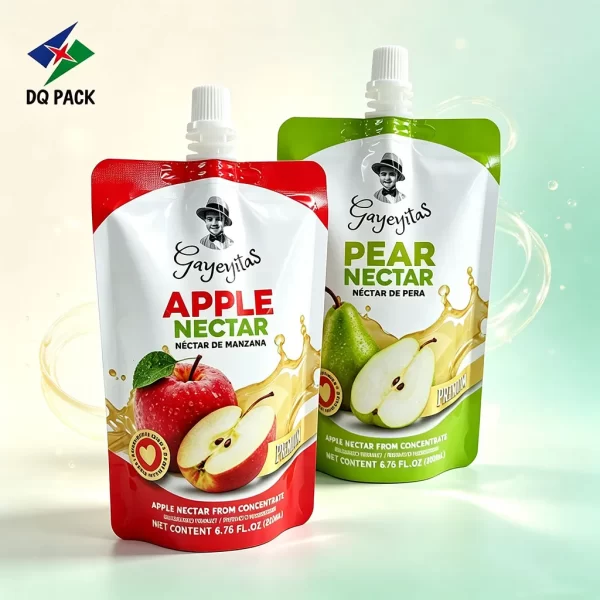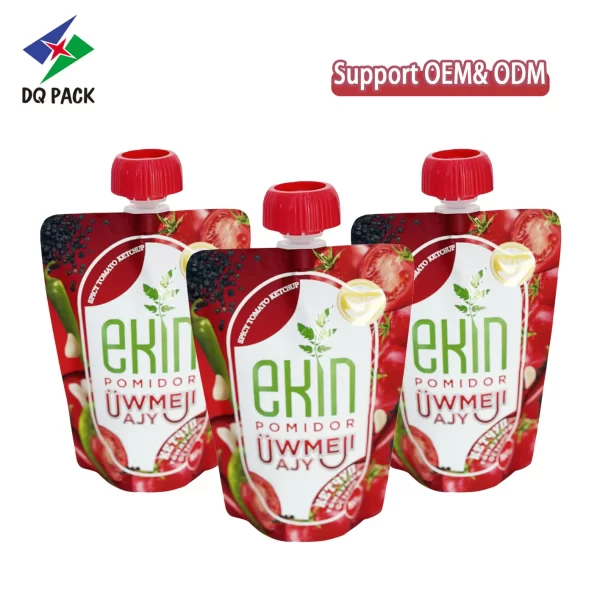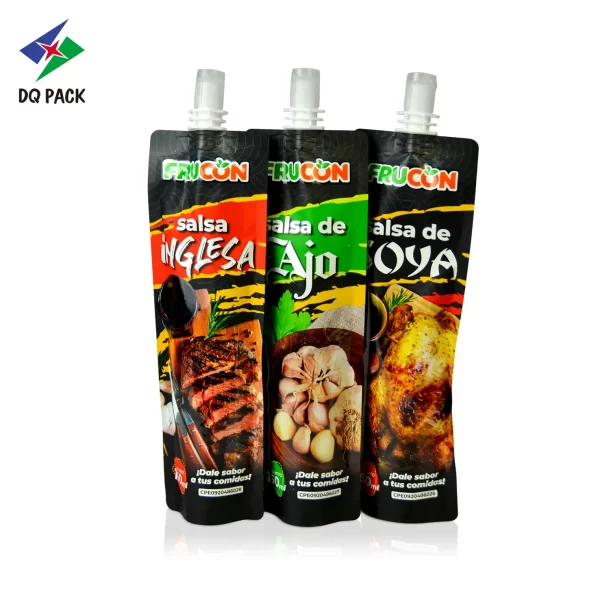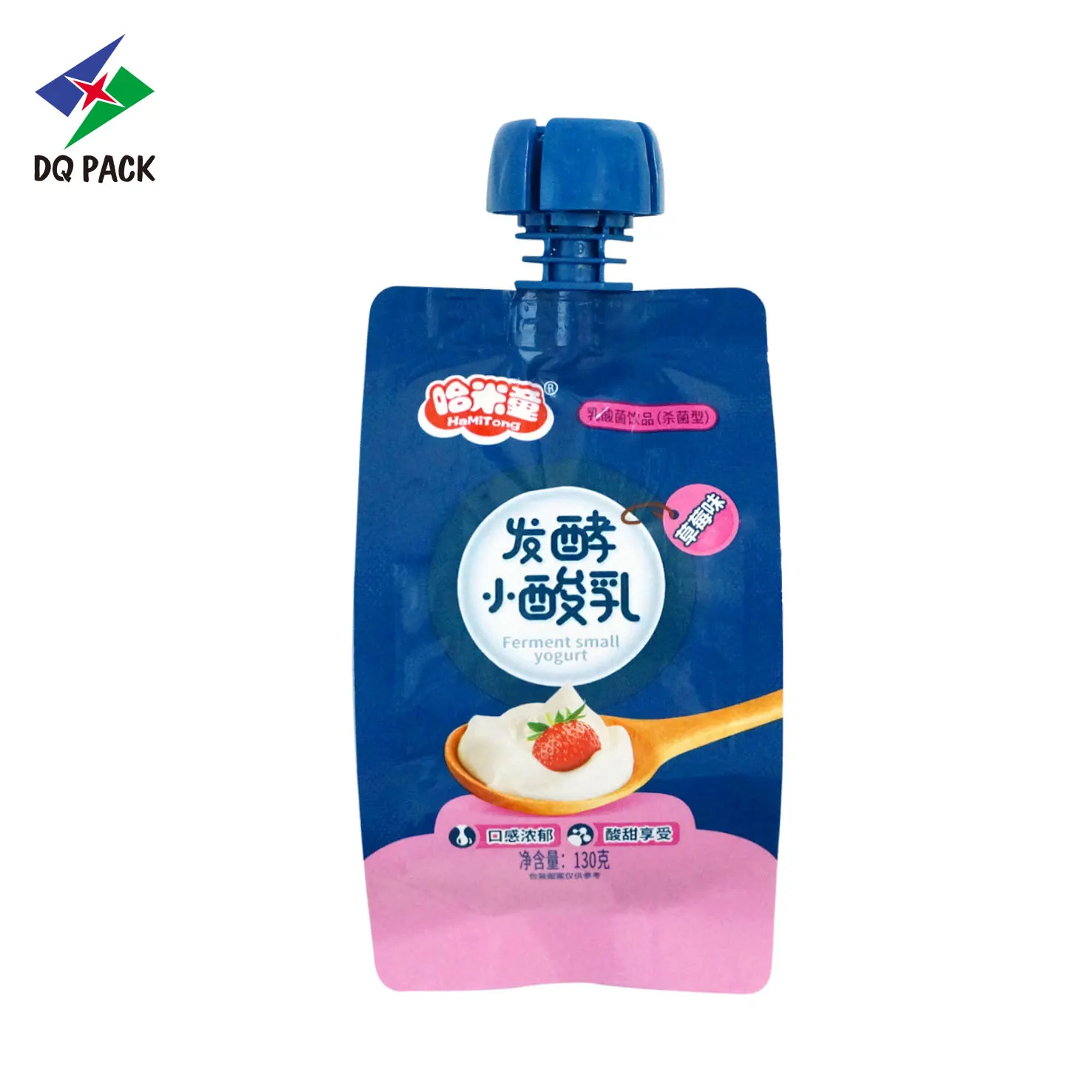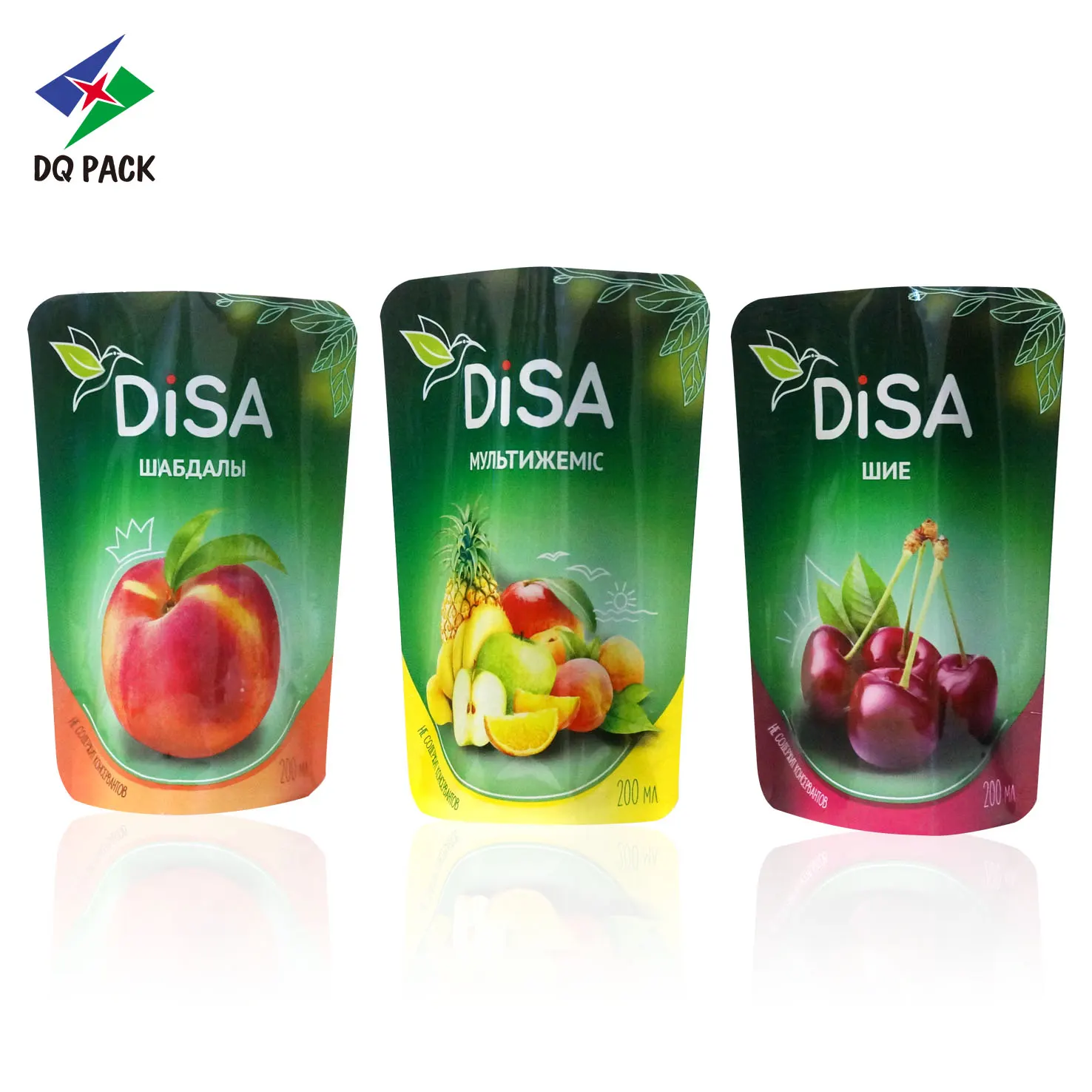


Spouted bags clog mainly due to mismatches between product viscosity, particle size, nozzle specifications, and filling conditions. DQパック is a professional カスタムフレキシブルパッケージングと印刷ソリューション manufacturer with 30+ years of experience, helping global brands optimize spout pouch structures, nozzle designs, and filling compatibility for stable production.
Why Do Spouted Bags Clog During Filling?
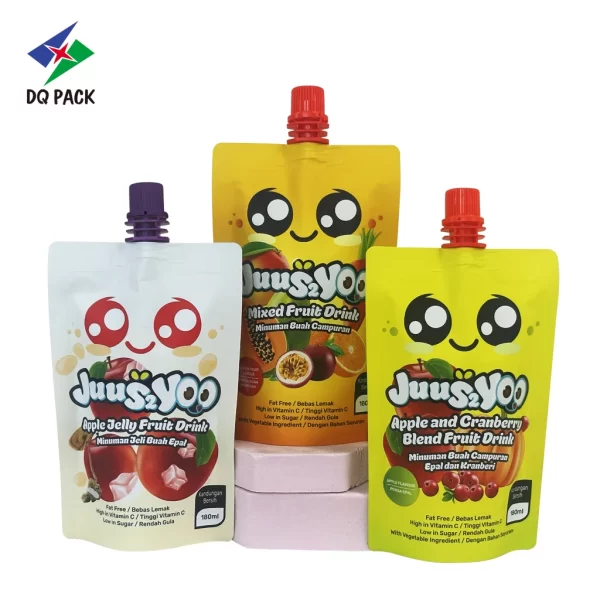
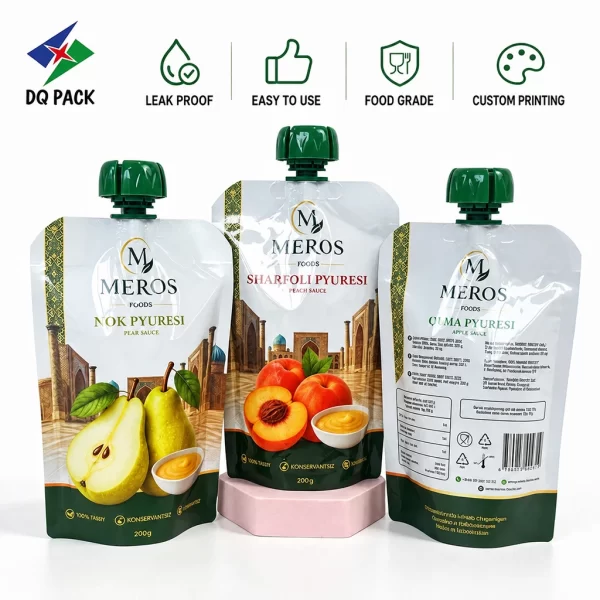
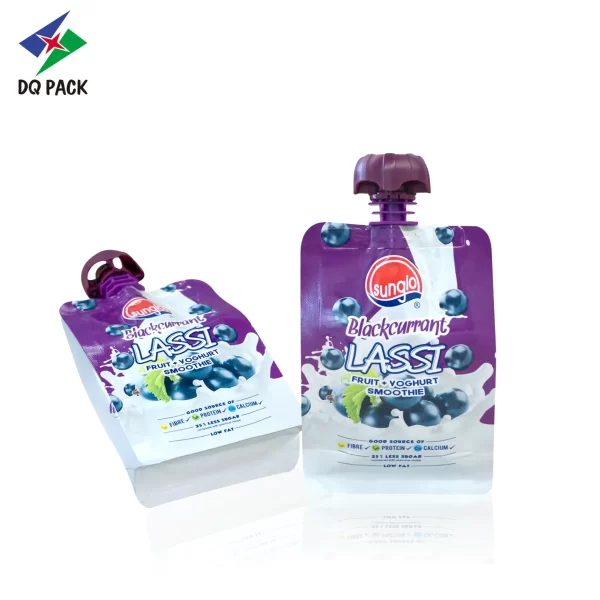
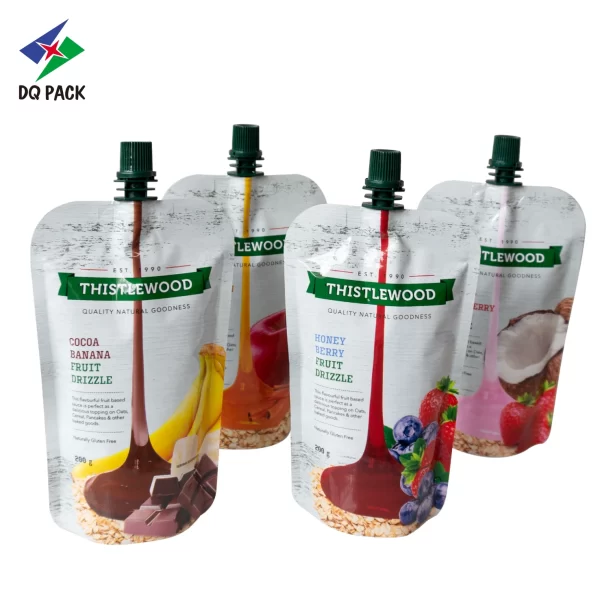
Spouted bags clog during filling when the product characteristics, nozzle design, and filling process are not properly matched. Products such as fruit puree, thick juice, yogurt, sauces, and beverages containing pulp require customized nozzle specifications to ensure smooth flow and stable production.
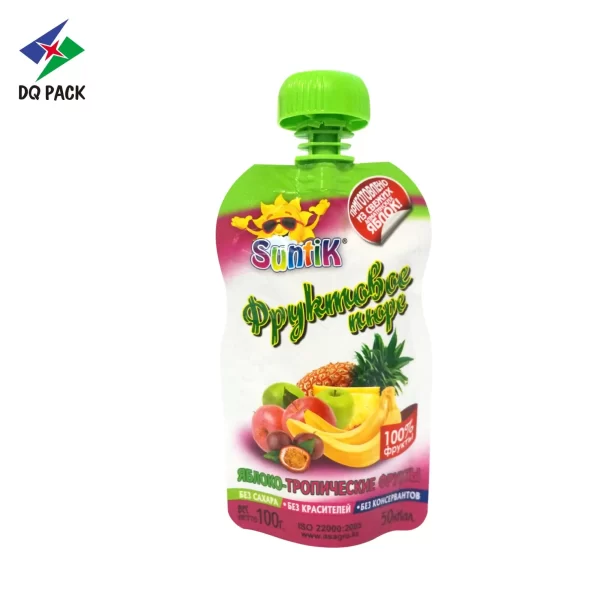
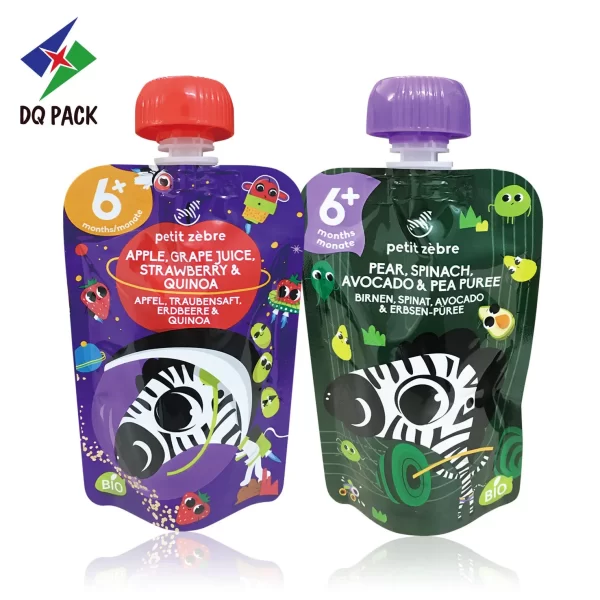
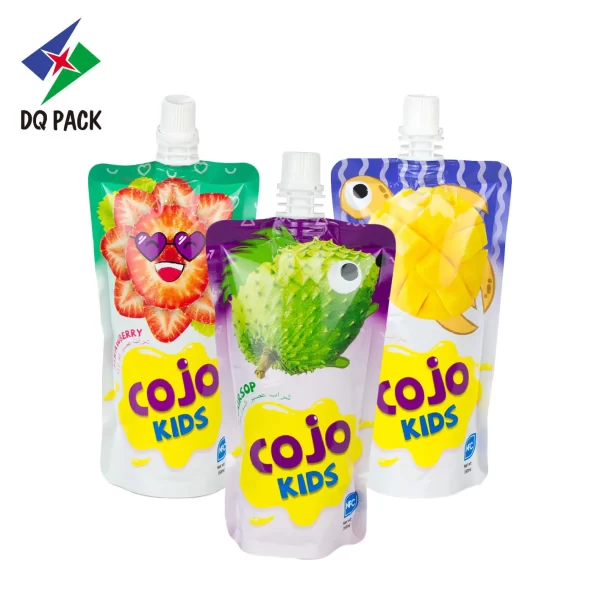
プロフェッショナルとして spouted bags manufacturer, DQパック provides customized flexible packaging solutions by evaluating product viscosity, particle size, filling speed, and equipment requirements before production. Proper matching between packaging structure and filling conditions reduces clogging risks, production downtime, and unnecessary adjustments.
Under What Conditions Do Spouted Bags Experience Clogging?
The performance of spouted bags depends heavily on the relationship between the product and the spout system.
Common situations that increase clogging risks include:
| Cause | Impact on Filling |
|---|---|
| High product viscosity | Requires higher pressure and reduces flow speed |
| Large fruit pulp particles | Particles may block the nozzle channel |
| Small nozzle diameter | Limits product flow capacity |
| Product residue after filling | Residue may dry and cause later blockages |
| Incorrect filling parameters | Creates unstable flow and increased residue |
For example, fruit puree has a much thicker consistency than regular juice. If the nozzle channel is too narrow, the filling pressure increases and affects production efficiency.
Common Causes of Spouted Bags Nozzle Blockages
1. Incorrect Nozzle Diameter Selection
A smaller nozzle is not always suitable for every product. While standard juice may flow smoothly through a narrow nozzle, products containing pulp, seeds, or thicker ingredients require larger flow channels.
When customizing spouted bags, the spouted bag manufacturer should evaluate:
- 製品の粘度
- Particle size
- Filling volume
- Filling machine speed
- 生産要件
The nozzle specification is selected based on actual application conditions rather than pouch capacity alone.
2. High Product Viscosity
Viscosity directly affects filling performance. Thick products create greater resistance inside the spout channel.
Typical products requiring special consideration include:
- フルーツピューレ
- 離乳食
- Yogurt drinks
- Thick sauces
- Concentrated beverages
For these applications, spouted bags must be designed with suitable nozzle dimensions to maintain consistent filling speed.
How to Choose the Right Spout Size for Spouted Bags?
Selecting the correct nozzle requires evaluating three key factors:
- Analyze product characteristics
Confirm viscosity, ingredients, and particle size before choosing the spout. - Match filling equipment requirements
The nozzle must support the filling machine speed and pressure conditions. - Conduct filling tests before mass production
Sample testing helps verify flow rate, residue levels, and clogging risks.
Spouted bag manufacturers recommend that customers provide complete product information before ordering:
- Product type and formula
- Particle size
- 充填温度
- Filling volume
- Target production speed
- Filling equipment model
Develop suitable spouted bags that match both product performance and production requirements.
How to Reduce Clogging Problems During Production?
Even with properly designed spouted bags, filling stability depends on production control.
Recommended actions include:
- Test samples using the actual product before bulk production.
- Monitor continuous filling performance instead of testing only one pouch.
- Check nozzle alignment with the filling head.
- Adjust filling speed according to product flow characteristics.
- Confirm nozzle specifications during the prototype stage.
According to the flexible packaging industry data from the Flexible Packaging Association, flexible packaging performance depends on proper material selection, design optimization, and application requirements. Matching packaging components with product conditions is essential for reliable performance.
What Should Buyers Confirm Before Purchasing Spouted Bags?
For importers, distributors, and brand owners, the following specifications should be confirmed:
| Purchasing Item | Why It Matters |
|---|---|
| Nozzle diameter | Determines product flow capability |
| Nozzle position and height | Ensures filling machine compatibility |
| Spout material | Affects sealing and durability |
| 製品の粘度 | Influences filling resistance |
| Particle characteristics | Prevents blockage risks |
| Filling equipment model | Ensures production compatibility |
Why Choose DQ PACK for Custom Spouted Bags?
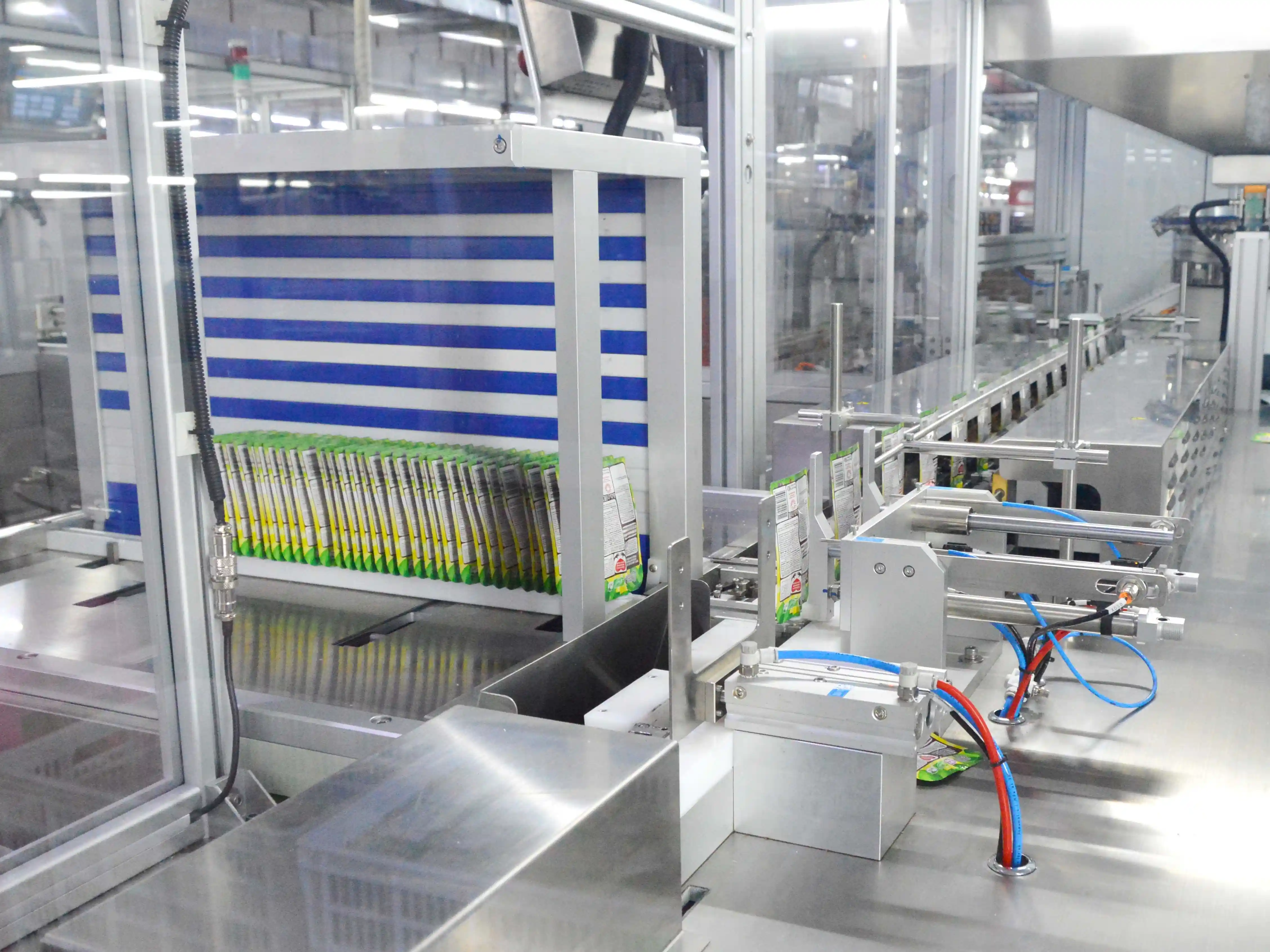
DQパック has specialized in custom flexible packaging and printing solutions since 1991. With more than 30 years of manufacturing and export experience, DQパック serves global customers with reliable packaging solutions.
The company operates a 30,000㎡ production facility equipped with:
- 6 automated packaging printing lines
- 6 high-speed solvent-free laminating lines
- 先進のスリッター7台
- 20 bag-making production lines
- Class 300,000 cleanroom facilities
With more than 200 skilled employees, DQパック follows ISO9001-2018 quality management standards and has established strong domestic and international market recognition. The registered trademark “DQ PACK CN” represents its commitment to professional manufacturing and consistent quality.
Whether for juice, puree, sauces, beverages, or other liquid products, DQパック provides customized spouted bag solutions based on product characteristics, filling requirements, and production conditions.
よくある質問
1. What causes spouted bags to clog during filling?
The main causes are incorrect nozzle size, high product viscosity, large particles, product residue, and poor matching between packaging and filling equipment.
2. Can fruit juice with pulp be packed in spouted bags?
Yes. However, the nozzle diameter and channel design must match the pulp size and filling speed to prevent blockage.
3. Does a larger spout always improve filling speed?
No. Filling speed also depends on product viscosity, pressure control, and equipment design.
4. How can buyers test spouted bags before mass production?
Conduct filling trials using the actual product and evaluate flow stability, residue, and clogging performance during continuous operation.
4. How does DQ PACK customize spouted bags?
DQ PACK analyzes product properties, filling equipment, and production requirements to develop suitable spout structures and flexible packaging solutions.
結論
The stability of spouted bags during filling depends on the precise balance between packaging design, product characteristics, and filling equipment. Problems such as nozzle clogging can be effectively reduced by selecting the correct spout diameter, understanding product viscosity, controlling filling parameters, and conducting proper sample testing before mass production.
As an experienced custom flexible packaging and printing solutions manufacturer, DQパック combines more than 30 years of manufacturing expertise with advanced production capabilities to deliver reliable spouted bag solutions for global brands, importers, and distributors. From product analysis and structural design to customized production, DQパック helps customers achieve efficient filling performance, consistent quality, and reduced production risks.
Whether you need packaging for juice, puree, sauces, dairy products, or other liquid applications, DQパック provides professional OEM/ODM support and customized flexible packaging solutions tailored to your market needs.
連絡先 DQパック today to develop high-performance spouted bags that improve product protection, production efficiency, and brand value.