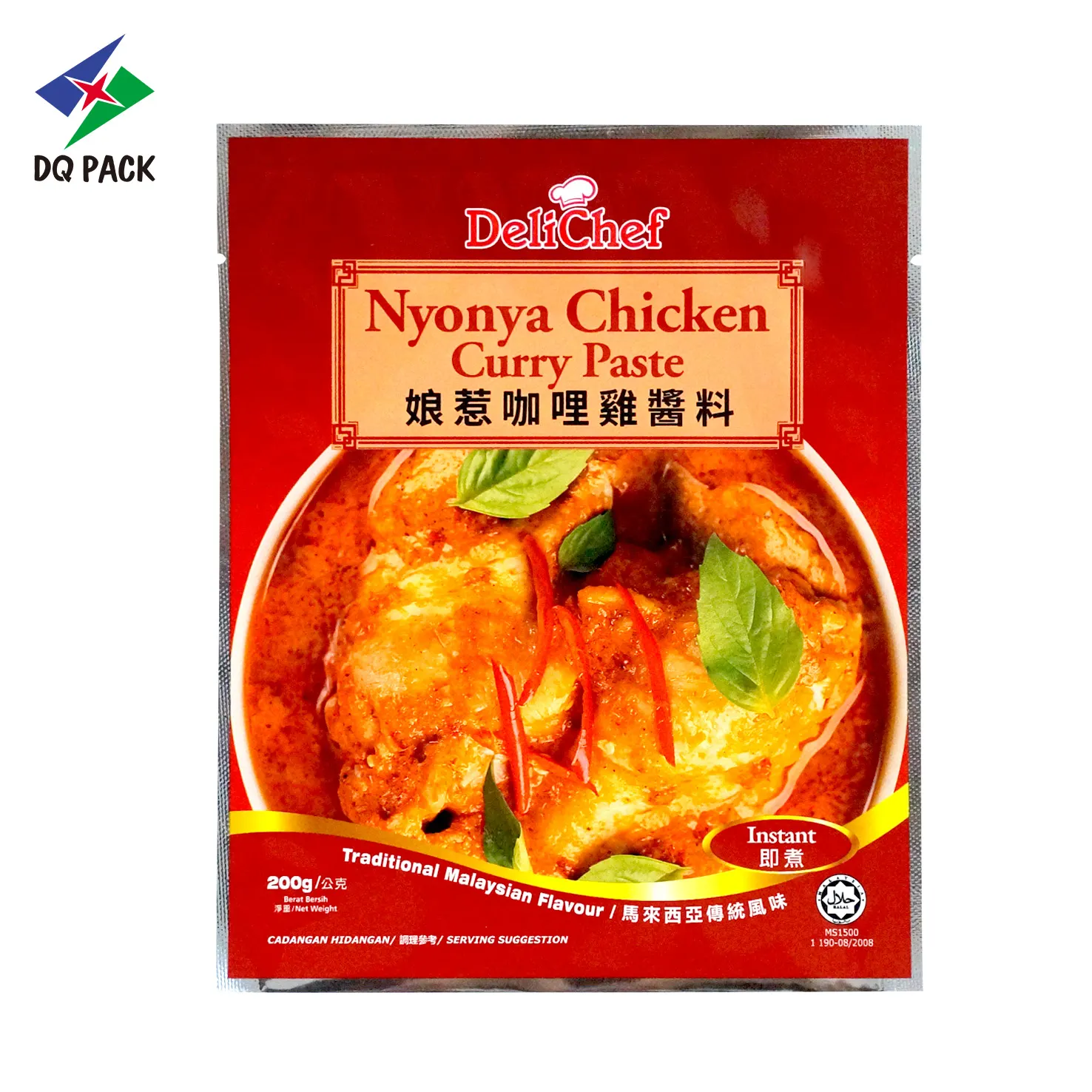


Custom pet treat packaging covers pouch formats, composite laminates, opening features, printing, and sizing. Your selection depends on treat texture, fat level, moisture sensitivity, target shelf life, filling equipment, and sales channel, rather than one universal pouch or film for all pet snacks. As an experienced custom flexible packaging and printing manufacturer, PACK DQ provides integrated printing, lamination, slitting, and bag-making services to help pet food brands, wholesalers, and distributors develop reliable packaging for different products and markets.
What Types of Custom Pet Treat Packaging Are Available?
Different pouch formats serve different product weights, retail requirements, and filling operations. The four common options are:
1. Stand-Up Pouches for Retail Dog Treats
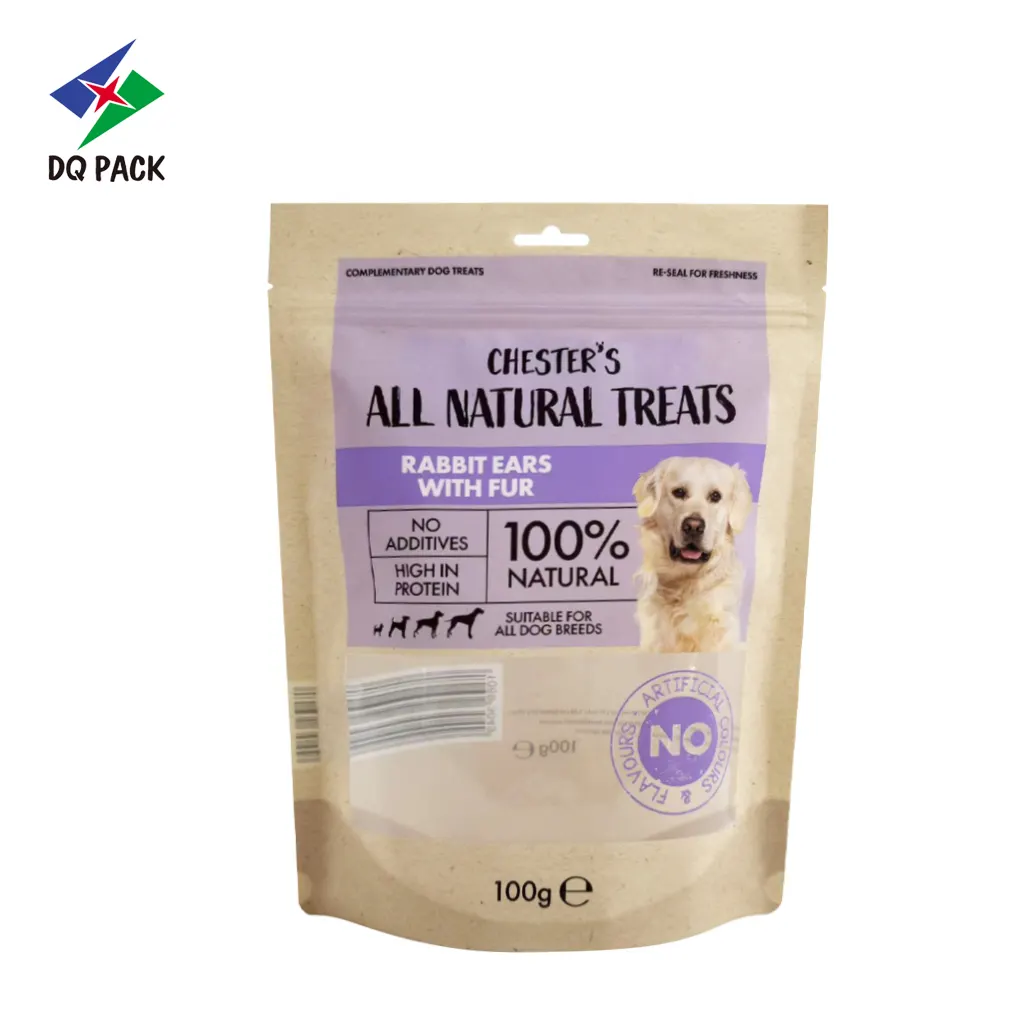
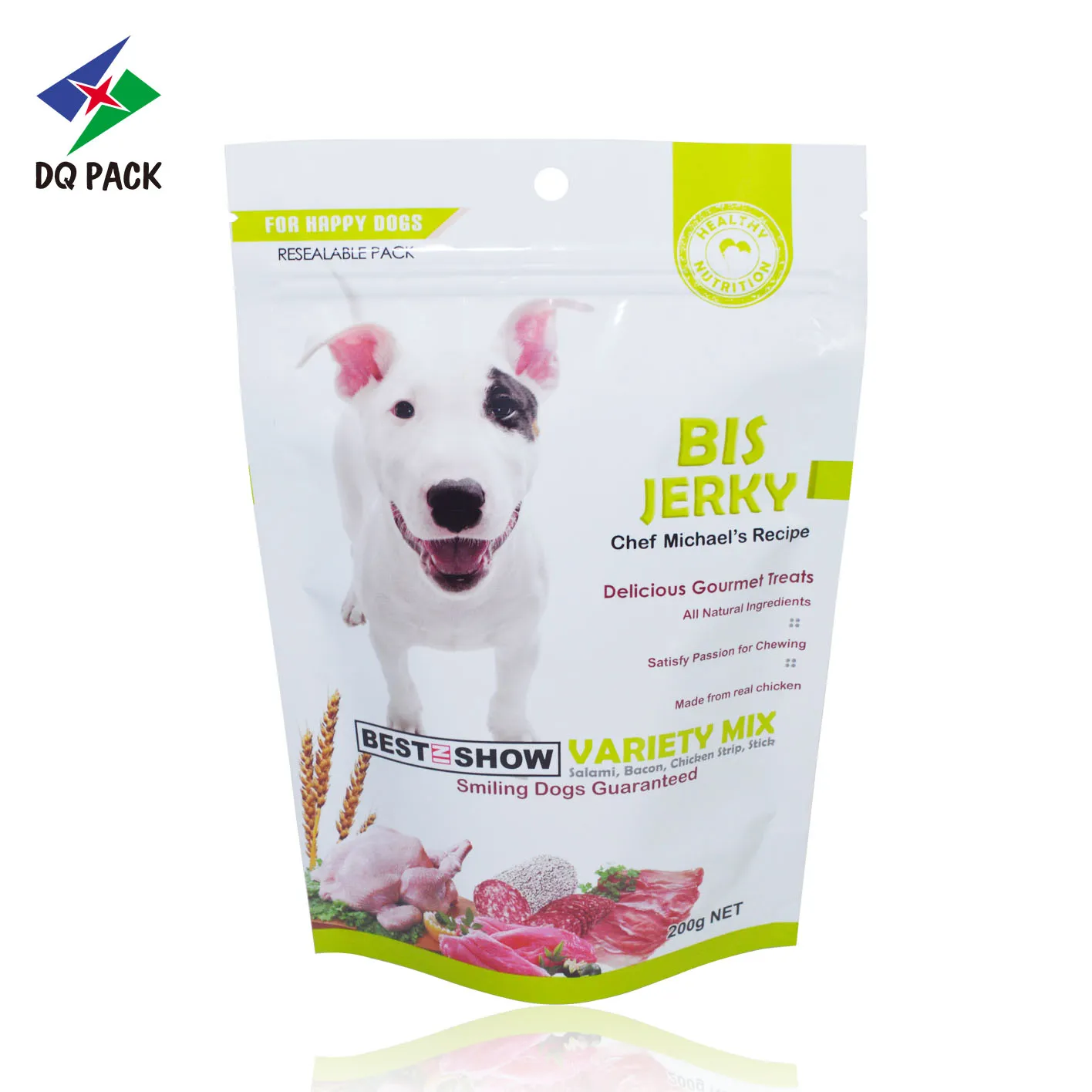
Stand-up pouches (Doypack) feature a bottom gusset that allows them to stand upright on retail shelves. They provide generous branding space and support resealable zippers, tear notches, and hang holes. They are suitable for biscuits, jerky, and training treats in small to medium retail sizes.


2. Flat-Bottom Pouches for Shelf Display
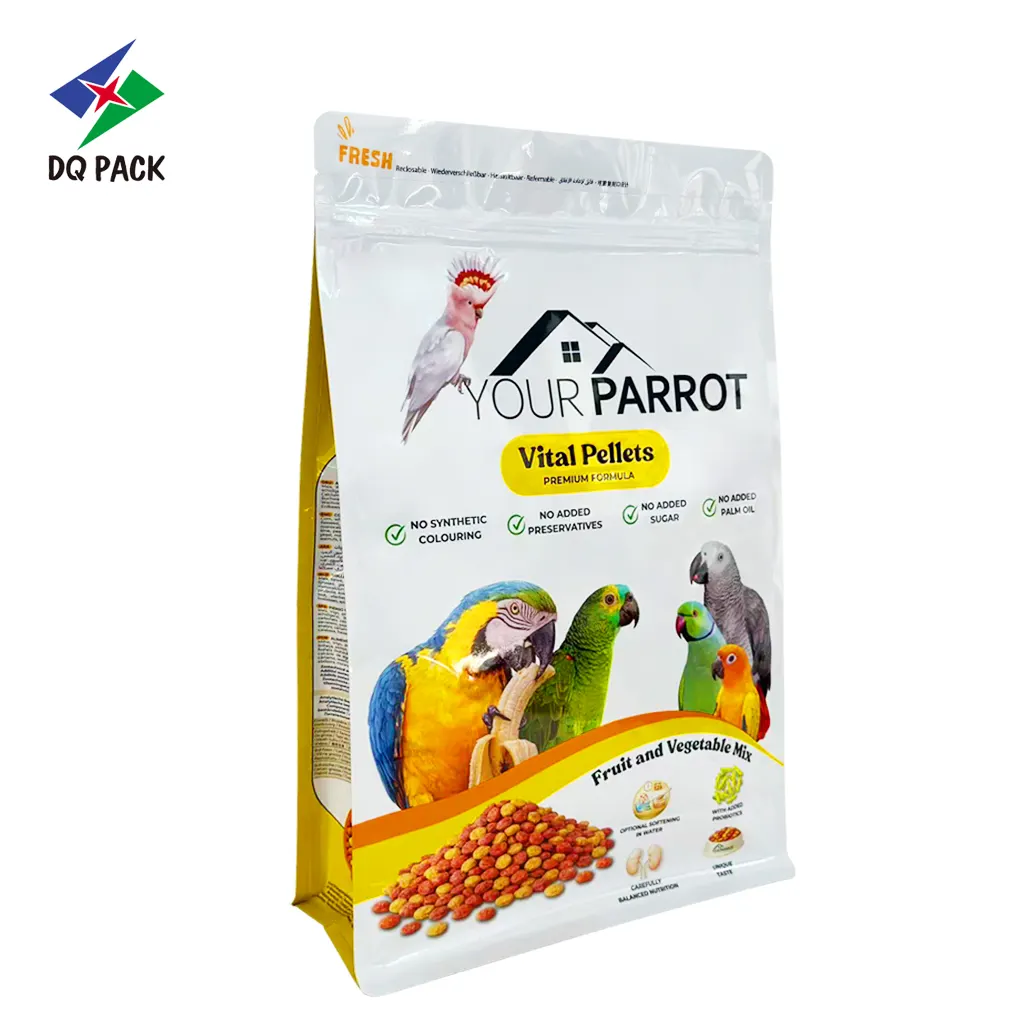
Also called box pouches, flat-bottom bags have a rectangular base and multiple printable panels. Their stable structure creates a premium shelf presentation, making them suitable for larger SKUs, freeze-dried snacks, and high-value meat treats. They require compatible pre-made pouch filling equipment.
3. Flat Pouches for Samples and Small Portions
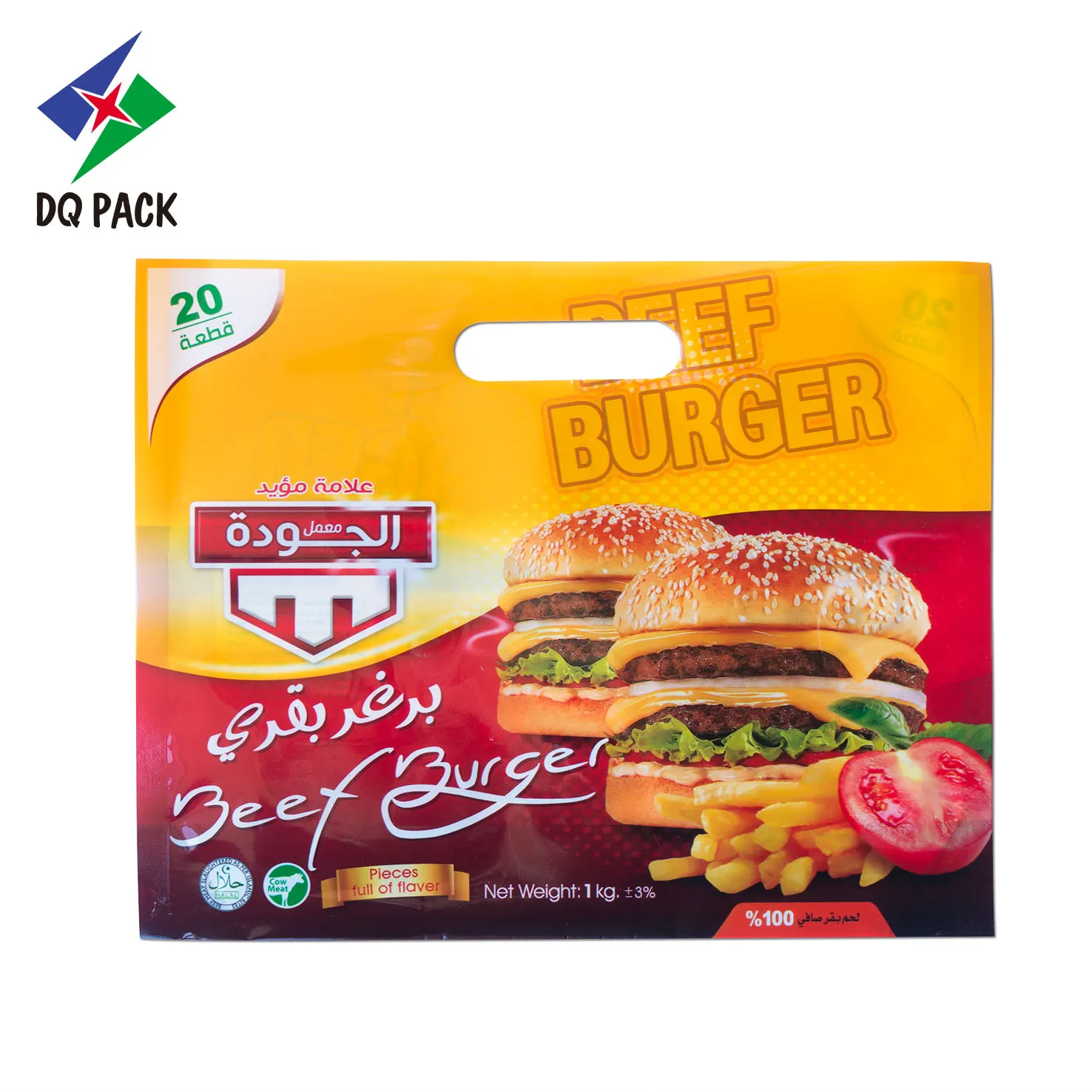
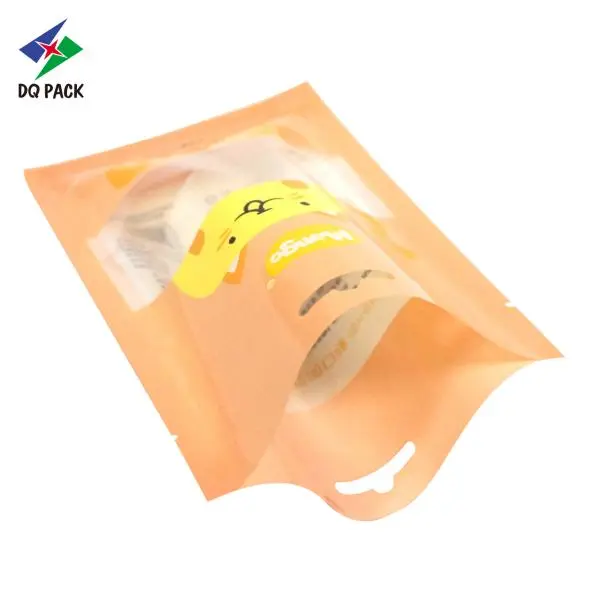
Three-side-sealed flat pouches are lightweight, economical, and easy to store. They work well for single-serve training bites, trial samples, promotional packs, and e-commerce inserts. Their main limitation is smaller capacity and the inability to stand independently.
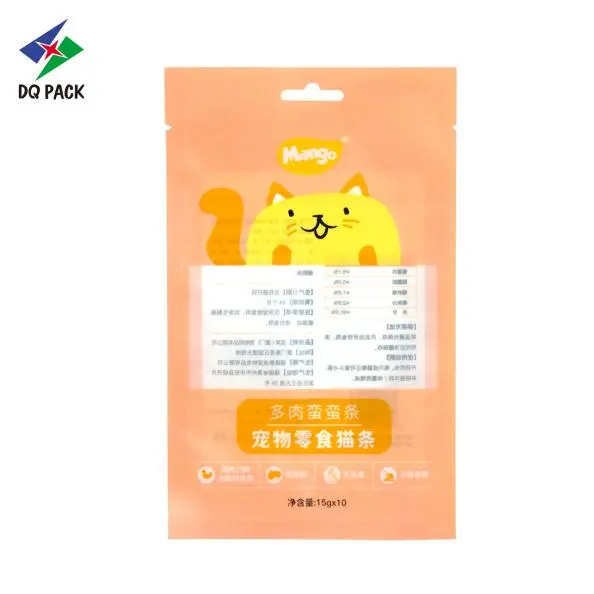
4. Printed Rollstock for Automatic Packaging Lines
Printed rollstock is continuous laminated film designed for vertical form-fill-seal (VFFS) machines. It eliminates manual pouch handling and supports high-speed, large-volume production. PACK DQ supplies custom gravure-printed rollstock matched to machine width, sealing parameters, and barrier requirements.
How to Choose Packaging for Different Pet Treats
The packaging structure must match the product’s physical and chemical characteristics. The following table provides practical starting points for buyers.
| Pet treat type | Key packaging requirements | Recommended considerations |
|---|---|---|
| Baked dog biscuits | Moisture control and crush resistance | Resealable pouches and optional clear windows |
| Meat jerky | Oxygen barrier, grease resistance and aroma retention | Oil-compatible sealant and strong heat seals |
| Freeze-dried treats | Strict moisture and oxygen control | Metallized or aluminium foil laminates |
| Soft or semi-moist treats | Moisture retention and reliable sealing | Validated high-barrier structures |
| Training treats | Portability and repeated opening | Small stand-up pouches with resealable zippers |
| Hard chews | Puncture and shipping resistance | Durable laminates and suitable film thickness |
For example, meat jerky requires an inner sealing layer that tolerates grease, while baked biscuits mainly need protection against moisture ingress. Freeze-dried treats require stronger moisture protection because absorbed moisture can compromise their crisp texture.
Which Materials Are Used for Custom Pet Treat Packaging?
Material selection determines barrier performance, appearance, durability, and cost. The following structures are common options for custom pet treat packaging.
| Structure des matériaux | Main advantages | Suitable applications | Limites |
|---|---|---|---|
| PET/PE | Good printability, flexibility, and heat sealing | Dry, low-fat biscuits with shorter shelf-life requirements | Limited oxygen and moisture barrier |
| PET/VMPET/PE | Improved light, oxygen and moisture protection | Dry treats and products requiring moderate barrier performance | Metallized layer can be damaged by excessive flexing |
| PET/AL/PE | High oxygen, moisture and light barrier | Fat-sensitive jerky and moisture-sensitive treats | Higher material cost and no product visibility |
| Mono-PE or mono-PET | Designed for improved recyclability | Sustainability-focused packaging projects | Barrier and sealing performance require validation |
How should buyers choose?
- Choose PET/PE for suitable dry products with less demanding shelf-life requirements.
- Choose PET/VMPET/PE when stronger barrier protection is necessary without using aluminium foil.
- Choose PET/AL/PE when product protection and extended ambient shelf life are priorities.
- Consider mono-material structures when recyclability is a key purchasing requirement, and the required barrier performance can be achieved.
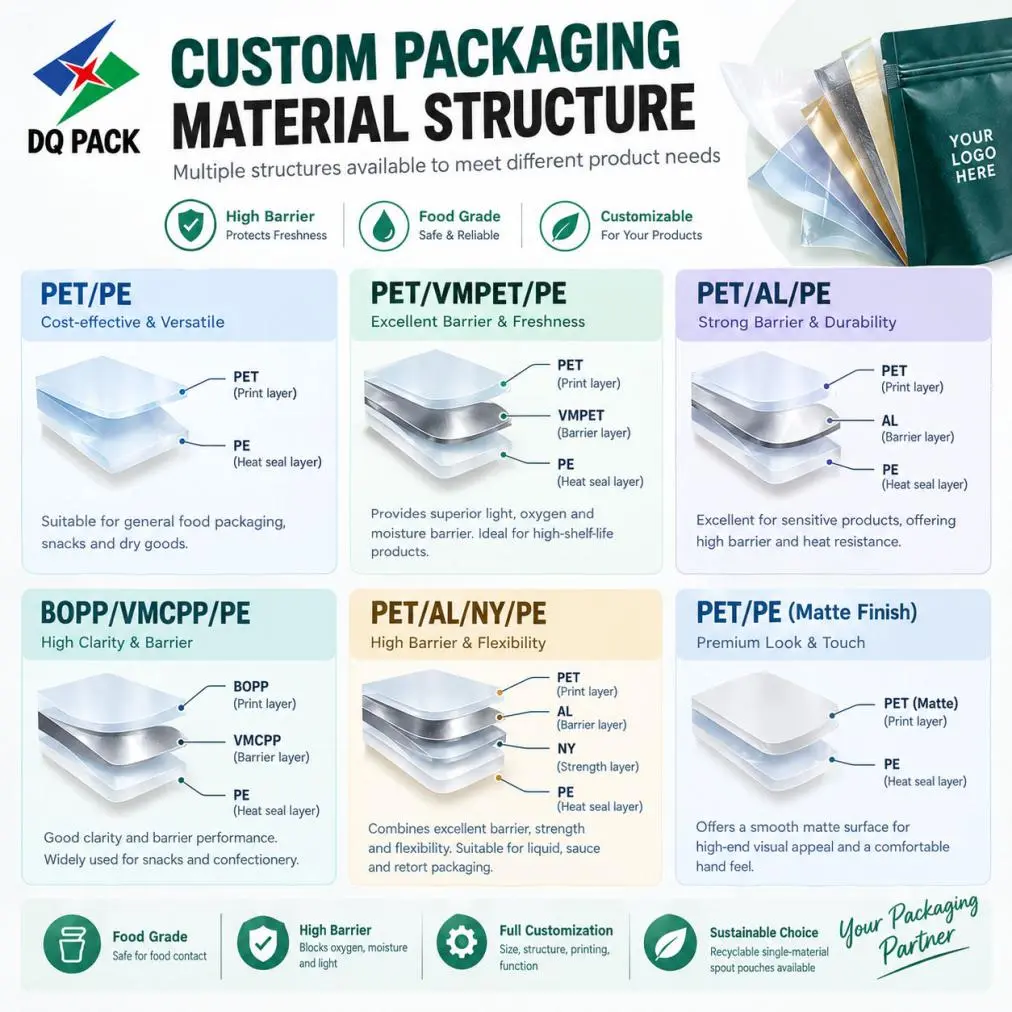
These structures are starting points, not universal specifications. Final selection must consider oxygen transmission rate (OTR), water vapour transmission rate (WVTR), seal strength, puncture resistance, and actual shelf-life testing.
What Custom Features Can Be Added to Pet Treat Packaging?

Custom pet treat packaging can combine functional features with distinctive branding to improve convenience and retail presentation.
Resealable Zippers and Tear Notches
Zippers and slider zippers support repeated opening and closing for multi-serve products. Tear notches allow consumers to open bags without scissors. Zipper selection must match pouch dimensions and laminate thickness to maintain seal integrity.
Clear Windows and Custom Pouch Shapes
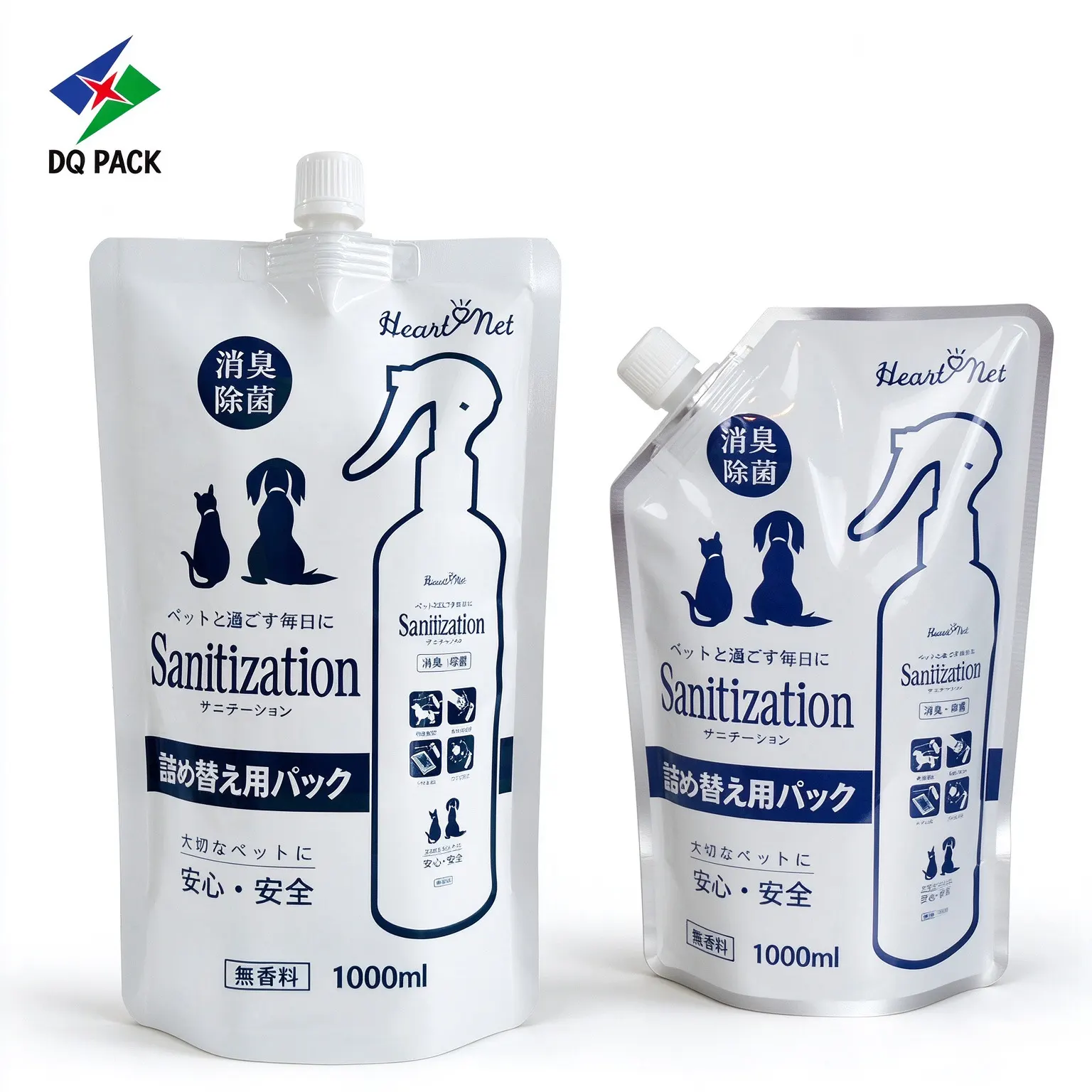
Transparent windows allow consumers to see the treats inside. Window placement must preserve the sealing area. Custom contour shapes create distinctive shelf appeal but require additional tooling and filling-line evaluation.
Matte and Gloss Finishes
Matte lamination creates a premium, understated appearance, while gloss finishes enhance colour intensity. Spot UV, embossing and soft-touch coatings provide additional branding options. All finishes require appropriate adhesion and scratch-resistance checks.
Custom Sizes and Printed Artwork
Pouch dimensions are determined by fill weight, product volume and machine specifications. DQ PACK supports gravure printing for consistent large production runs and digital printing for selected short-run projects. Artwork must account for seal margins, zipper positions, and bleed areas.
Hang Holes and Retail Display Options
Euro slots, standard hang holes, header cards, and tear-off hang tabs support pegboard merchandising. Their structural requirements should be confirmed during sample development.
How to Design Pet Treat Bags for Your Filling Line
Packaging performance depends on compatibility with filling equipment, not just material quality.
Pre-made pouches run on pouch-feeding equipment, while printed rollstock feeds VFFS machines. Pouch width, height, and gusset depth must match the product’s fill weight and volume.
For reliable production, buyers should:
- Confirm filling equipment: Identify whether the production line uses pre-made pouches or rollstock.
- Determine pouch dimensions: Match width, height, and gusset depth to product volume.
- Check sealing requirements: Leave sufficient clearance around zippers and dosing nozzles.
- Evaluate contamination risks: Fatty or crumbly treats can contaminate seal areas and weaken seals.
- Conduct filling trials: Test sealing temperature, pressure, and dwell time using the selected laminate.
- Validate transportation performance: Conduct drop and vibration tests before approving bulk production.
These steps reduce packaging waste, sealing defects, and production interruptions.
Custom Pet Treat Packaging Manufacturing Process
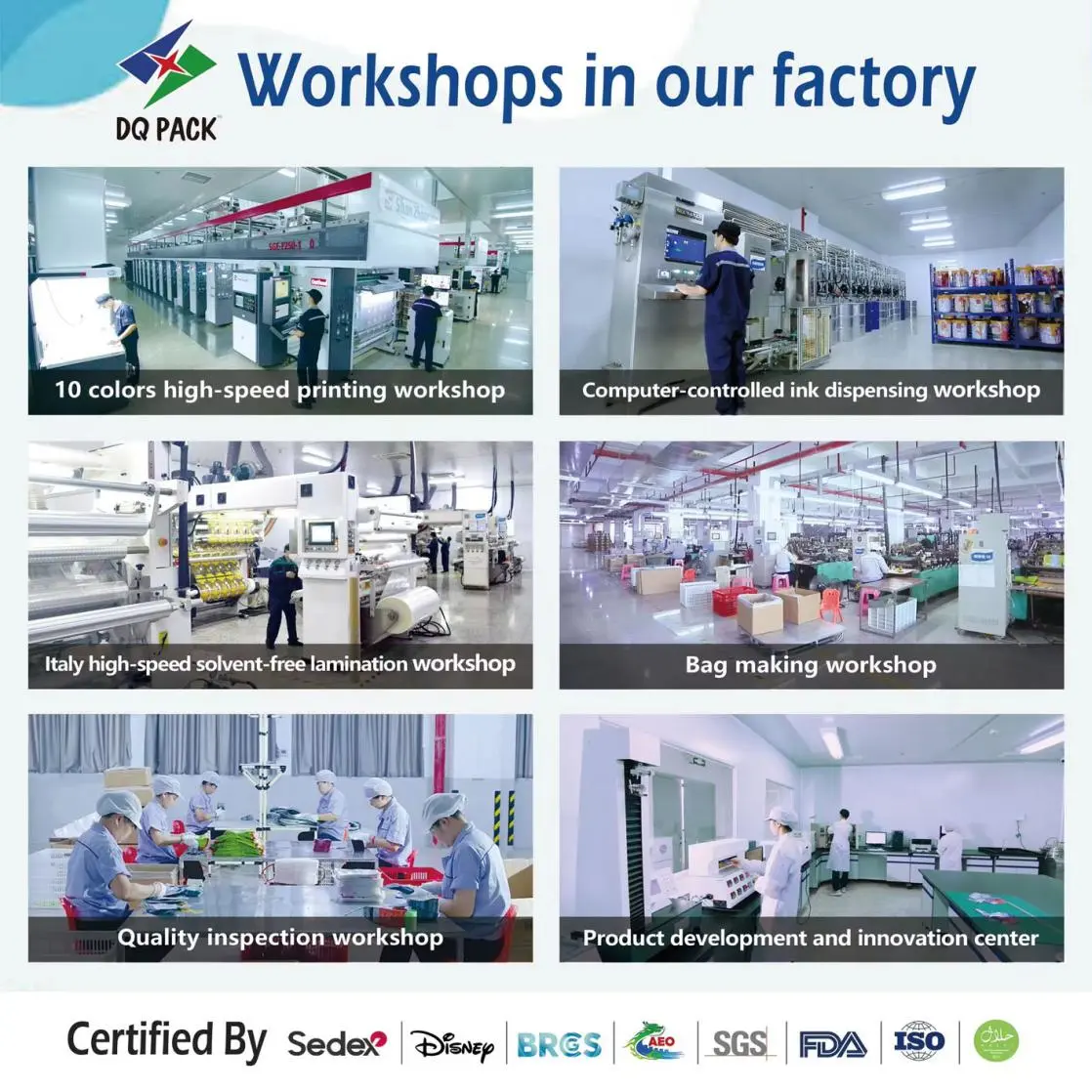
DQ PACK operates as a flexible packaging manufacturer with integrated printing, lamination, slitting, and pouch-converting capabilities.
Our manufacturing workflow follows six steps:
- Confirm product profile, shelf life target, and compliance requirements.
- Select pouch format and laminate structure based on barrier and filling needs.
- Lock dimensions, seal margins, and artwork.
- Produce physical samples for filling compatibility and shelf screening.
- Obtain written specification approval before mass production.
- Run in-line inspection of finished pouches, then pack and arrange delivery.
Each project follows agreed specifications. MOQ and lead time are confirmed after reviewing material availability, printing requirements, and sampling arrangements.
How to Choose a Custom Pet Treat Packaging Manufacturer
B2B buyers should evaluate manufacturers based on technical capabilities, quality control, and long-term production reliability.
| Evaluation criteria | What buyers should confirm |
|---|---|
| Material expertise | Recommendations based on moisture, fat and shelf-life requirements |
| Customisation | Multiple pouch formats, sizes, closures and printing options |
| Capacité de production | Printing, lamination, slitting and bag-making capabilities |
| Quality control | Documented specifications and inspection procedures |
| Compliance support | Relevant food-contact documentation for the destination market |
| Commercial terms | MOQ, sampling costs, lead time and export packaging |
Compliance deserves particular attention. The European Commission’s food-contact materials legislation establishes general safety requirements, while EU Regulation No. 10/2011 sets specific requirements for plastic materials intended for food contact. Buyers should confirm which requirements apply to their product and market before production.
Market demand also supports investment in differentiated packaging. According to FEDIAF’s 2025 Facts & Figures, the European pet food market was valued at €29.3 billion based on 2023 data, with reported annual value growth of 9%. This market scale highlights the importance of product protection, brand differentiation, and dependable packaging supply.
Foire aux questions
1. Does Every Freeze-Dried Pet Treat Pouch Need Aluminium Foil?
No. Aluminium foil provides high barrier protection, but metallized structures may meet shorter shelf-life requirements. The final choice depends on moisture sensitivity, oxygen exposure, and storage conditions.
2. Can I Use the Same Film for Jerky and Baked Biscuits?
Not automatically. Jerky requires grease-resistant sealants and oxygen protection, while baked biscuits primarily need moisture control. This is why investing in custom pet treat packaging tailored to each product type is essential rather than using a one-size-fits-all material.
3. Is Printed Rollstock Cheaper Than Pre-Made Pouches?
Rollstock can reduce unit costs in high-volume production, but it requires compatible VFFS equipment. Pre-made pouches are more practical for brands using manual or semi-automatic filling systems.
4. Are Recyclable Mono-Material Bags Suitable for High-Fat Pet Treats?
Not automatically. Their oil resistance, oxygen barrier, and sealing performance must be tested against the actual product and shelf-life target.
5. Can DQ PACK Provide OEM/ODM Custom Pet Treat Packaging?
Yes. DQ PACK provides custom printing, laminate selection, pouch design, and manufacturing solutions for different pet treat products. Buyers can discuss product requirements, artwork, dimensions, and production quantities with our team.
Conclusion: Partner with PACK DQ for Custom Pet Treat Packaging
Choisir le bon custom pet treat packaging requires more than selecting an attractive pouch. Buyers must consider treat characteristics, moisture and oxygen barrier requirements, shelf-life targets, filling equipment compatibility, and retail presentation. From stand-up pouches and flat-bottom bags to high-barrier laminates and recyclable mono-material structures, every packaging solution should match the product’s actual requirements.


Founded in 1991, PACK DQ is a professional manufacturer of custom flexible packaging and printing solutions. With over 30 years of manufacturing and export experience, we operate a 30,000 m² facility equipped with 6 automated packaging printing lines, 6 high-speed solvent-free lamination lines, 7 slitting machines, and 20 bag-making lines. Our Class 300,000 cleanroom facilities, ISO 9001-based quality management, and team of more than 200 skilled employees support consistent production. Under our registered brand, DQ PACK CN, we serve customers in domestic and international markets. Whether you need custom stand-up pouches, flat-bottom bags, printed rollstock, or complete OEM/ODM packaging development, contact PACK DQ today to discuss your project and request a factory-direct quotation.