

Choosing the right flexible packaging requires matching material structures, barrier properties, pouch styles, and sealing performance to your product’s specific requirements. Food, beverages, powders, snacks, and pet food each need different protection against moisture, oxygen, light, and temperature.
として オーダーメイドのフレキシブル包装および印刷ソリューションのメーカー, DQパック provides OEM/ODM packaging services, material selection support, custom printing, lamination, and pouch manufacturing to help global B2B buyers develop reliable packaging solutions.
1. Understand Your Product’s Packaging Requirements
Before selecting the right flexible packaging, identify your product’s physical characteristics, shelf-life requirements, and storage conditions. These factors determine the necessary material structure and packaging performance.
Product Type: Solid, Powder, Liquid, or Semi-Liquid
Different product forms require different packaging designs:
- Solid products: Nuts, chips, dried fruits, and pet treats need moisture protection and sufficient mechanical strength.
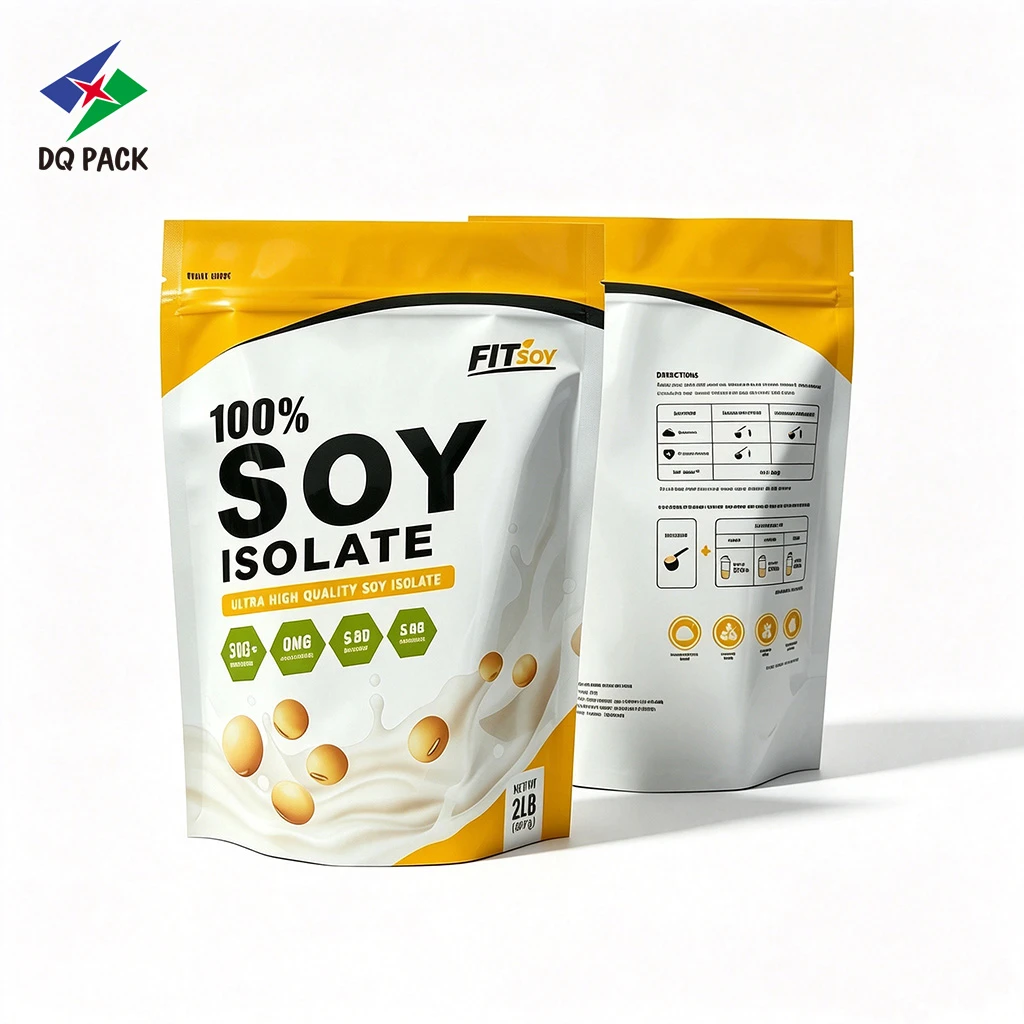
- Powder products: Milk powder, starch, protein powder, and seasonings require moisture barriers and reliable seals to prevent leakage.
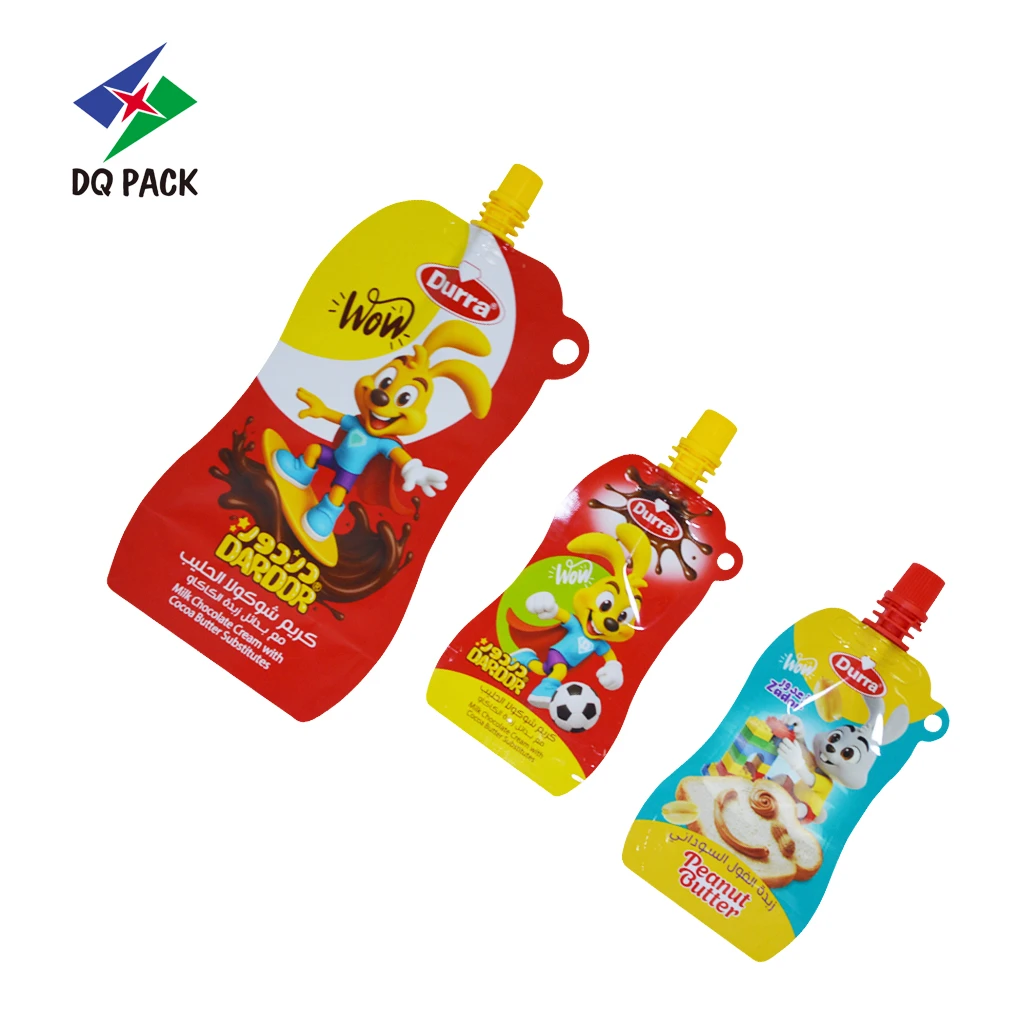
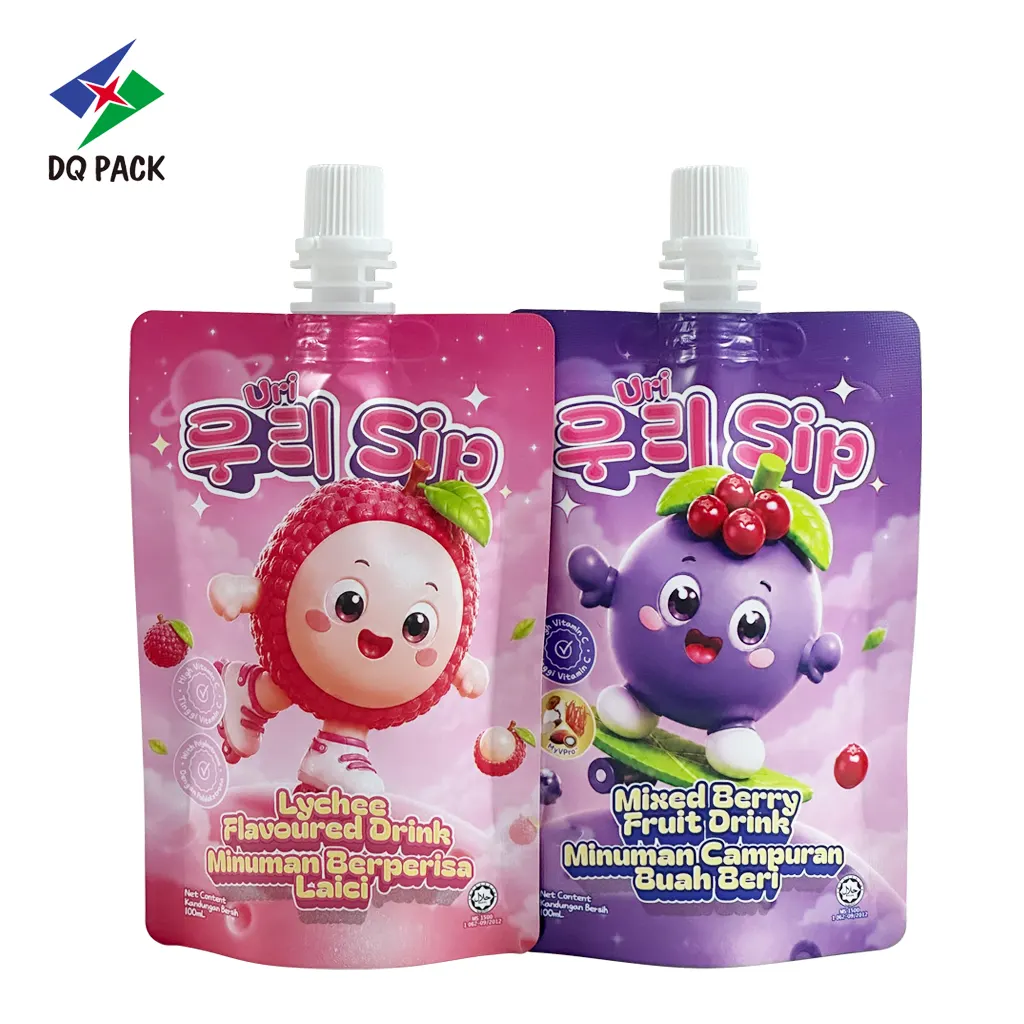
- Liquid products: Juice, yogurt, sauces, and beverages need leak-resistant structures and compatible filling solutions.
- Semi-liquid products: Peanut butter, fruit puree, and wet pet food require suitable dispensing features and strong seals.
For example, roasted nuts can use a PET/VMPET/PE laminated stand-up pouch with a zipper, while fruit juice can be packed in a custom spout pouch.

Product Sensitivity and Shelf Life
Evaluate the following environmental factors:
| ファクター | Potential Impact | Packaging Requirement |
|---|---|---|
| 水分 | Loss of crispness or powder quality | Moisture barrier |
| 酸素 | Oxidation of oils and flavor deterioration | 酸素バリア |
| 光 | Product quality degradation | 光からの保護 |
| Temperature | Material deformation or seal failure | Temperature-resistant structure |
The target shelf life, distribution environment, and storage temperature must also be considered when choosing packaging materials.
2. Choose the Right Flexible Packaging Material
Material selection determines the mechanical strength, barrier properties, printability, and heat-sealing performance of flexible packaging.
Common Flexible Packaging Materials
| 素材 | Main Properties | 代表的な用途 |
|---|---|---|
| PET | Strength, printability, dimensional stability | Outer layer of laminated pouches |
| PE | Flexibility, moisture resistance, heat sealing | Inner sealing layer |
| BOPP | Clarity, stiffness, moisture resistance | Snack packaging |
| VMPET | Light and gas barrier properties | Coffee, snacks, dry foods |
| Aluminum Foil (AL) | High barrier against light, oxygen, and moisture | High-barrier food packaging |
| Nylon (NY) | Puncture resistance and mechanical strength | Vacuum packaging |
Single-Material vs. Laminated Structures
The right flexible packaging material structure depends on the required protection and end-use application.
- Single-material packaging
Single-material PE structures are an option for buyers prioritizing recyclable packaging designs. However, barrier performance, stiffness, sealing properties, and compatibility with existing filling equipment must be verified.
- Laminated flexible packaging
Laminated structures combine different materials to achieve specific packaging functions.
| 材料の構造 | 主な特徴 | 適した用途 |
|---|---|---|
| PET/PE | Printability and heat sealing | General food pouches |
| PET/VMPET/PE | Improved light and moisture barriers | Snacks, nuts, and dry foods |
| PET/AL/PE | High barrier against light, oxygen, and moisture | Sensitive food products |
| PET/NY/PE | Enhanced mechanical strength and puncture resistance | Vacuum and demanding food applications |
More layers do not automatically mean better packaging. The final structure must match the product, filling process, storage environment, and shelf-life target.
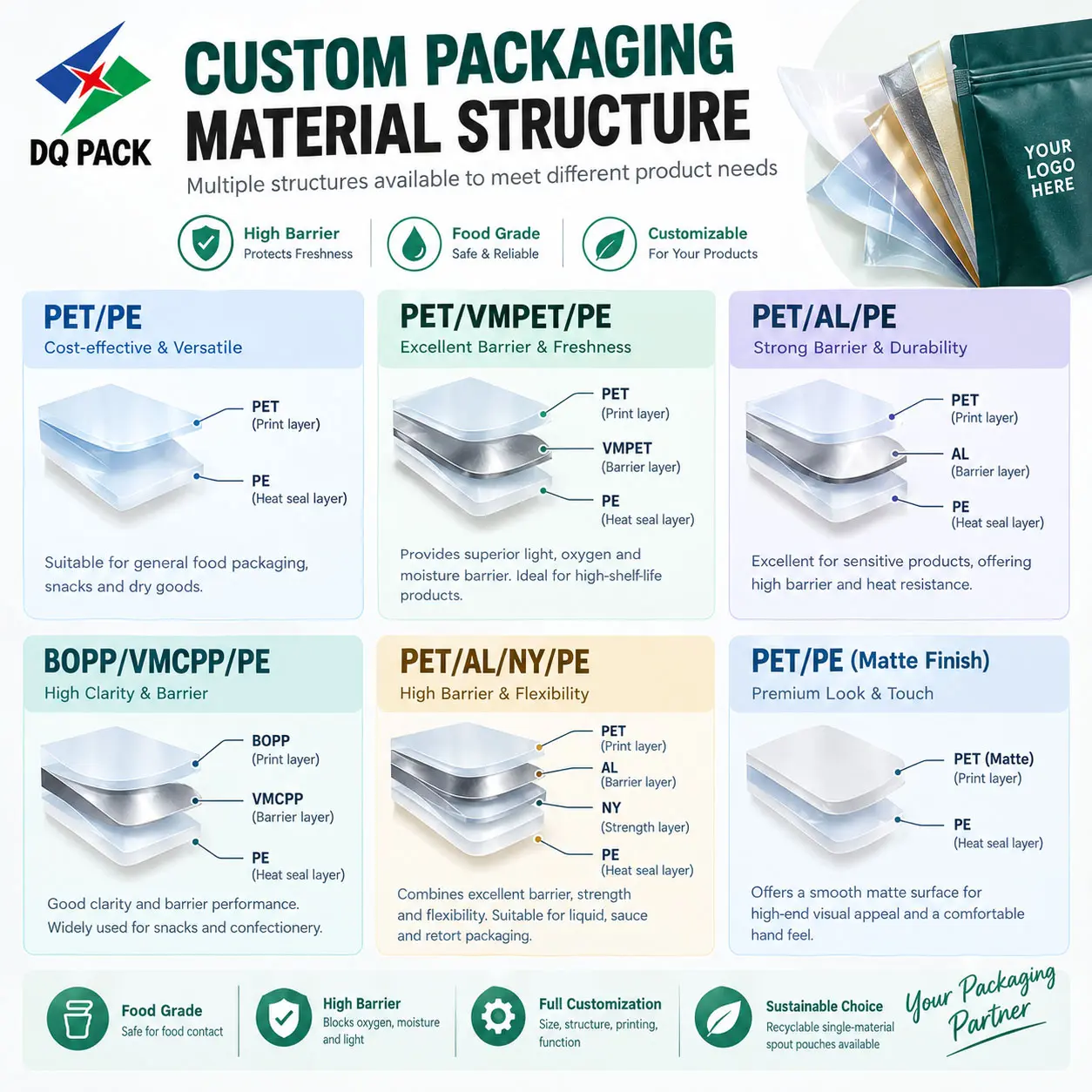
How to Select the Right Barrier Properties
| 製品 | Main Packaging Concerns | Suggested Material Direction |
|---|---|---|
| Nuts and dried fruits | Oxygen and moisture | PET/VMPET/PE |
| コーヒー豆 | Oxygen, moisture, and aroma | High-barrier laminated structure |
| Potato starch | Moisture and powder leakage | PET/PE or PET/VMPET/PE |
| Fruit juice | Leakage and sealing | Liquid-compatible laminated structure |
| ウェットペットフード | Retort temperature and seal integrity | Retort-grade laminated structure |
These structures are starting points. Actual specifications must be confirmed through product testing and filling trials.
3. Select the Right Flexible Packaging Pouch Type
After determining the material requirements, choose a pouch style based on product capacity, filling method, transportation, storage, and consumer convenience.
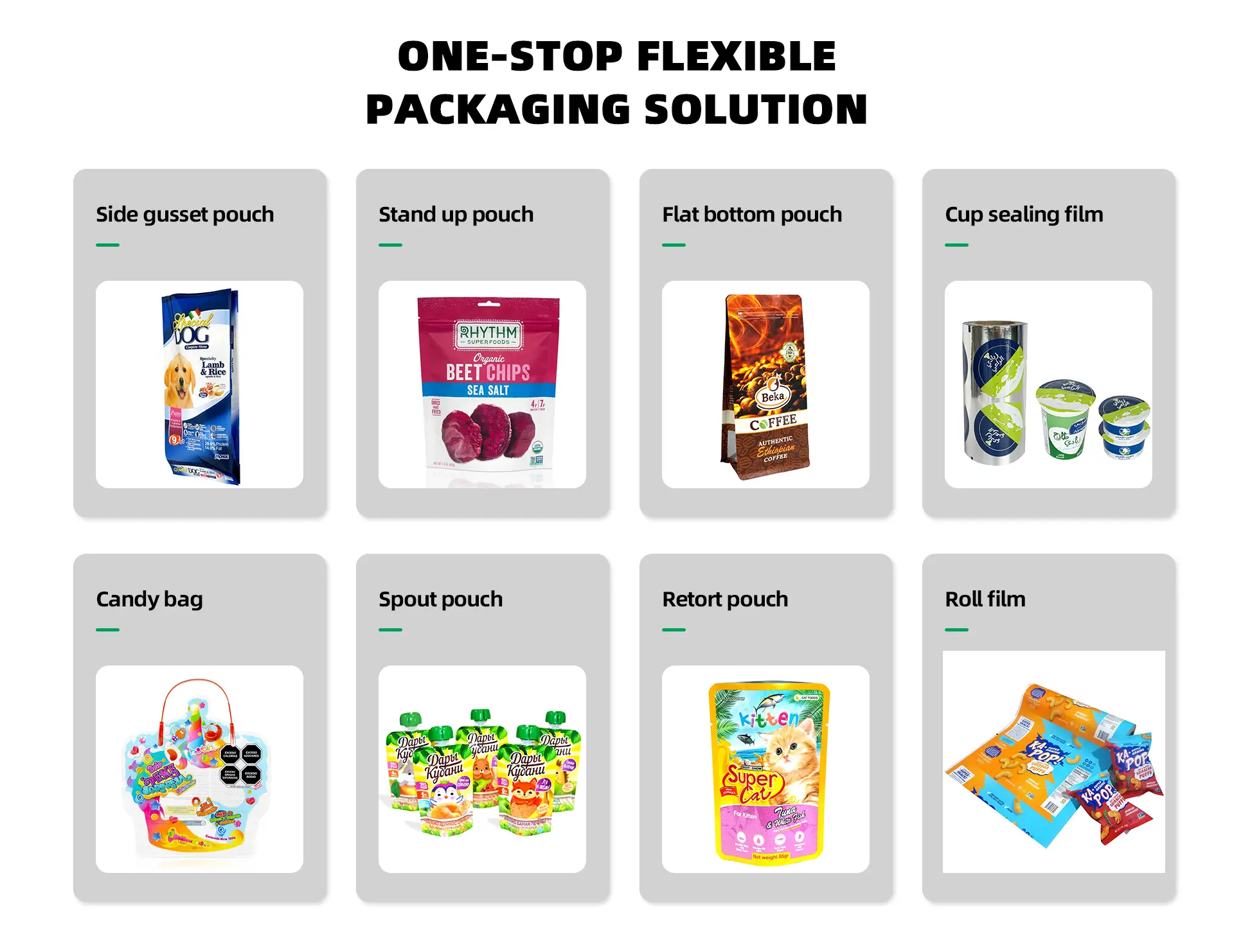
スタンドアップパウチ
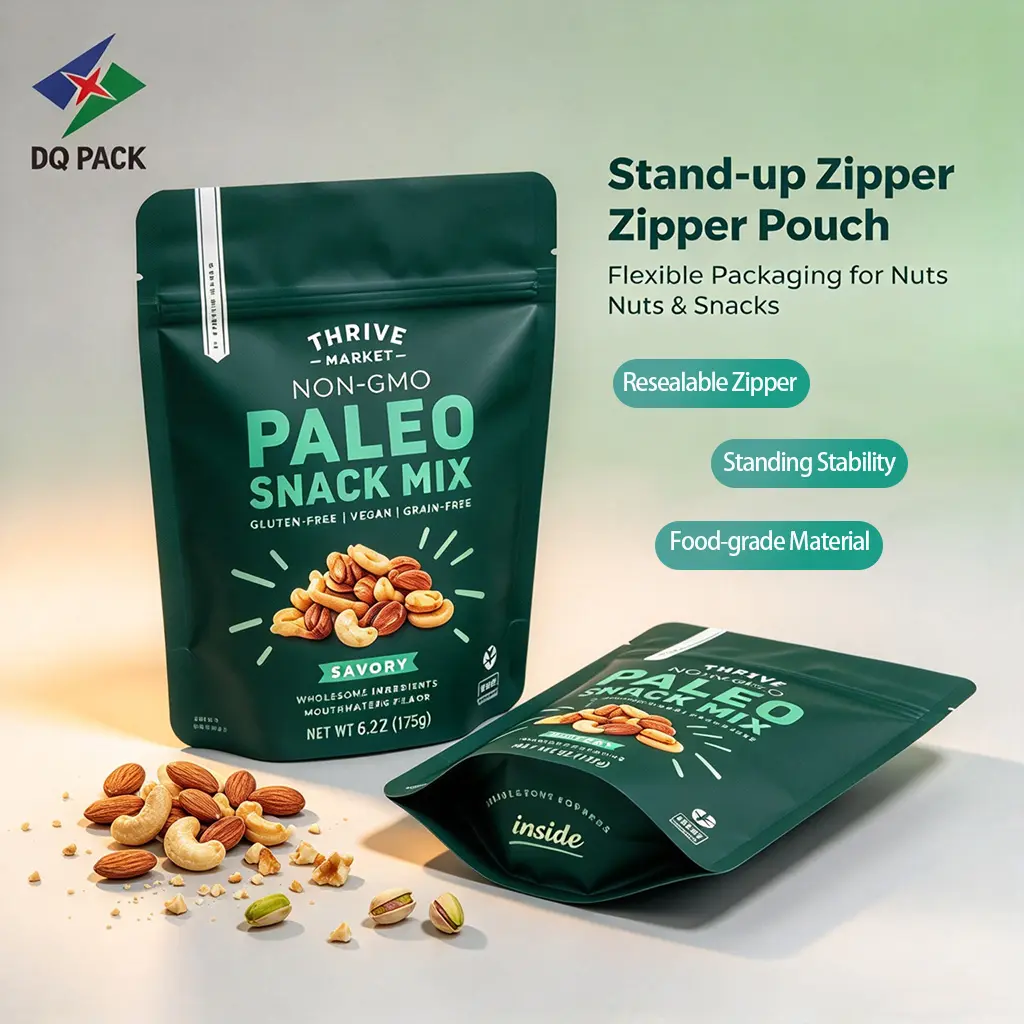
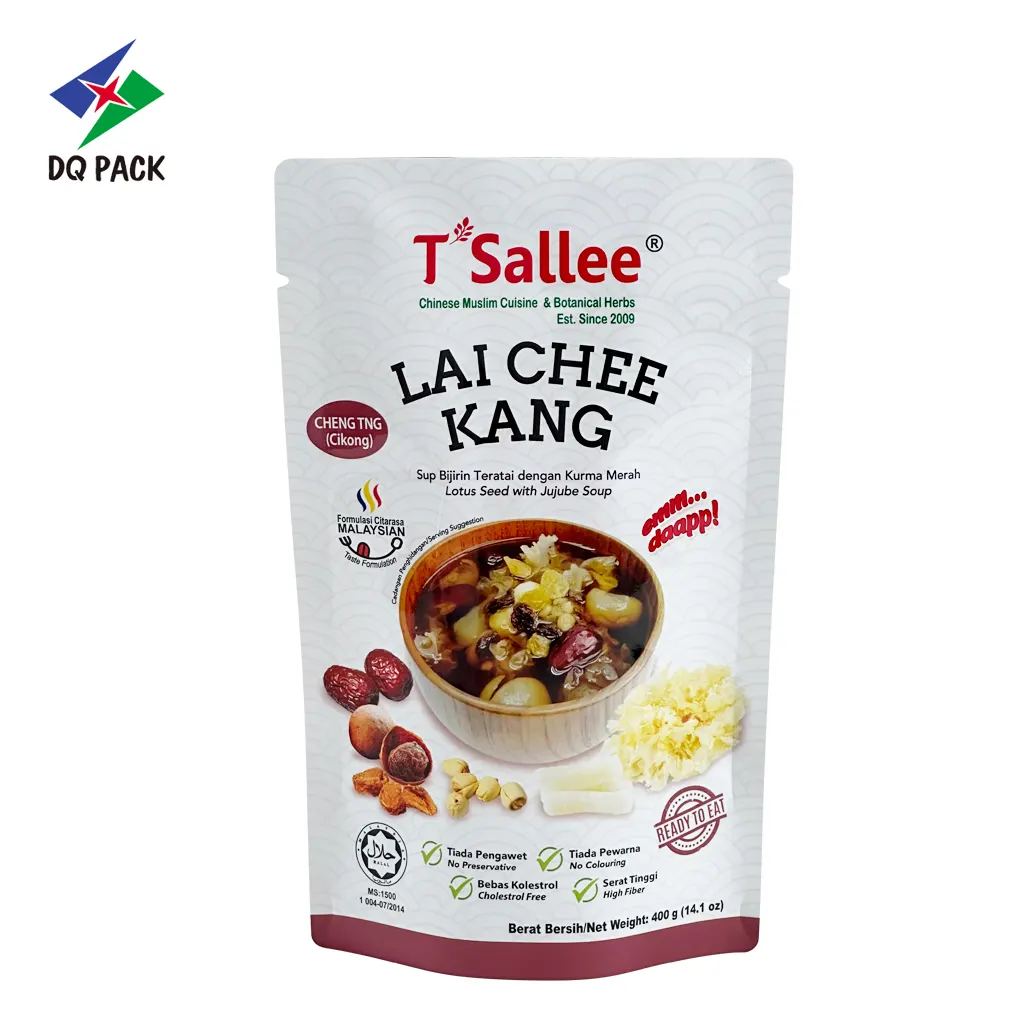
Stand-up pouches feature a bottom gusset that allows packages to stand upright on shelves. They are suitable for snacks, nuts, dried fruits, coffee, and pet food.
Common customization options include zippers, tear notches, matte finishes, glossy finishes, and custom printing.
注ぎ口付きパウチ
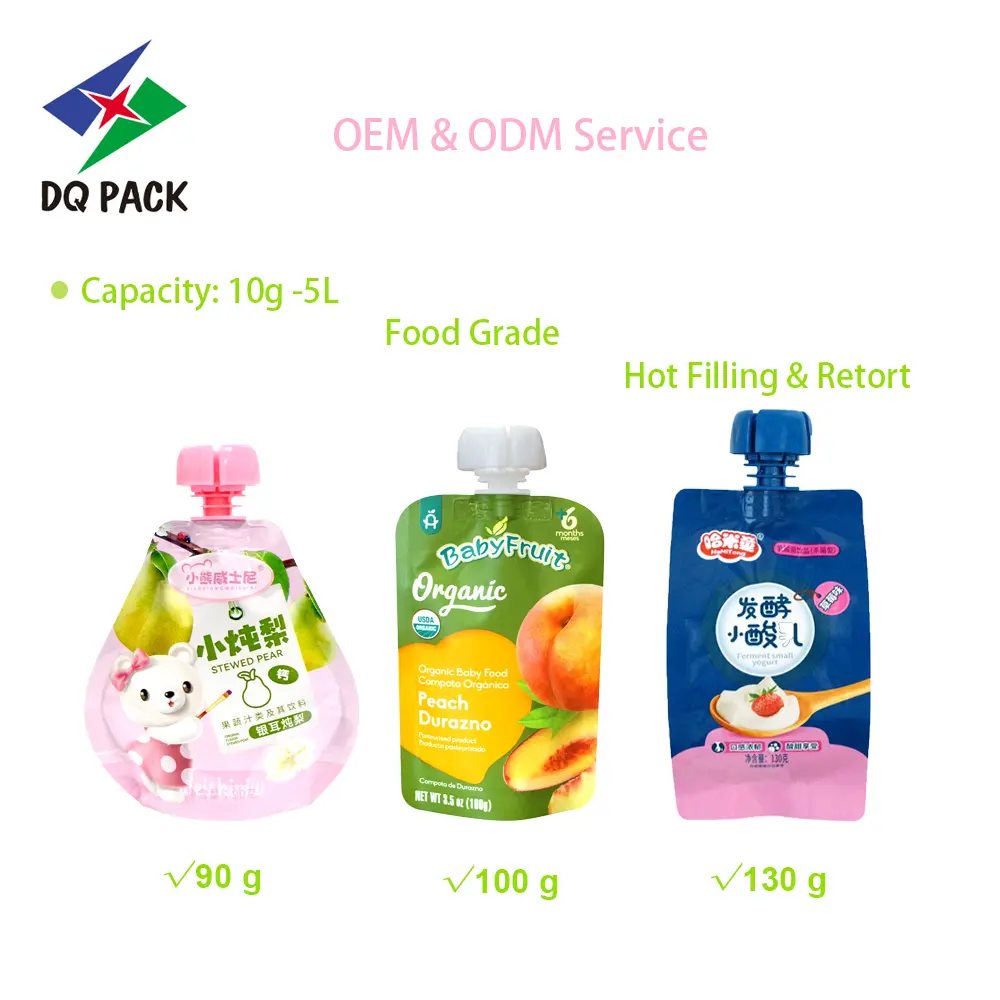
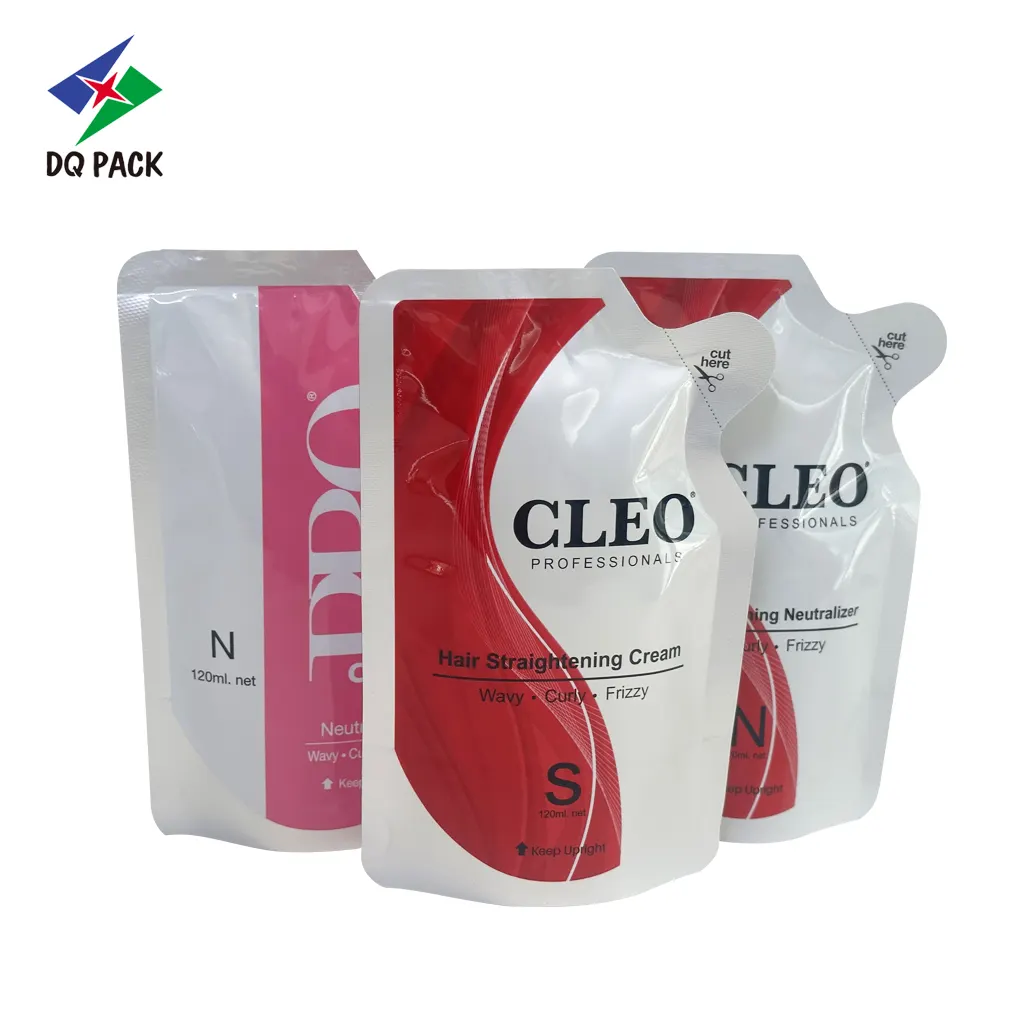
Spout pouches are designed for liquid and semi-liquid products. Their spouts and caps provide controlled pouring and dispensing.
代表的な用途としては、次のようなものがあります:
- Fruit juice and beverages
- Baby food and fruit puree
- Yogurt and drinkable dairy products
- Sauces and condiments
- Shampoo and liquid detergents
Spout diameter, position, cap design, and filling method must be confirmed before production.
Flat Bottom Pouches
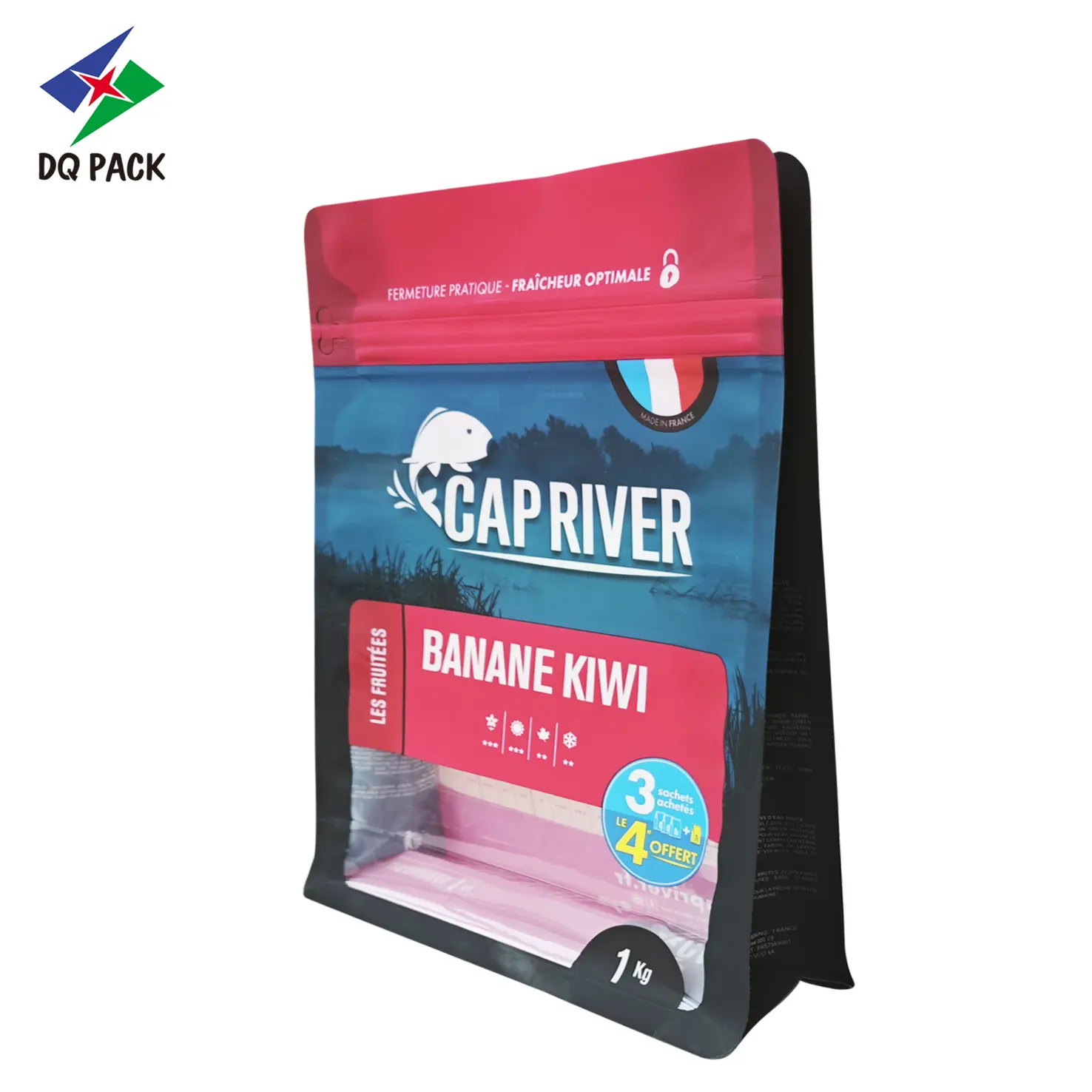
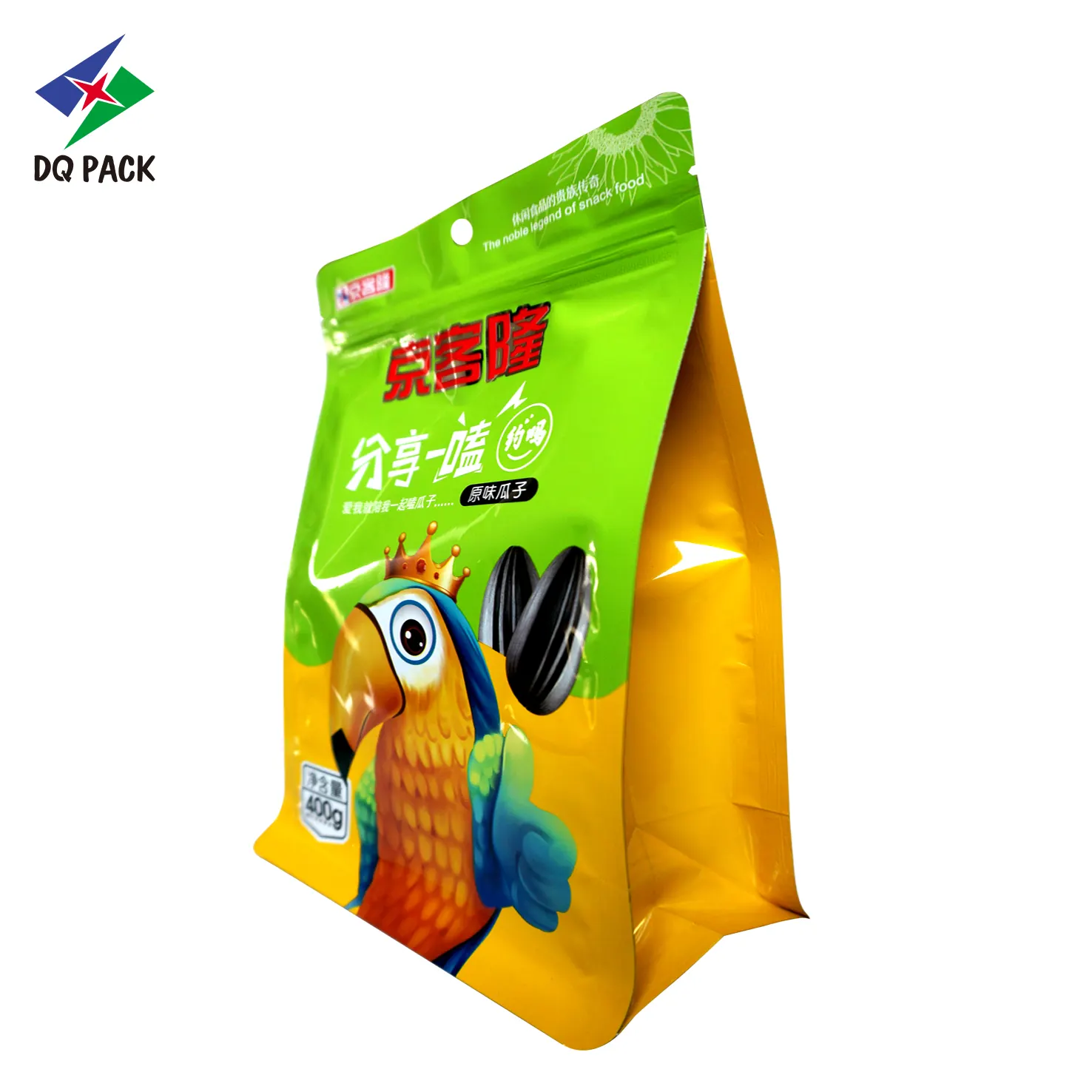
Flat bottom pouches provide a stable base and multiple printable panels, making them suitable for products requiring strong shelf presentation.
Common applications include coffee, pet food, snacks, and powdered products.
Three-Side-Seal Pouches
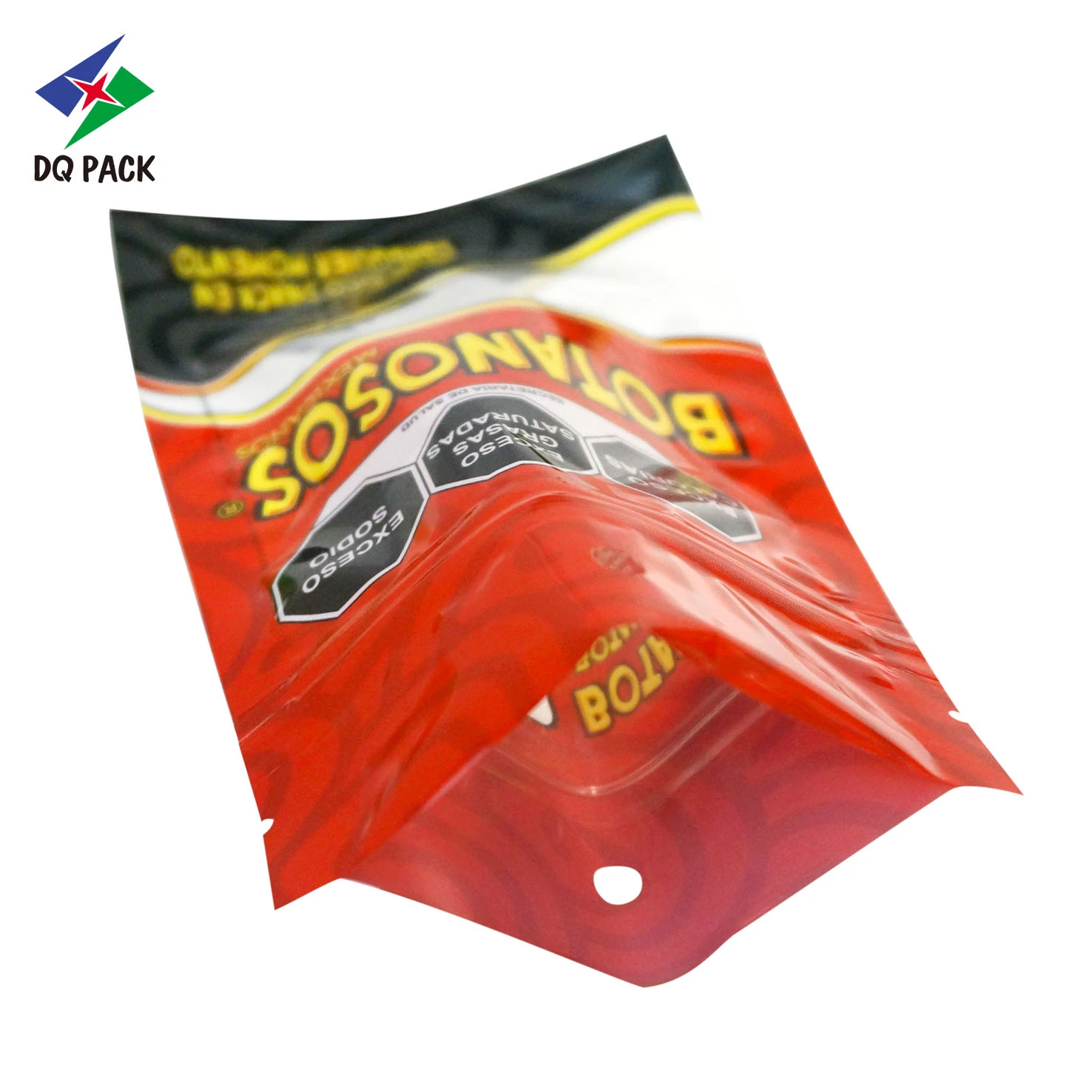
Three-side-seal pouches have three sealed edges and one open edge for filling. They are widely used for single-serving products, powders, sauces, samples, and small food portions.
Their compact design supports efficient packaging and distribution.
Retort Pouches
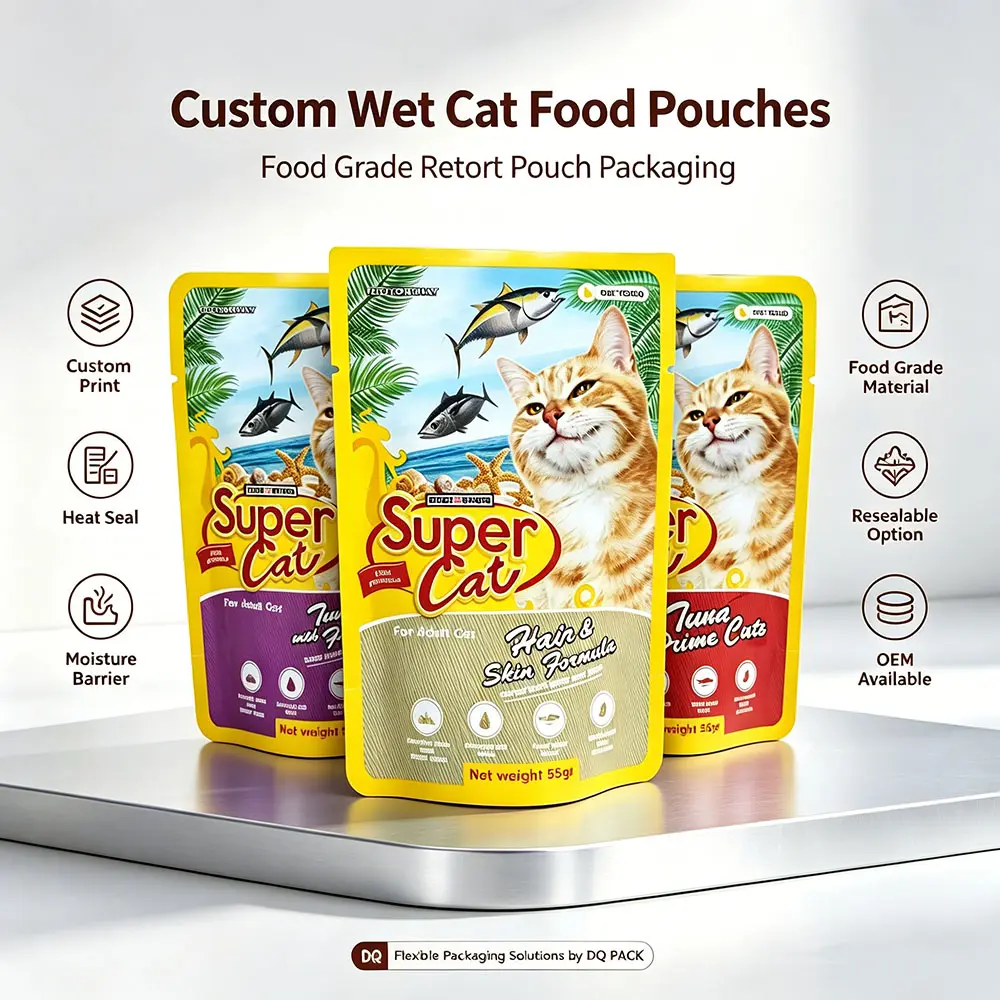
Retort pouches are designed for products undergoing high-temperature sterilization. They are commonly used for wet pet food, ready-to-eat meals, meat products, and sauces.
For example, wet cat food processed at 121°C for 15 minutes requires a retort-grade material structure and seals capable of withstanding the specified sterilization conditions.
Material selection, pouch construction, and sterilization validation are essential to prevent delamination, seal failure, and leakage.
Packaging Roll Film
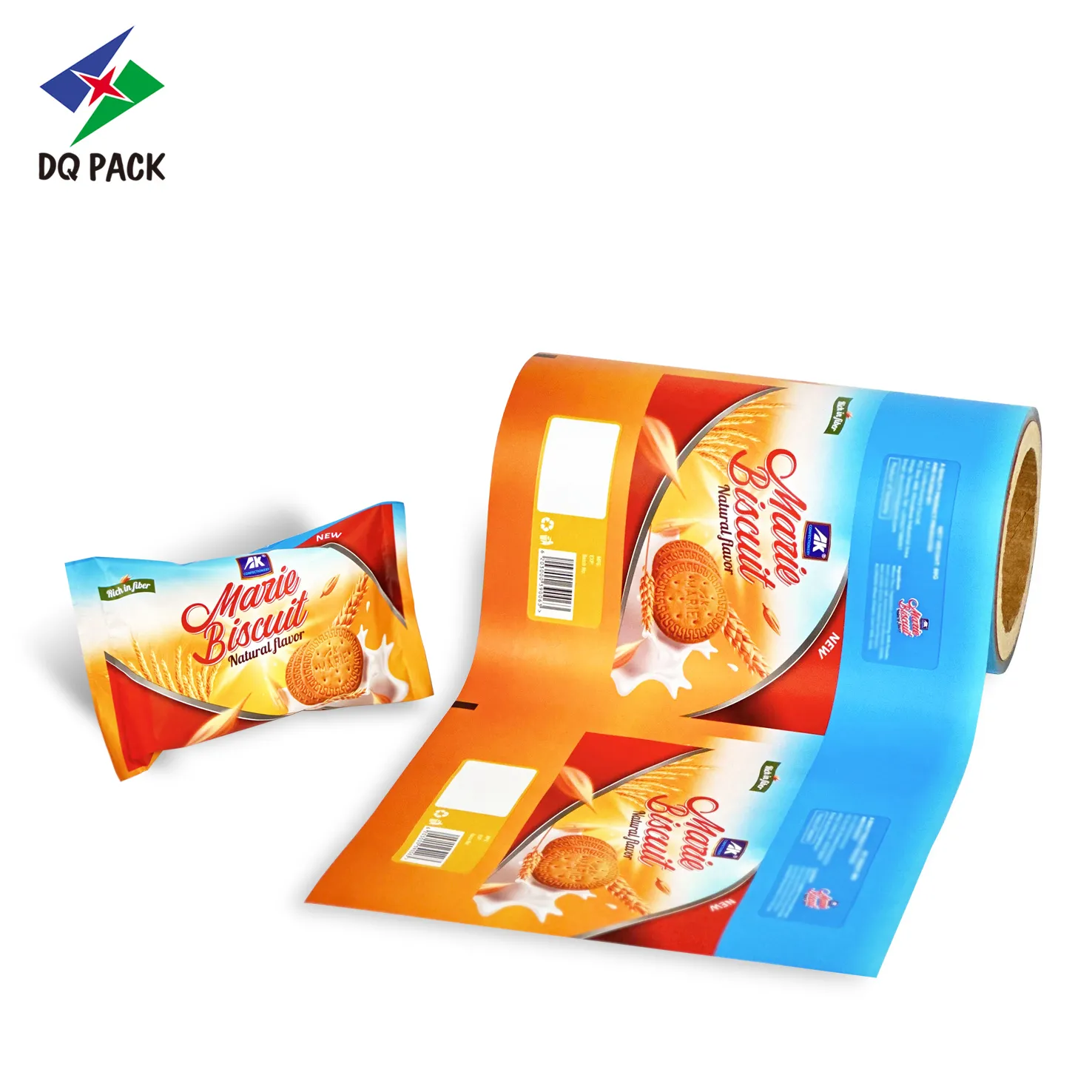
Roll film is supplied in continuous rolls for automatic packaging machines. It is commonly used for snacks, biscuits, tea, powders, and other high-volume products.
Before ordering, confirm film width, roll diameter, machine type, sealing method, material structure, and running speed.
4. Consider Packaging Functions and Features
Functional features improve product protection, filling efficiency, and consumer convenience. Choose options according to actual product requirements.
Closures and Functional Accessories
| 特徴 | Main Function | Common Applications |
|---|---|---|
| Zippers | Reopening and resealing | Snacks, nuts, pet food |
| Spouts and caps | 定量吐出 | Beverages, sauces |
| Handles | Easier carrying | Large-capacity packages |
| Tear notches | Convenient opening | Single-serving products |
| 角が丸い | Improved handling | Consumer-facing pouches |
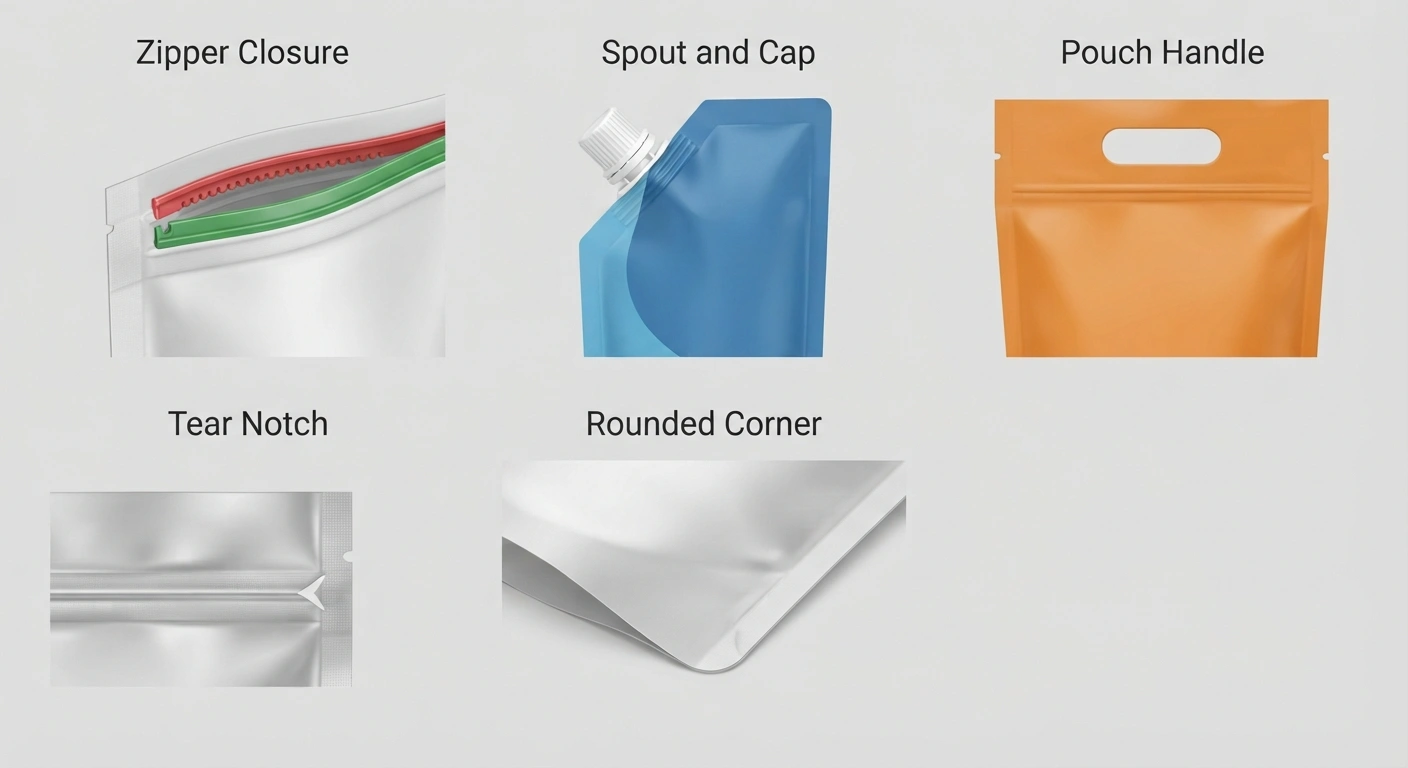
For liquid packaging, the spout, cap, pouch material, and sealing process must be evaluated together.
Heat Sealing and Leak Resistance
Heat-sealing performance directly affects package integrity. The sealing layer, temperature, pressure, and dwell time determine seal quality.
Manufacturers should evaluate seal strength and conduct appropriate leakage tests. Powder packaging also requires attention to seal contamination and channel leaks.
Printing and Surface Finishes
Custom printed flexible packaging supports brand recognition and product differentiation.
一般的なオプションには次のようなものがあります:
- Glossy finish: Creates a reflective appearance.
- Matte finish: Provides a non-reflective, refined appearance.
- カスタム印刷: Displays brand graphics, product information, and regulatory labeling.
Artwork, color requirements, printing methods, and cylinder or plate specifications should be confirmed before mass production.
Compatibility with Filling Machines
A suitable packaging design must also work with the customer’s filling equipment.
For premade pouches, confirm pouch dimensions, opening width, spout position, and filling method. For roll film, confirm machine specifications, film feeding direction, sealing conditions, and running speed.
Packaging samples should be tested on the actual filling line whenever possible.
5. Evaluate Customization and Manufacturing Requirements
Choosing the right flexible packaging also requires confirming the technical details needed for custom manufacturing.
Confirm Packaging Dimensions and Capacity
Provide the following specifications:
- Finished pouch width and height.
- Bottom or side gusset dimensions.
- Target filling capacity or product weight.
- Spout diameter and position, if applicable.
- Zipper, handle, and other accessory requirements.
Capacity should be verified using the actual product because different products have different densities and filling characteristics.
Prepare Information for a Packaging Quotation
A フレキシブル包装の専門メーカー needs the following information to prepare an accurate quotation:
- Product name and physical form.
- Target packaging capacity.
- Preferred pouch style.
- Required material or barrier properties.
- Printing artwork and number of colors.
- Filling and sealing method.
- Estimated order quantity.
If the material structure has not been determined, provide product samples, application details, and shelf-life requirements. The manufacturer can then recommend suitable structures for evaluation.
Check Food Contact Compliance and Quality Testing
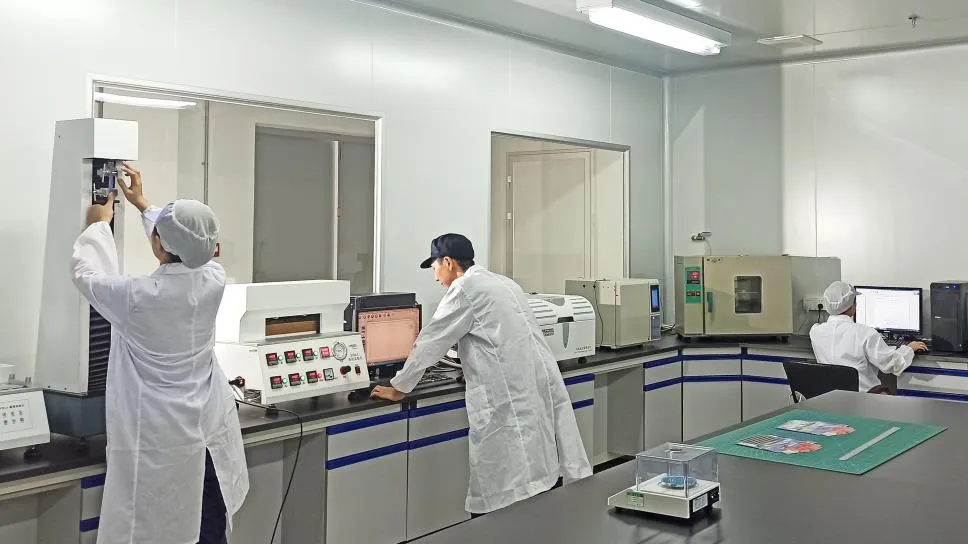
For food packaging, buyers must verify that the materials and finished packaging comply with the regulations applicable to their destination markets and intended use.
Relevant references include:
- U.S. FDA – 21 CFR Part 177: Requirements for certain polymers used in food-contact applications.
- European Commission Regulation (EU) No 10/2011: Specific requirements for plastic materials and articles intended to come into contact with food.
Quality control should cover:
- 入荷品の検査。.
- Printing and color inspection.
- Lamination quality checks.
- Pouch dimensions and sealing inspection.
- Seal strength and leakage testing.
- Application-specific performance testing.
Retort packaging also requires validation under the specified sterilization conditions.
Consider MOQ, Lead Time, and Bulk Orders
Minimum order quantity (MOQ) depends on pouch style, material structure, printing method, and production setup.
For custom printed flexible packaging, buyers should also consider cylinder or plate costs, sampling time, production scheduling, and shipping arrangements.
で DQパック, the typical factory production lead time is approximately 20–25 days, depending on product specifications, order quantity, and production scheduling. Confirm the actual schedule before placing an order.
6. How to Choose a Reliable Flexible Packaging Manufacturer
Selecting the right supplier is as important as choosing the packaging structure. A reliable manufacturer should provide technical support, sampling, production management, and quality control.
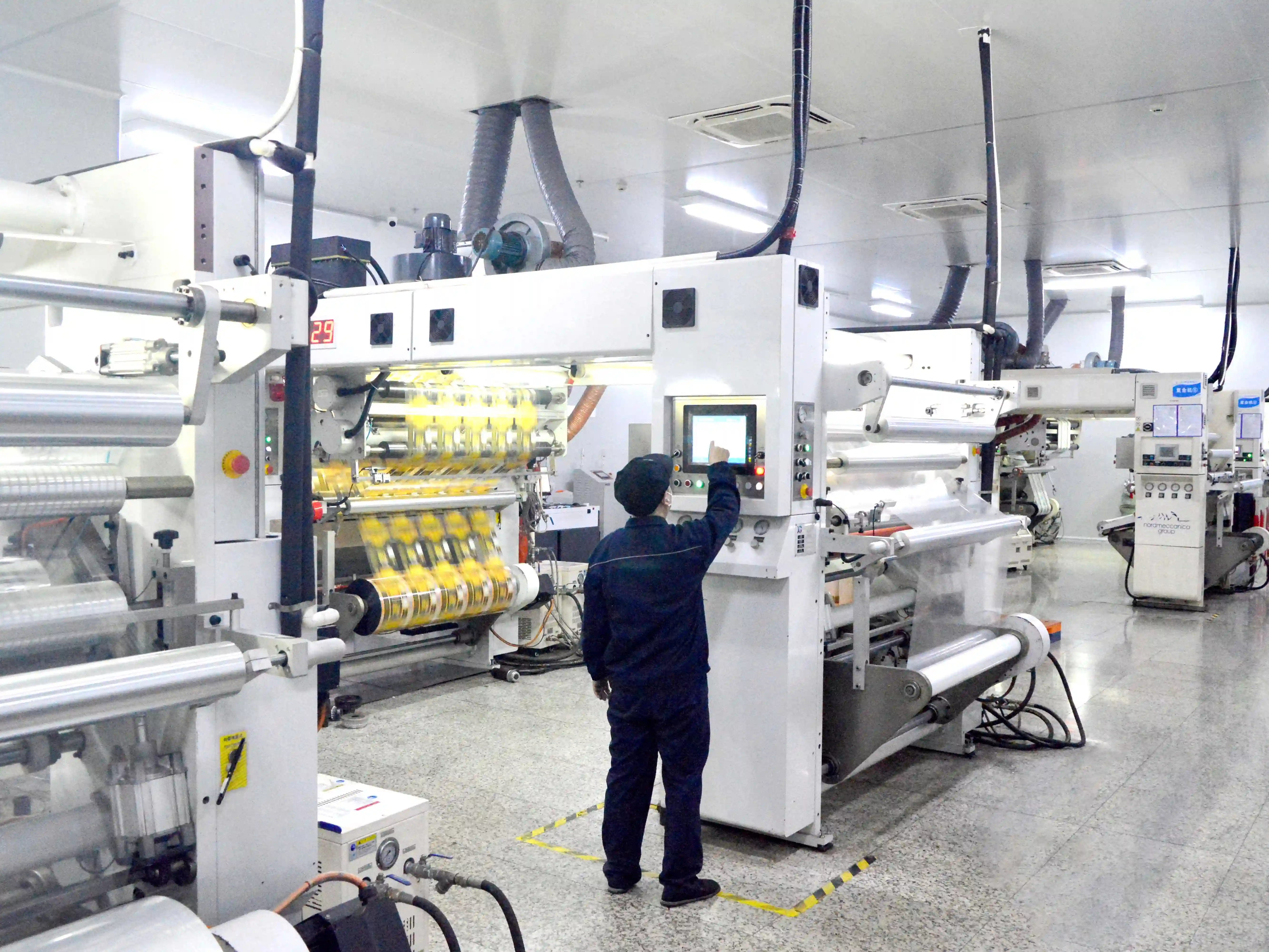
Check Manufacturing Capabilities
Evaluate whether the supplier has the equipment and experience required for your packaging project.
Important capabilities include:
- Gravure printing and other suitable printing processes.
- Lamination and curing equipment.
- Pouch-making production lines.
- Roll film converting.
- Spout and cap integration.
- Suitable production environments.
A manufacturer with integrated production processes can coordinate printing, lamination, slitting, and pouch making more efficiently.
Evaluate Material Expertise and Quality Control
Ask how the supplier selects material structures for different products and which tests are performed during manufacturing.
A retort pouch manufacturer must understand high-temperature sterilization requirements, while a liquid packaging supplier must verify spout sealing and leakage performance.
Request Samples and Verify Production Consistency
Before bulk production, review samples for:
- Packaging dimensions and appearance.
- 印刷品質と色の一貫性。.
- Material structure and thickness.
- シール性能。.
- Compatibility with filling equipment.
Whenever possible, test samples using your actual product and filling line. Confirm that mass-produced packaging matches the approved sample.
Review Production Capacity and OEM/ODM Services
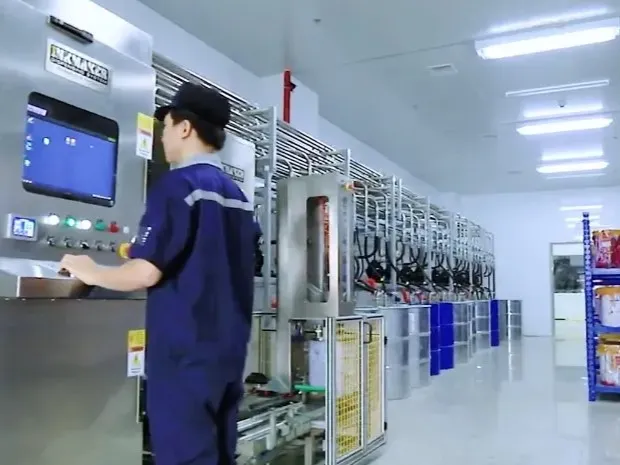
For long-term B2B cooperation, evaluate production capacity, customization support, communication, order management, and delivery performance.
A qualified manufacturer should support material selection, structural recommendations, packaging design, printing, lamination, and finished pouch production.
なぜ選ぶのか DQパック for Custom Flexible Packaging?
DQパック has specialized in custom flexible packaging and printing solutions since 1991, bringing more than 30 years of manufacturing and export experience to international B2B customers.
Our manufacturing capabilities include:
| Factory Capability | Production Resources |
|---|---|
| Factory area | 30,000 m² |
| Cleanroom | Class 300,000 cleanroom |
| 印刷 | 6 automated packaging printing lines |
| Lamination | 高速無溶剤ラミネーションライン6本 |
| スリット | 先進のスリッター7台 |
| Pouch making | 20 production lines |
| Workforce | More than 200 skilled employees |
Our production system follows the ISO 9001-2018 standard specified in our company profile. DQパック serves customers in more than 140 countries and regions, with its registered trademark, DQ PACK CN, established in domestic and international markets.
Our product range includes stand-up pouches, spout pouches, flat bottom pouches, retort pouches, zipper pouches, and packaging roll film.
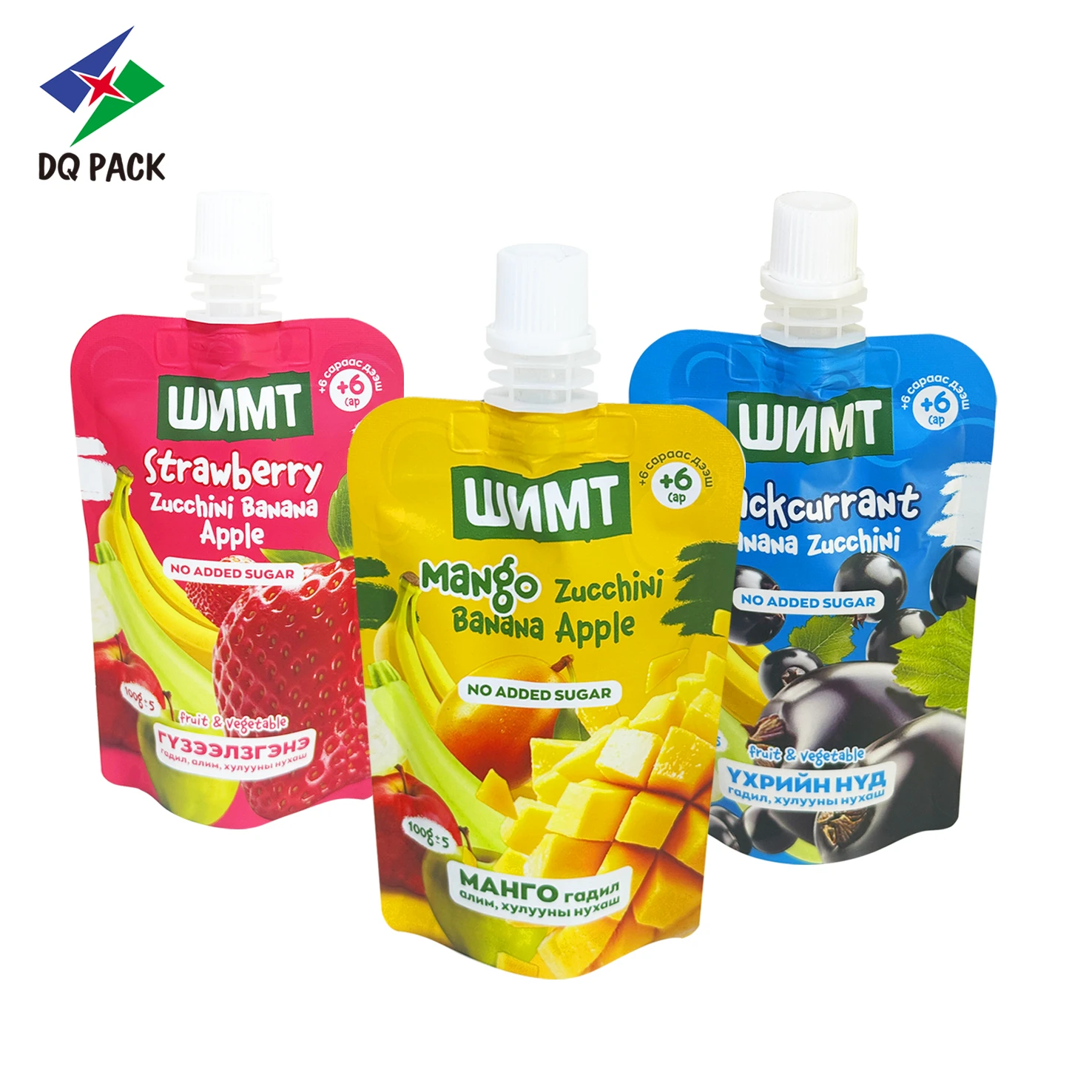
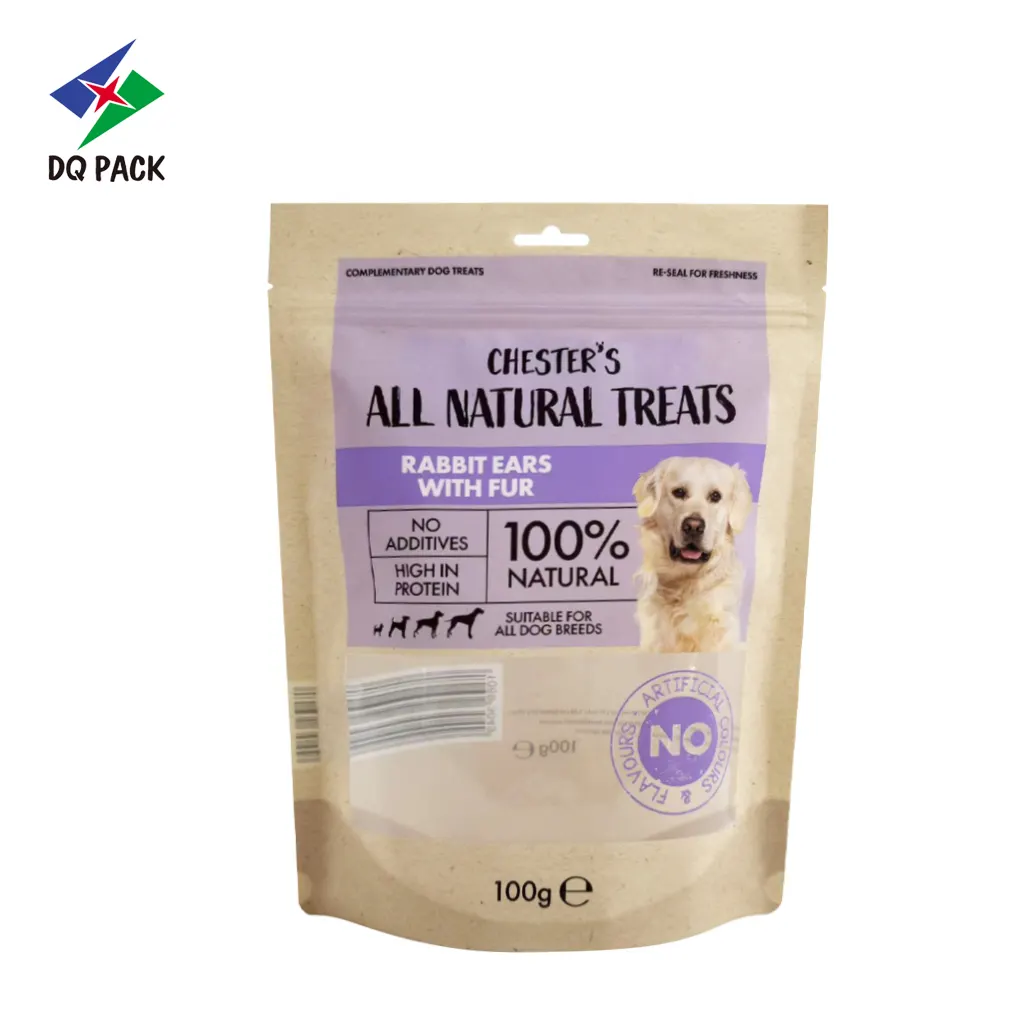
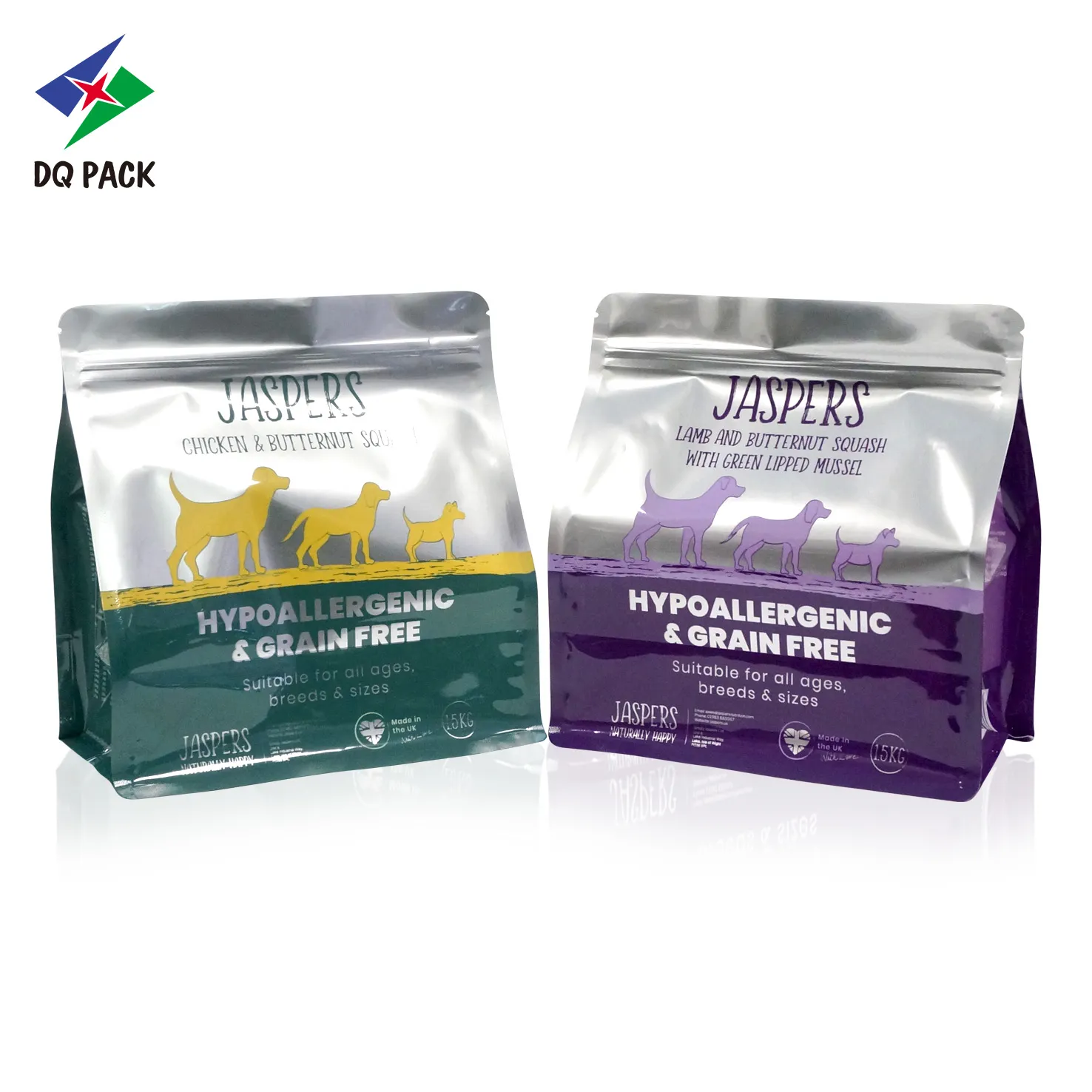
We provide OEM/ODM services covering material selection, pouch design, custom printing, lamination, and bag making. From initial packaging concepts to bulk manufacturing, our team supports buyers in developing packaging solutions that match product requirements and production conditions.
Frequently Asked Questions About Flexible Packaging
1. How Do I Choose the Right Flexible Packaging for My Product?
To choose the right flexible packaging, start by identifying the product type, shelf-life target, and exposure to moisture, oxygen, light, and temperature. Then select a suitable material structure, pouch style, and sealing method. Test the packaging with your actual product before bulk production.
2. What Is the Best Flexible Packaging Material for Food?
PET, PE, BOPP, VMPET, aluminum foil, and nylon are commonly used in food packaging. Selecting the right flexible packaging combination depends on barrier requirements, food-contact compliance, filling conditions, and shelf-life expectations.
3. Which Pouch Type Is Best for Liquid Products?
Spout pouches are suitable for juice, yogurt, puree, sauces, and liquid detergents. Their material structures, spout dimensions, caps, and seals must match the product and filling process.
4. Can Flexible Packaging Be Fully Customized?
Yes. Manufacturers can customize material structures, pouch dimensions, capacity, printing, surface finishes, closures, spouts, and functional features according to project requirements and production capabilities.
5. What Information Is Needed to Get a Flexible Packaging Quote?
Provide the product type, target capacity, pouch style, dimensions, material requirements, printing artwork, filling method, and estimated order quantity. Product samples and application details also help manufacturers recommend the right flexible packaging solutions.
6. How Long Does Custom Flexible Packaging Production Take?
Production time depends on material availability, printing preparation, pouch structure, order quantity, and factory scheduling. At DQ PACK, typical production lead time is approximately 20–25 days, subject to order specifications and confirmation.
結論
Choosing the right flexible packaging requires a complete evaluation of product protection, material structure, pouch design, functional features, and manufacturing quality. B2B buyers should confirm packaging performance through samples and filling trials before committing to bulk orders.
として オーダーメイドのフレキシブル包装および印刷ソリューションのメーカー with more than 30 years of experience, DQパック provides integrated OEM/ODM services, advanced production equipment, and customized packaging solutions for international customers.
連絡先 DQパック today to discuss your packaging project and request a customized quotation.