

Custom printed food packaging pouches do more than contain food products. They protect contents from moisture, oxygen, light, and external contamination, provide essential product information, and strengthen brand recognition in competitive retail markets.
For food brands, importers, wholesalers, and distributors, selecting the right packaging requires balancing material performance, pouch structure, printing quality, functionality, and production costs.
As a custom flexible packaging and printing solutions manufacturer, DQ PACK provides integrated printing, lamination, pouch converting, and OEM/ODM services for food brands, importers, wholesalers, and distributors worldwide.
This guide explores popular pouch styles, material structures, customization options, and wholesale purchasing considerations to help buyers make informed packaging decisions.
What Are Custom Printed Food Packaging Pouches?
Custom printed food packaging pouches are flexible packages manufactured using laminated plastic films, aluminum foil, or other suitable packaging materials. They feature customized logos, graphics, product information, colors, and brand designs.
Unlike standard stock packaging, custom printed food packaging pouches are manufactured according to specific product requirements, packaging dimensions, filling processes, and branding preferences.
They offer three main benefits:
- Product protection: Selected laminated structures provide barriers against moisture, oxygen, light, and external contamination.
- Brand presentation: High-quality printing, colors, and surface finishes improve shelf appeal and brand recognition.
- Packaging flexibility: Buyers can customize pouch dimensions, opening methods, closures, and material combinations.
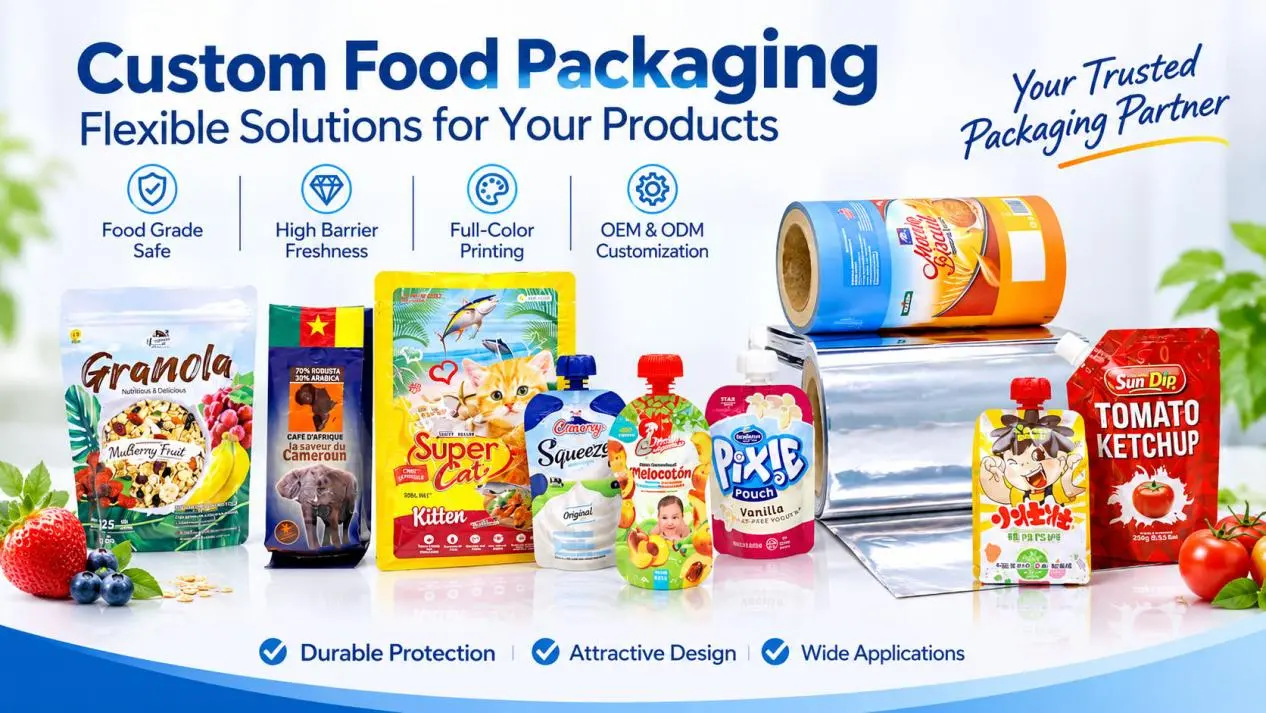
These advantages make flexible pouches suitable for snacks, coffee, dried fruit, frozen food, sauces, beverages, pet food, and other packaged products.

Popular Types of Food Packaging Pouches
Different food products require different packaging structures. The right choice depends on product weight, physical characteristics, shelf-life requirements, filling methods, and retail presentation.
1. Stand-Up Pouches
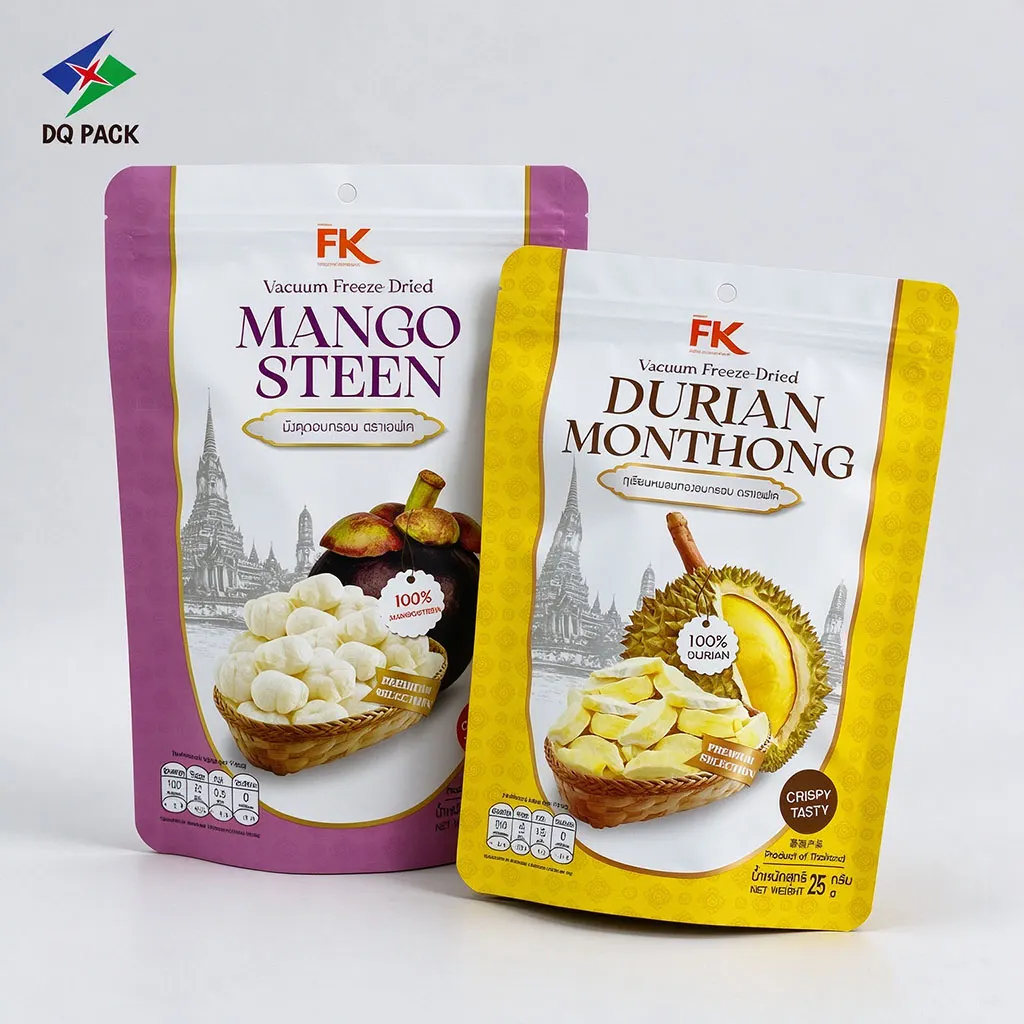
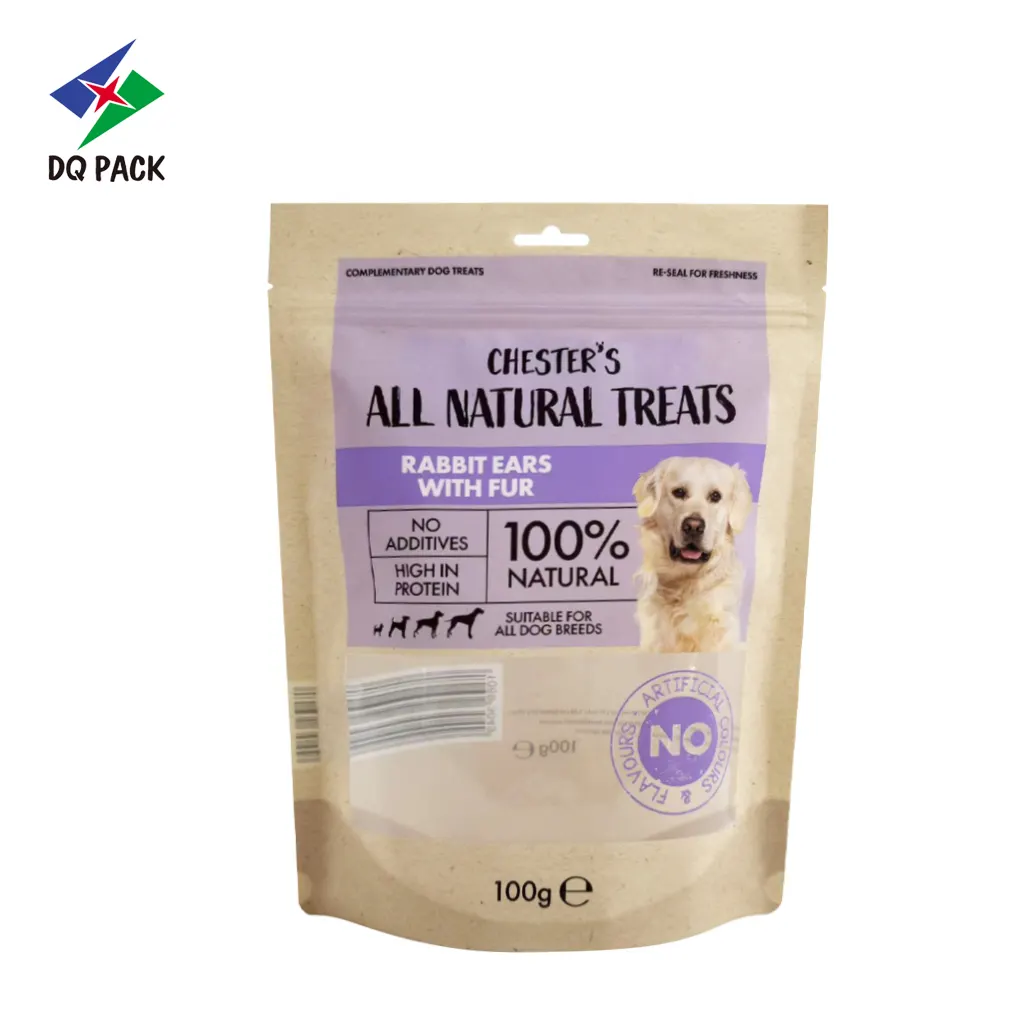
Stand-up pouches feature a bottom gusset that allows the package to remain upright when filled. They offer excellent shelf-display performance and flexible customization options.
Common applications include nuts, dried fruit, snacks, coffee, pet treats, and powdered foods.
Available features include:
- Zipper closures for repeated opening and resealing.
- Tear notches for convenient opening.
- Transparent windows for product visibility.
- Matte or glossy finishes.
- Customized dimensions and bottom gussets.
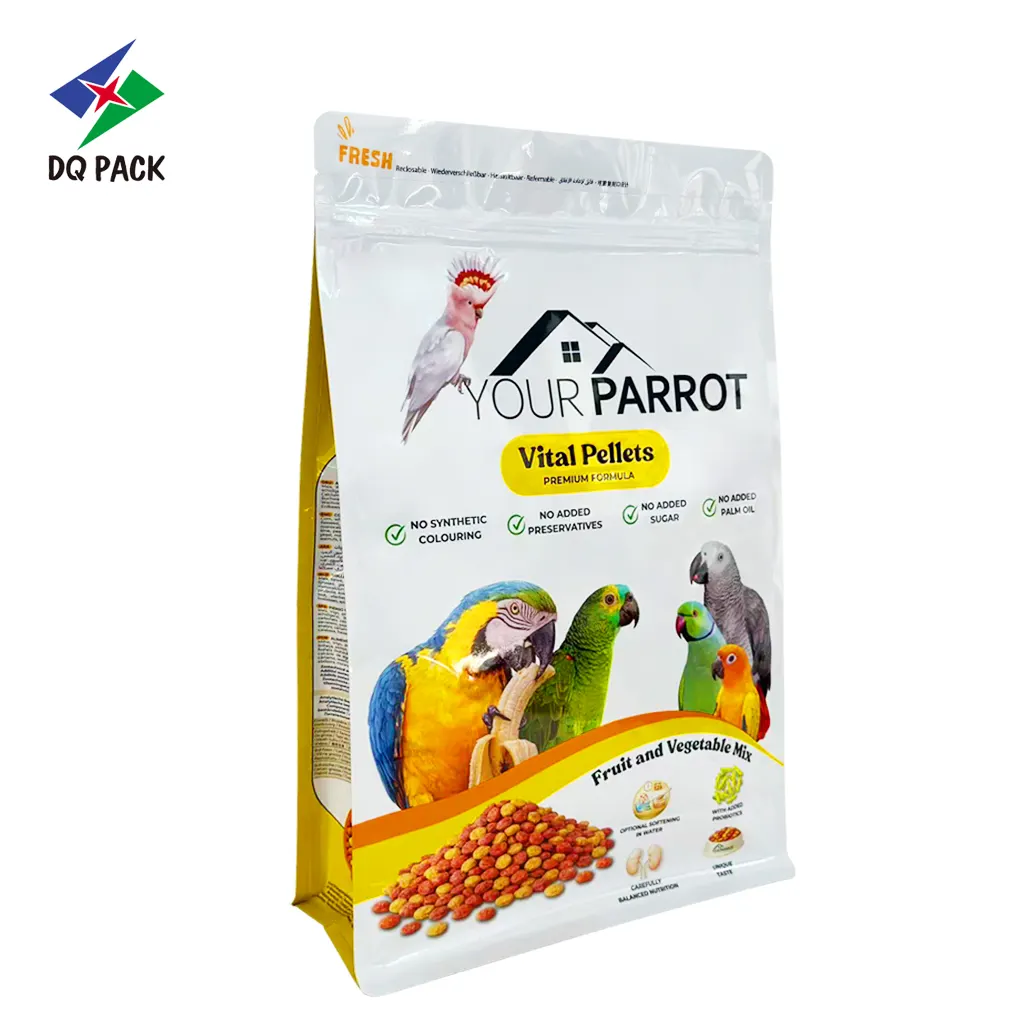
2. Flat Bottom Bags
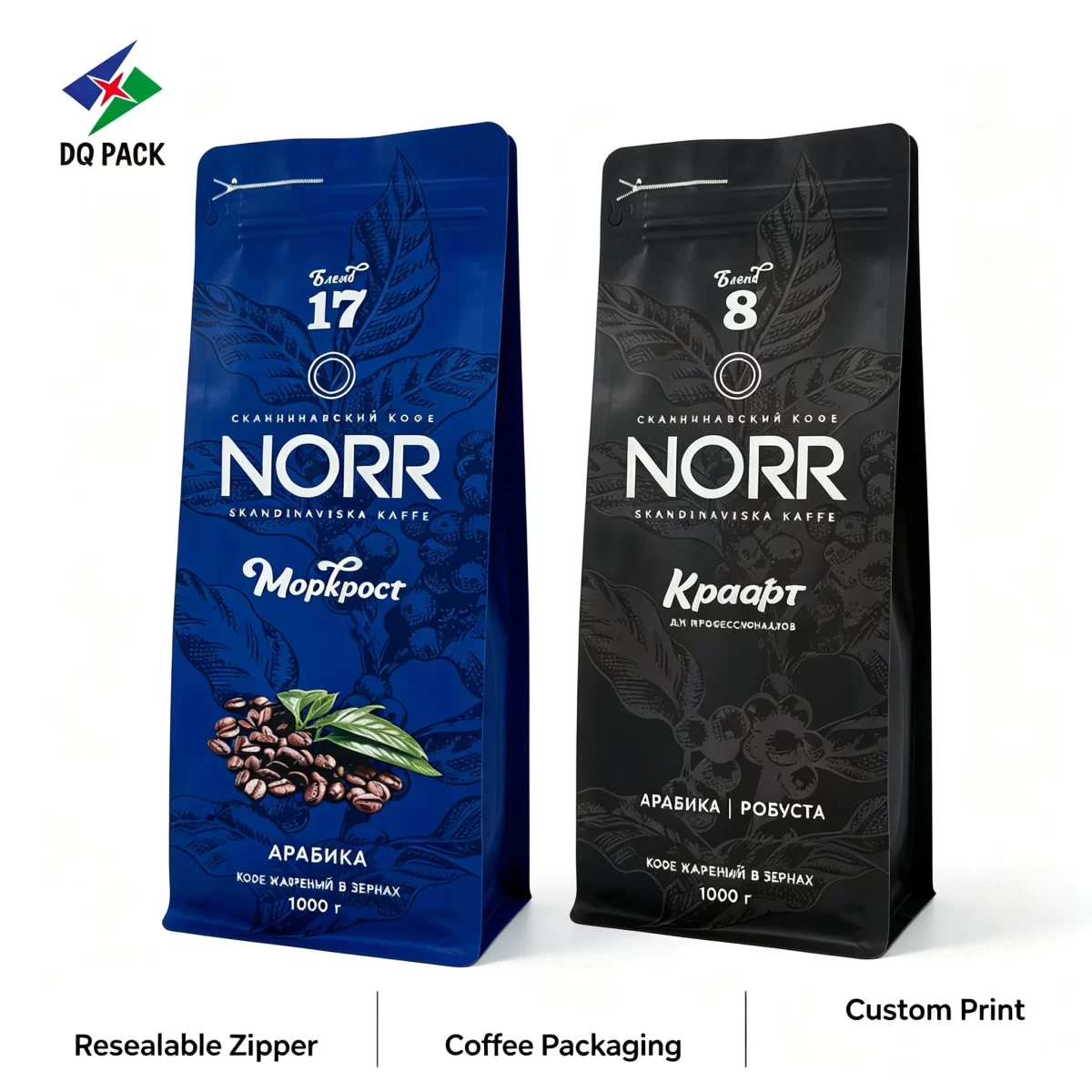
Flat bottom bags, also called box pouches, feature a rectangular base and multiple sealed panels. Their stable structure provides an attractive retail appearance and additional printable surfaces.
They are commonly used for coffee beans, ground coffee, premium snacks, nuts, and pet food.
Key advantages include a stable shelf-standing base, multiple branding panels, and optional zippers, valves, and tear notches.
3. Three Side Seal Bags
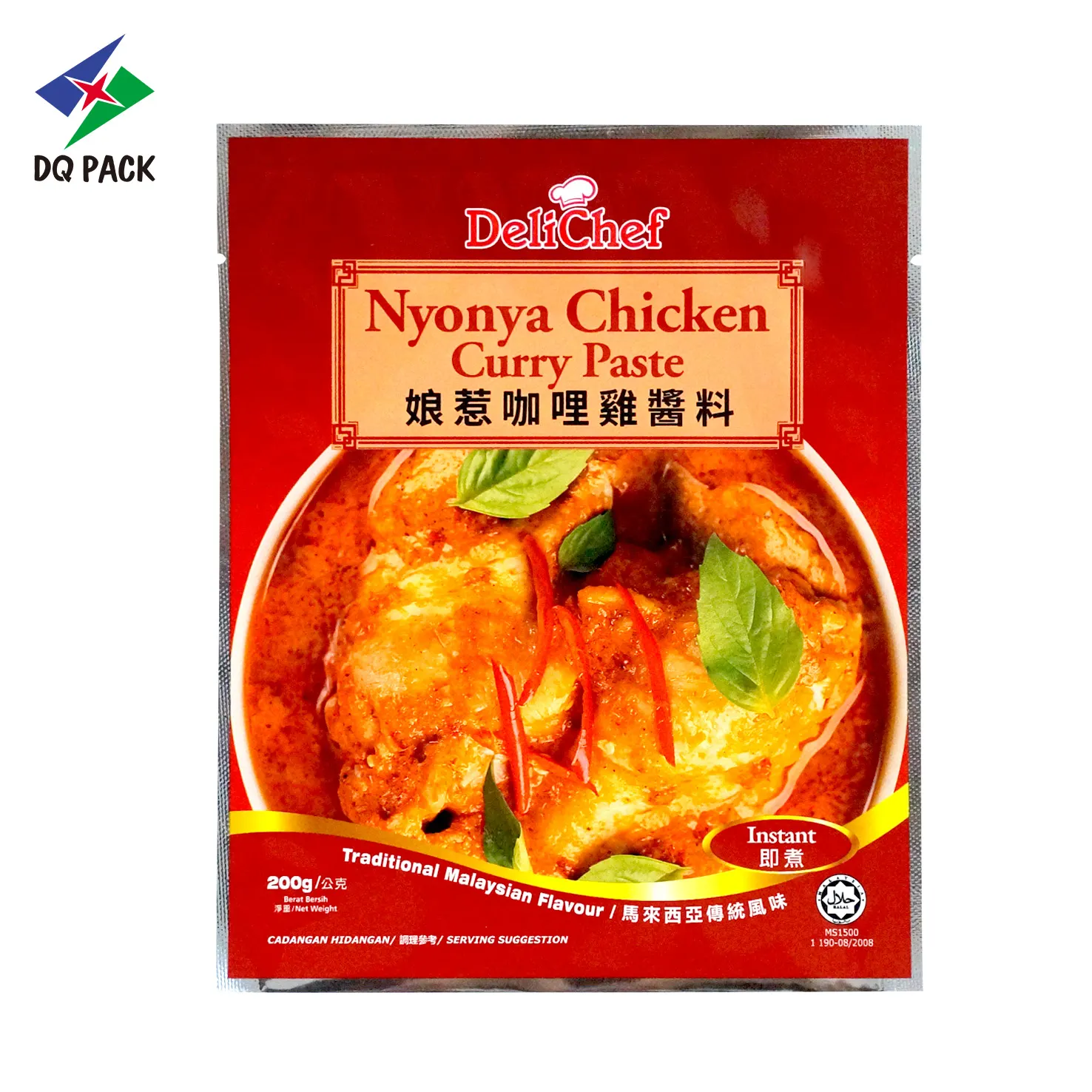
Three-side seal bags have three sealed edges and one open side for filling. Their simple construction makes them suitable for single-serving and small-format packaging.
Typical applications include seasonings, sauces, powdered foods, dried snacks, frozen foods, and sample packs.
Buyers can select different sizes, transparent films, and high-barrier laminated structures according to storage and sealing requirements.
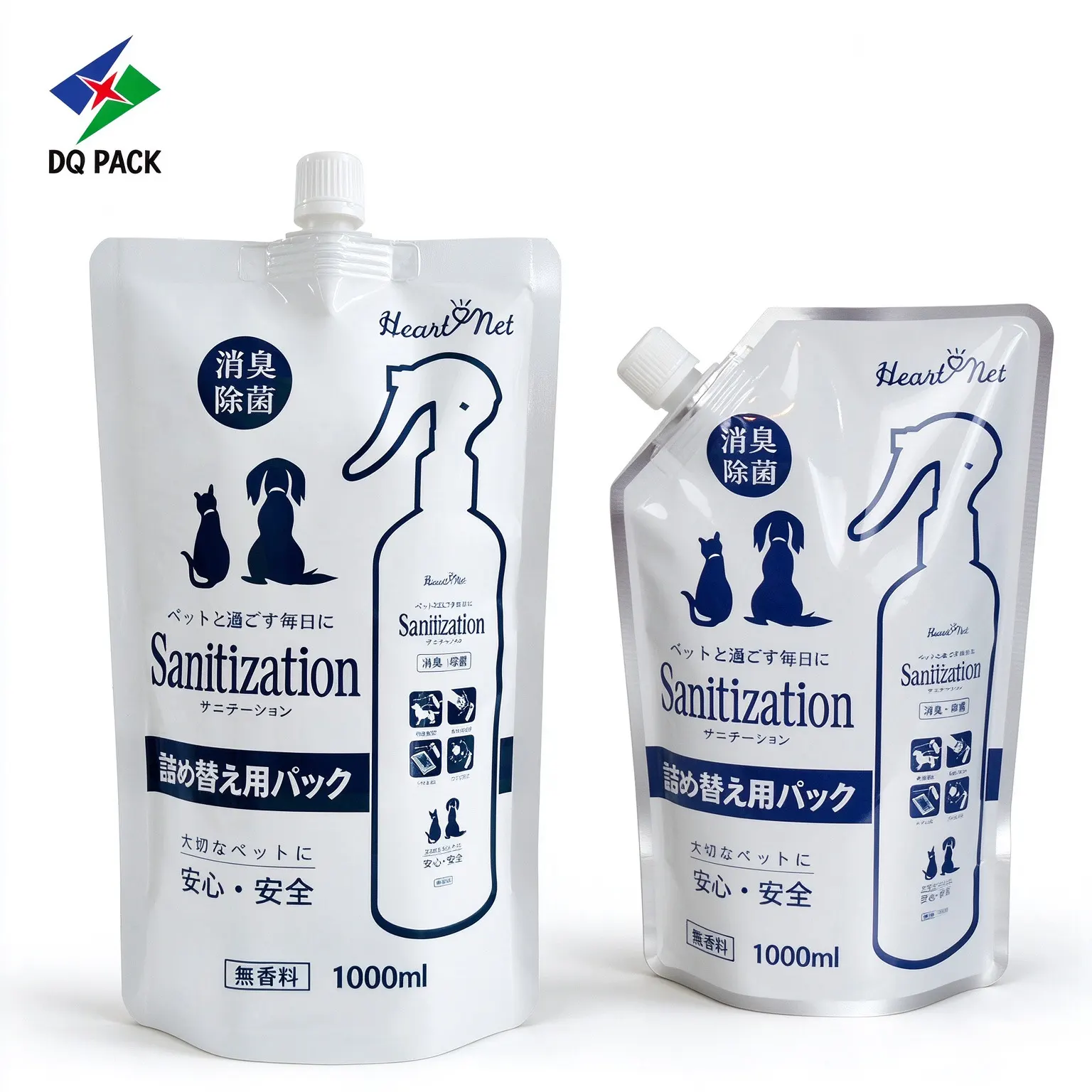
4. Spout Pouches

Spout pouches feature a dispensing fitment and cap for pouring or squeezing liquid and semi-liquid products.
They are widely used for fruit puree, juice, yogurt, sauces, liquid baby food, and other squeezable products.
Customization options include spout position, opening size, cap design, pouch capacity, printed artwork, and material structure.
Before production, buyers should confirm product viscosity, filling temperature, fitment compatibility, and sealing requirements.
5. Roll Stock Packaging Film
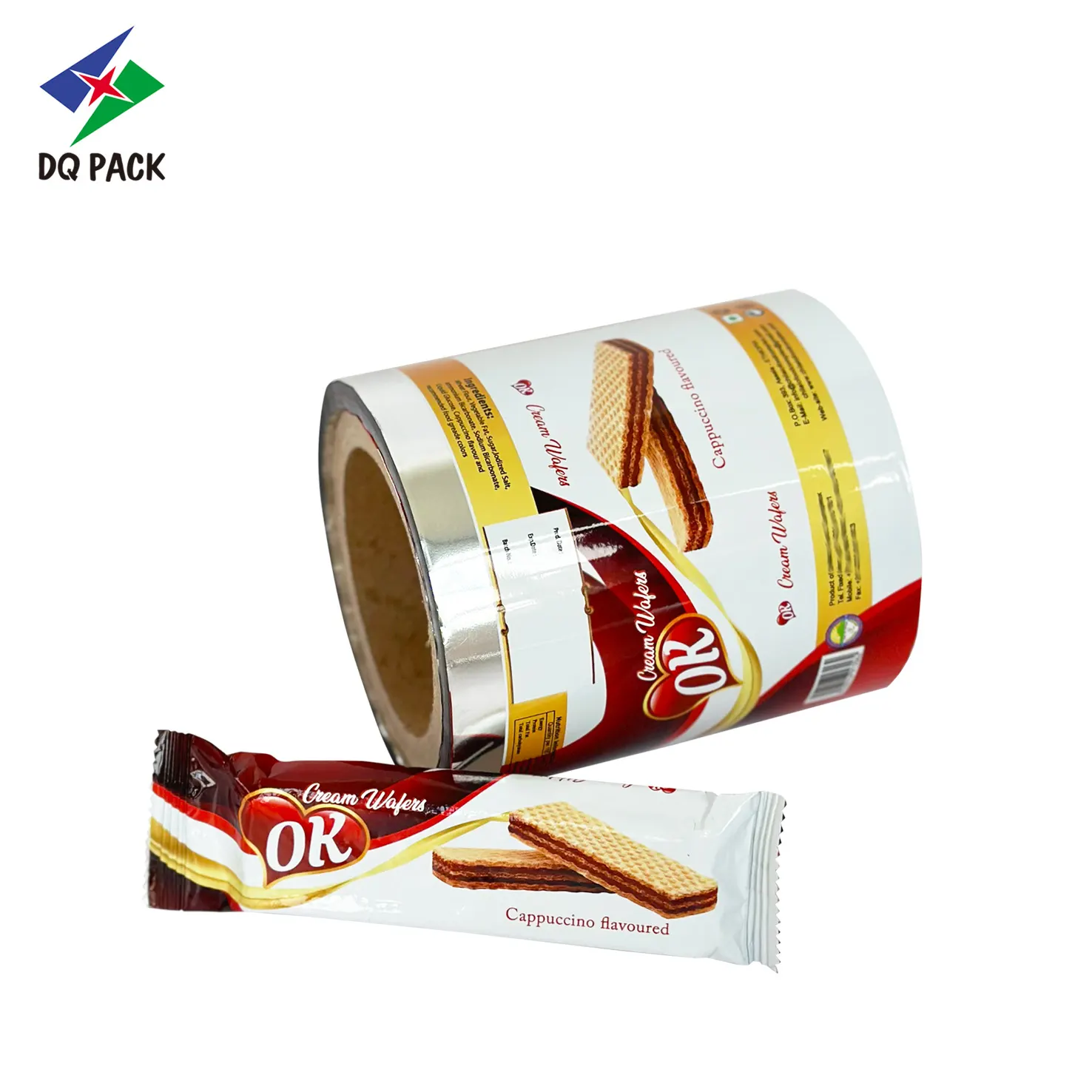
Roll stock is flexible packaging film supplied in rolls for automatic filling and sealing machines. Unlike finished pouches, it is formed into packages during the customer’s production process.
Typical applications include snack packs, tea bags, powder sachets, and frozen food.
Important specifications include film width, roll diameter, sealing properties, printing direction, material structure, and machine compatibility.
How to Choose Materials for Food Packaging Pouches
Material selection directly affects barrier performance, package durability, sealing quality, shelf life, and production costs.
Custom printed food packaging pouches commonly use laminated structures that combine different materials to achieve specific packaging functions.
Common Food Packaging Material Structures
| Material Structure | Main Characteristics | Typical Applications |
|---|---|---|
| PET/PE | Printable outer layer and heat-sealing inner layer | Dry food, snacks, powders |
| PET/VMPET/PE | Improved moisture, oxygen, and light barrier | Coffee, nuts, chips, dried fruit |
| PET/AL/PE | Strong barrier against light, moisture, and oxygen | Sensitive food, powdered products |
| Mono-material PE | Designed for selected PE-based recycling systems | Applications compatible with PE structures |
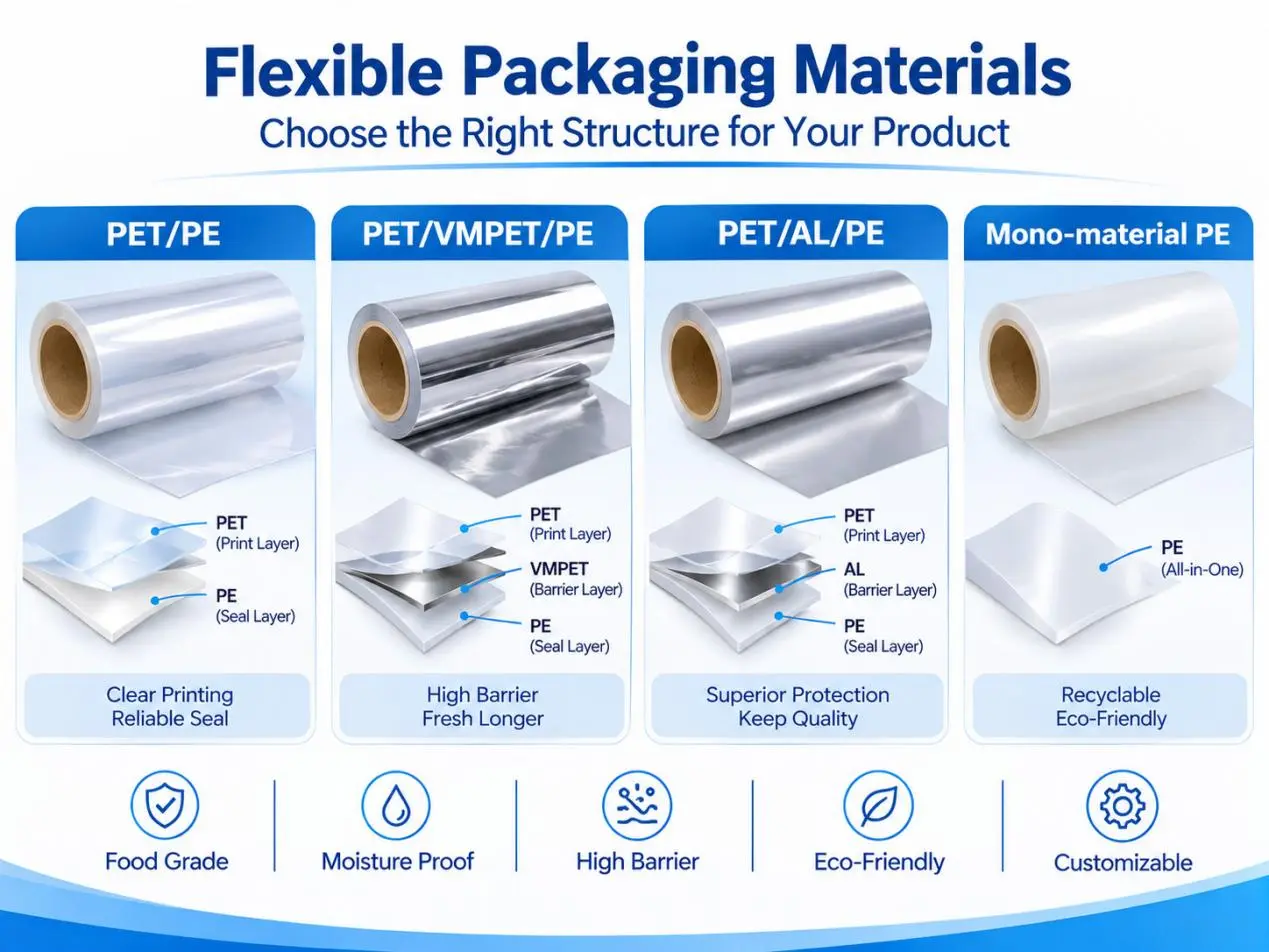
PET/PE for General Food Packaging
PET provides a printable outer surface with good stiffness and dimensional stability, while PE serves as the inner heat-sealing layer.
This structure is suitable for general dry food, snacks, and powdered products that do not require exceptionally high oxygen or light barriers.
PET/VMPET/PE for Enhanced Barrier Protection
This structure combines PET, metallized PET, and PE. The VMPET layer improves protection against moisture, oxygen, and light compared with many basic transparent structures.
It is commonly used for coffee, nuts, chips, dried fruit, and other products sensitive to environmental exposure.
PET/AL/PE for High-Barrier Applications
PET/AL/PE incorporates an aluminum foil layer that provides strong protection against light, moisture, and oxygen when properly converted and sealed.
It is suitable for coffee, powdered foods, and other products requiring high-barrier packaging.
However, aluminum foil increases material costs and affects recyclability. Buyers should select it according to actual product protection requirements.
Recyclable Mono-Material PE Packaging
Mono-material PE packaging is designed around a single polymer family to support compatibility with selected recycling systems.
Compared with conventional multi-material laminates, it can simplify material separation. However, recyclability depends on the complete packaging design and local collection, sorting, and recycling infrastructure.
Mono-material structures are not universal replacements for foil-based or metallized packaging. Barrier performance, sealing strength, and shelf-life requirements must be evaluated before switching materials.
Customization Options for Printed Food Packaging Pouches
Customization allows food brands to develop packaging that combines product protection, functionality, and consistent brand presentation.
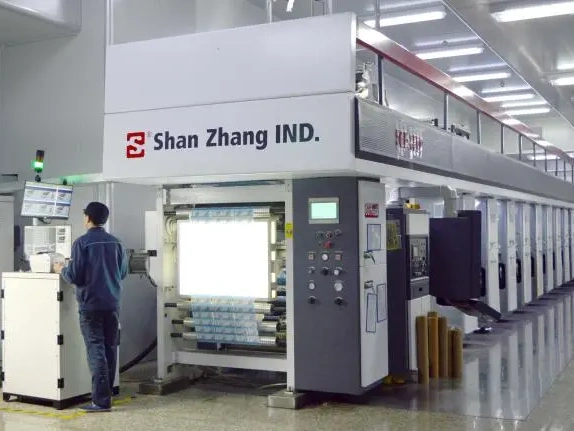
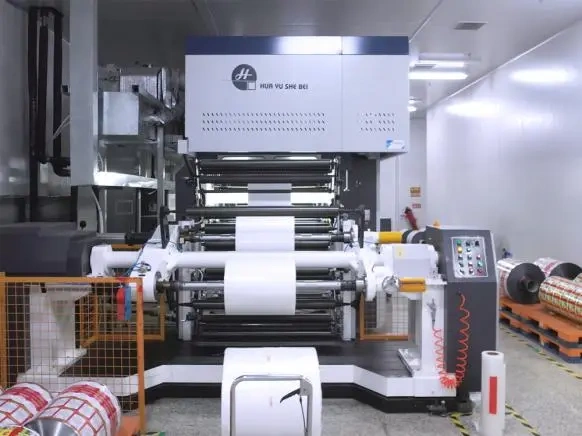
Custom Logo and Artwork Printing
Buyers can customize logos, product images, ingredients, nutritional information, barcodes, and other required information.
Before production, prepare high-resolution artwork and confirm:
- Final pouch dimensions and print layout.
- Color specifications and brand consistency.
- Sealing areas, gussets, and zipper positions.
- Text readability and regulatory information.
Reviewing a digital or physical proof before mass production helps prevent printing and layout errors.
Matte, Glossy, and Combination Finishes
| Finish | Appearance | Suitable Applications |
|---|---|---|
| Glossy | Bright, reflective surface | Snacks, colorful food packaging |
| Matte | Soft, low-reflection appearance | Coffee, premium snacks |
| Combination | Contrasting surface effects | Premium branded packaging |
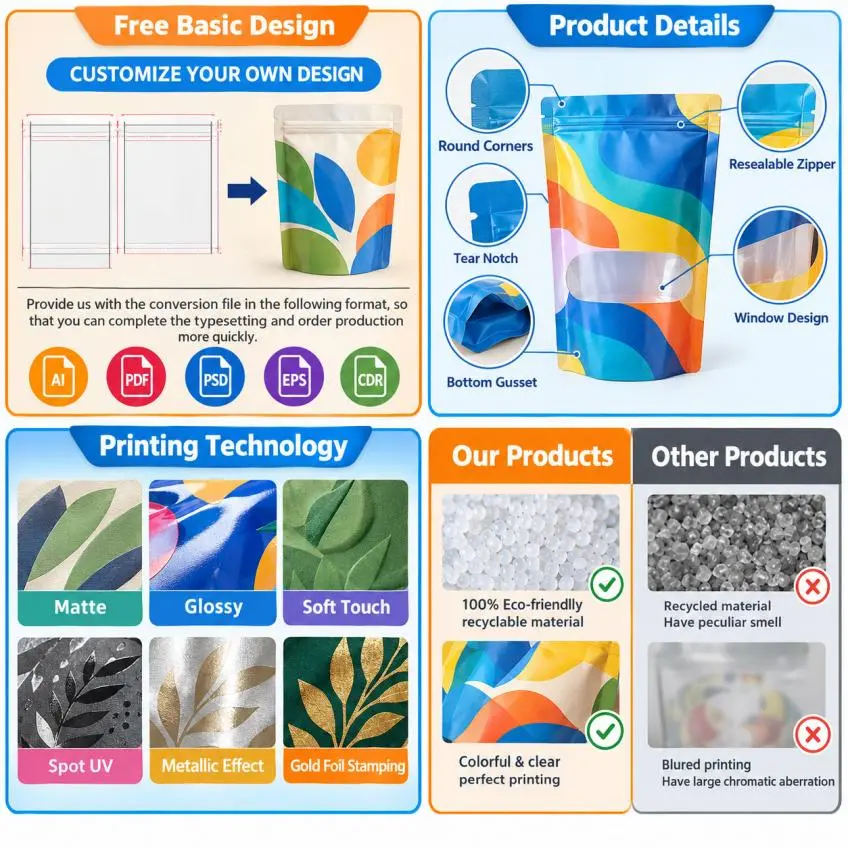
Custom Sizes and Functional Features
Custom printed food packaging pouches can incorporate various features to improve convenience and product usability.
Common options include:
- Zippers for resealable packaging.
- Tear notches for easy opening.
- Transparent windows for product visibility.
- Spouts and caps for liquid products.
- Degassing valves for suitable coffee packaging.
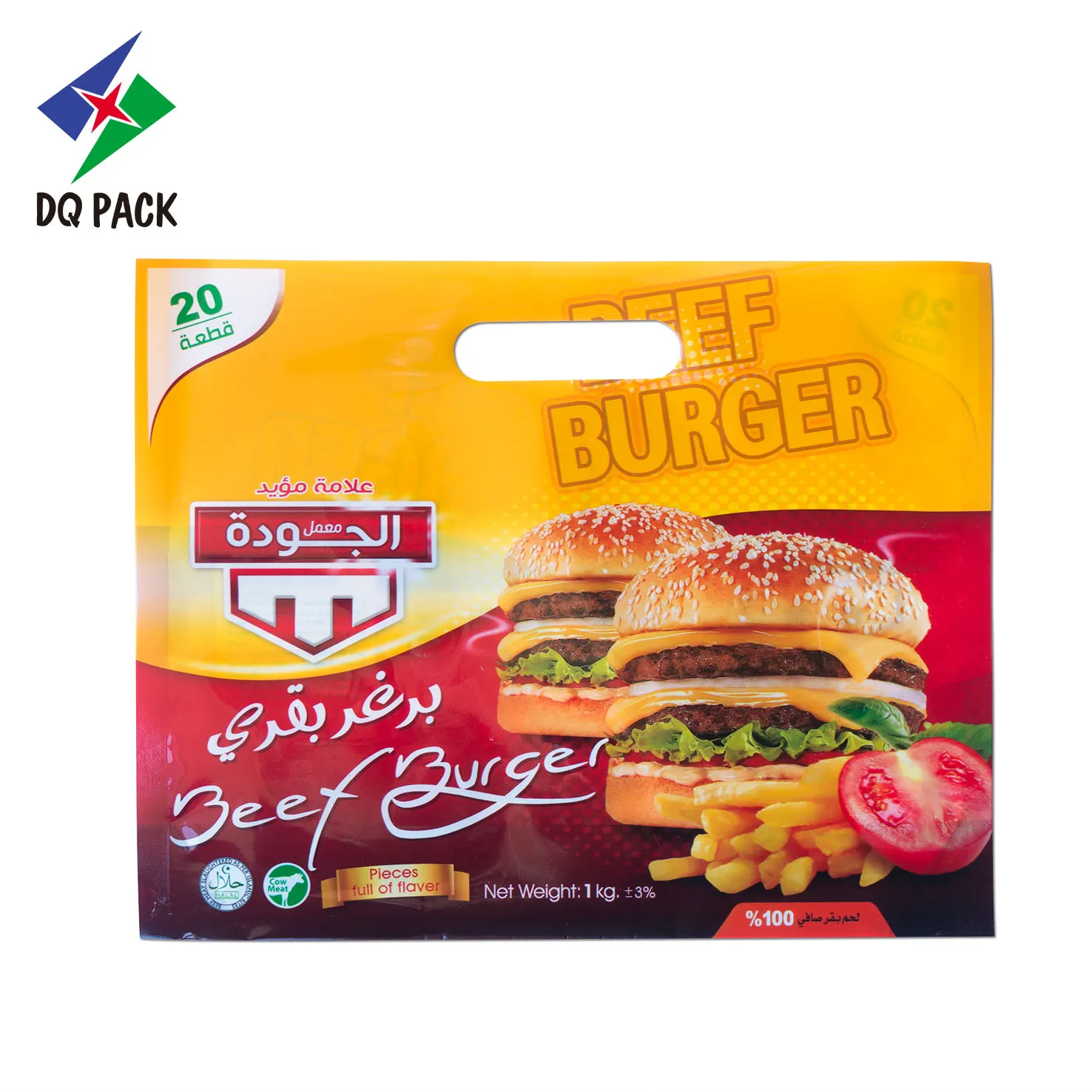
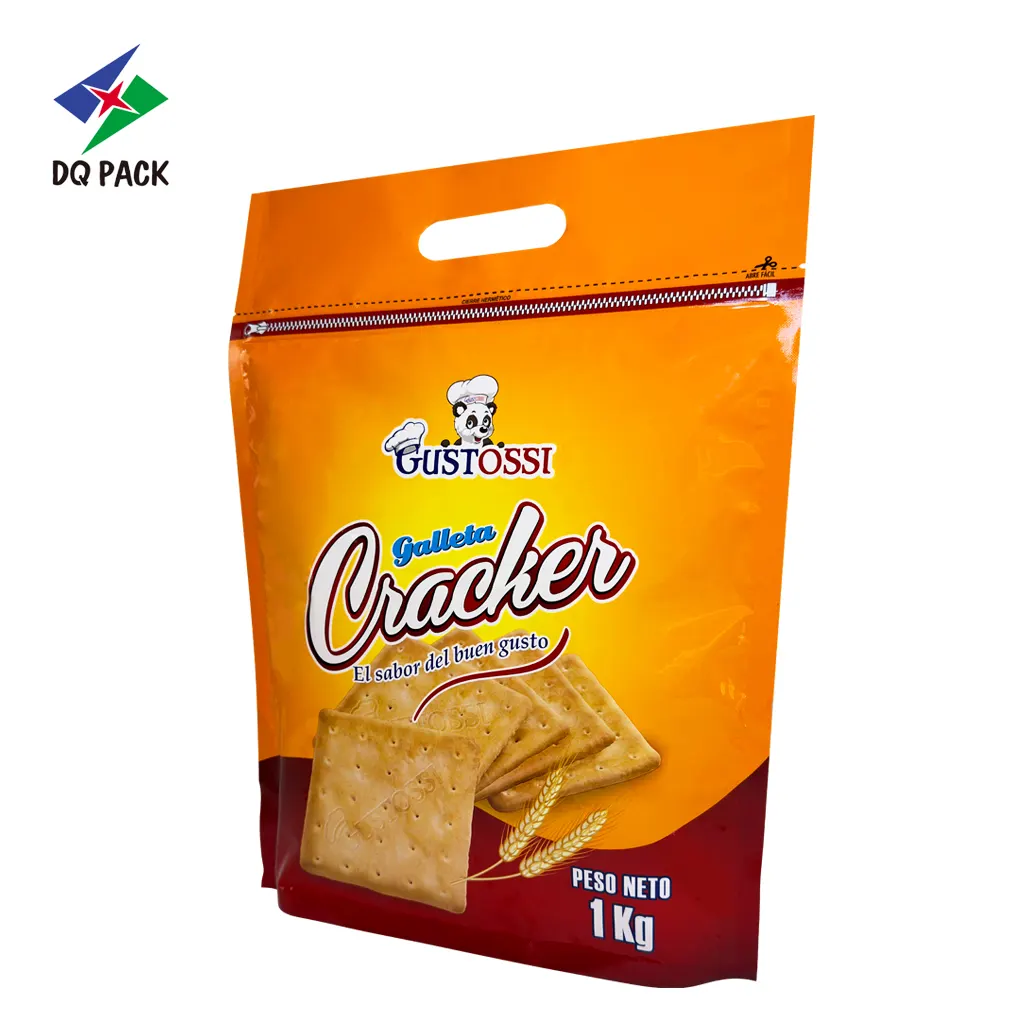
- Rounded corners and carrying handles for selected designs.
The pouch dimensions should match the actual product volume, target weight, filling method, and required headspace.
What to Consider When Buying Wholesale Food Packaging Pouches
For importers, distributors, and food brands, wholesale purchasing involves more than comparing unit prices. The following factors directly influence order costs, production efficiency, and packaging quality.
1. Confirm MOQ and Bulk Pricing
Minimum order quantity (MOQ) depends on pouch style, dimensions, material structure, printing method, and production setup.
When requesting a quotation, provide:
- Pouch type and dimensions.
- Required material structure.
- Order quantity.
- Printing artwork and specifications.
- Functional features.
- Intended food application.
Larger orders can reduce unit costs, but buyers must also consider storage capacity, inventory turnover, and potential design changes.
2. Verify Food Contact Requirements
Food packaging materials must be suitable for their intended applications and comply with the regulations of the destination market.
Buyers should confirm applicable food-contact requirements and request relevant material declarations, test reports, and compliance documents.
For EU-bound packaging, Regulation (EU) 2025/40 (PPWR) has applied since August 12, 2026. Buyers should assess relevant packaging requirements when developing products for the European market.
3. Approve Printing Files and Samples
Before mass production, review packaging samples to verify:
- Pouch dimensions and finished appearance.
- Material structure and physical properties.
- Printing colors and graphic placement.
- Zipper, spout, and other functional components.
- Filling and heat-sealing compatibility.
Sample approval reduces avoidable production changes and helps establish clear acceptance standards.
4. Confirm Production Lead Time and Quality Control
Custom packaging production typically takes approximately 20–25 days after specifications and artwork are confirmed. Special structures, material availability, and complex orders may extend the schedule.
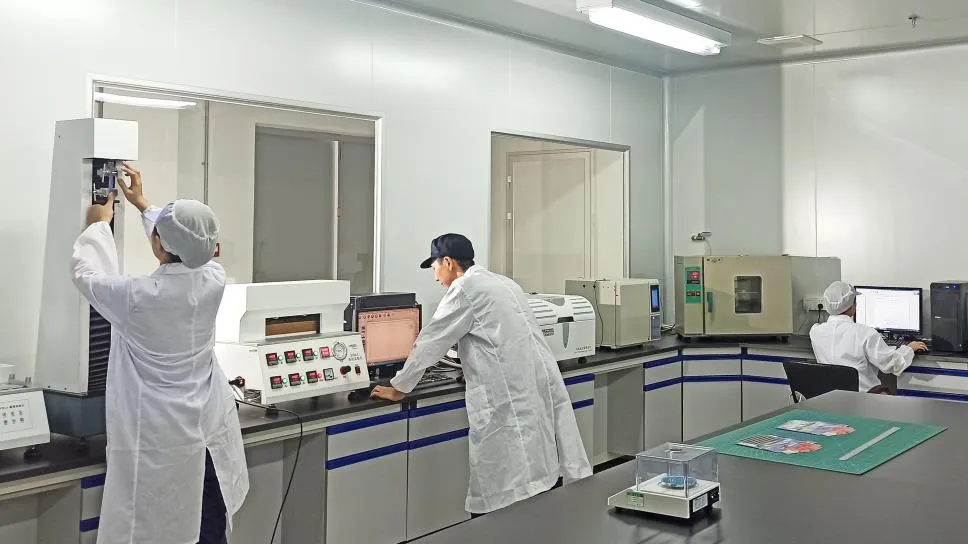
Quality inspection should cover:
- Incoming material inspection.
- Printing quality and color consistency.
- Lamination quality.
- Pouch dimensions and appearance.
- Sealing performance and functional components.
Buyers should agree on inspection methods and acceptance criteria before production begins.
Why Choose DQ PACK for Custom Food Packaging Pouches?
Choosing a direct manufacturer helps buyers coordinate material selection, printing, lamination, pouch converting, and quality inspection within one production system.
When evaluating a supplier, prioritize these capabilities:
| Supplier Capability | Value to B2B Buyers |
|---|---|
| In-house printing and lamination | Better coordination of artwork, materials, and production |
| Multiple pouch-making lines | Flexible pouch styles and customized dimensions |
| Spout and cap manufacturing | Better coordination of liquid packaging components |
| OEM/ODM services | Support for customized packaging development |
| Quality management | Consistent production and inspection processes |
| Export experience | More efficient communication for international orders |
DQ PACK is a custom flexible packaging and printing solutions manufacturer with more than 30 years of manufacturing and export experience. Founded in 1991, the company serves customers in over 140 countries and regions.
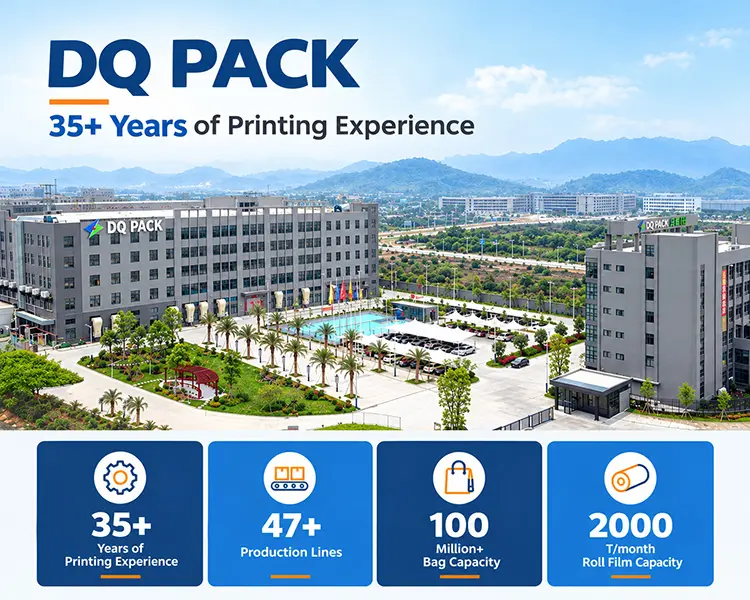
Its production facilities cover approximately 30,000 square meters and include:
- 6 automated packaging printing lines.
- 6 high-speed solvent-free lamination lines.
- 7 advanced slitting machines.
- 20 pouch-making production lines.
- A Class 300,000 cleanroom.
- More than 200 skilled employees.
DQ PACK provides integrated flexible packaging manufacturing, including printing, lamination, slitting, pouch making, and spout-related production. Its in-house spout and cap injection molding capabilities support liquid packaging projects.
With OEM/ODM capabilities and production processes managed according to the company’s stated ISO9001-2018 standard, DQ PACK supports customized packaging requirements for food brands, importers, wholesalers, and distributors.
Whether you need stand-up pouches for snacks, high-barrier coffee bags, spout pouches for liquid food, or printed roll stock for automatic packaging equipment, DQ PACK provides manufacturing support from packaging specification development to finished production.
Frequently Asked Questions
Q1: What Materials Are Used for Custom Printed Food Packaging Pouches?
Common materials include PET, PE, VMPET, and aluminum foil. Typical laminated structures include PET/PE, PET/VMPET/PE, and PET/AL/PE. The selection depends on product sensitivity, shelf life, and barrier requirements.
Q2: Can I Print My Own Logo on Wholesale Food Packaging Pouches?
Yes. Manufacturers can customize brand logos, product images, colors, nutritional information, and other artwork according to supplied design files and printing specifications.
Q3: What Is the MOQ for Custom Printed Food Packaging Pouches?
MOQ depends on pouch style, dimensions, material structure, printing method, and order quantity. Contact the manufacturer with your specifications to receive an accurate MOQ and quotation.
Q4: Are Recyclable Food Packaging Pouches Available?
Yes. Mono-material PE packaging is available for selected applications. Its suitability depends on barrier requirements, sealing performance, product shelf life, and local recycling infrastructure.
Q5: How Long Does Custom Food Packaging Production Take?
Production typically takes around 20–25 days after specifications and artwork approval. Actual lead times depend on order complexity, material availability, and production scheduling.
Q6: How Do I Choose the Right Food Packaging Pouch?
Start by identifying the food product, target shelf life, required barrier properties, filling method, pouch capacity, and retail presentation. A professional packaging manufacturer can then recommend suitable materials and pouch structures.
Conclusion: Choose the Right Custom Printed Food Packaging Pouches for Your Brand
Choosing the right custom printed food packaging pouches requires more than selecting an attractive design. Food brands and wholesale buyers must consider material barrier properties, pouch styles, printing quality, functional features, food contact requirements, and production capabilities to ensure reliable packaging performance and cost efficiency.
From stand-up pouches and flat bottom bags to spout pouches and roll stock films, the right packaging solution should match your product characteristics, filling equipment, storage conditions, and market requirements. Working directly with an experienced manufacturer also helps streamline customization, quality control, and bulk production.
Looking for a reliable supplier of custom-printed food packaging pouches? Contact DQ PACK today. Share your product type, pouch style, material requirements, artwork, and order quantity to request a customized packaging solution and wholesale quotation.