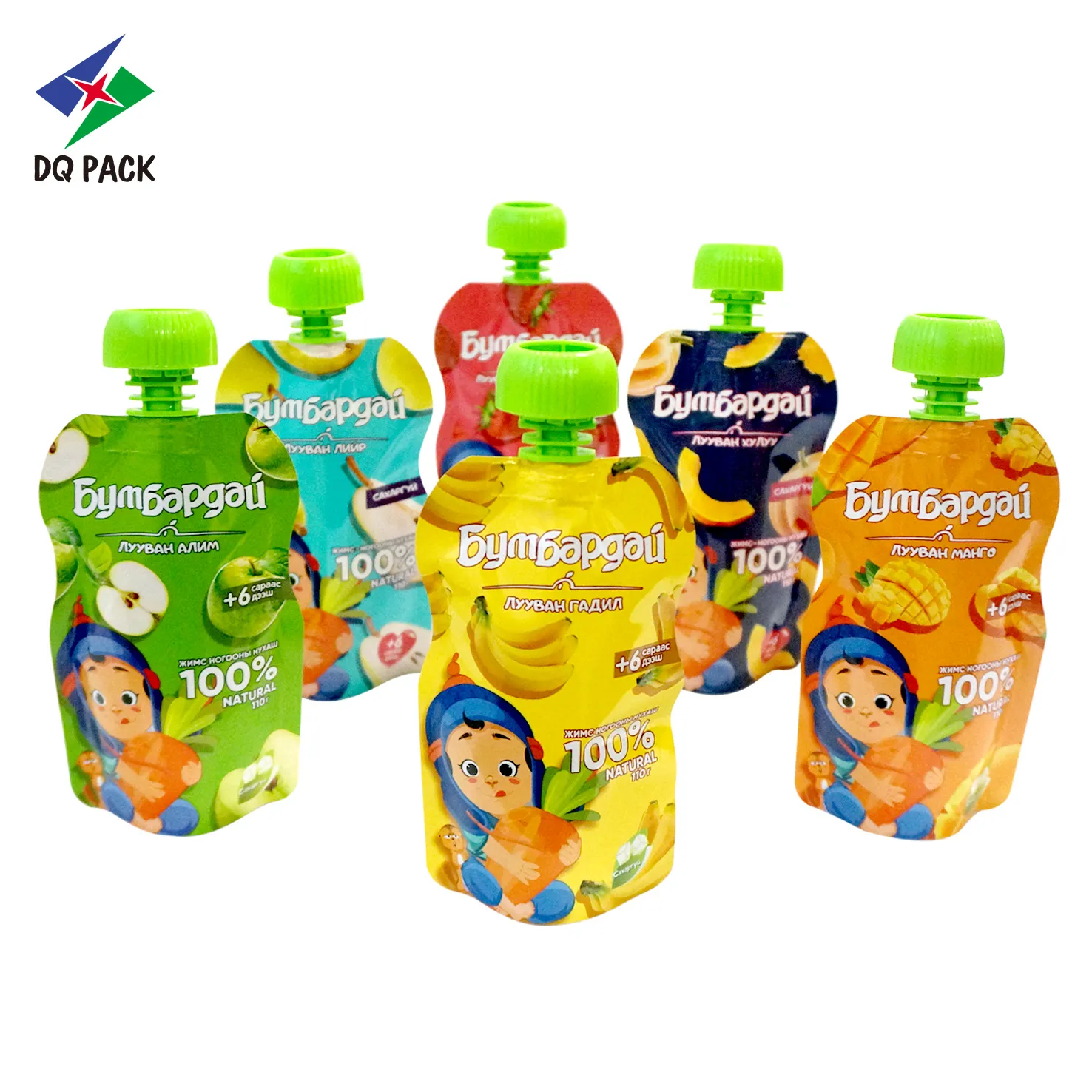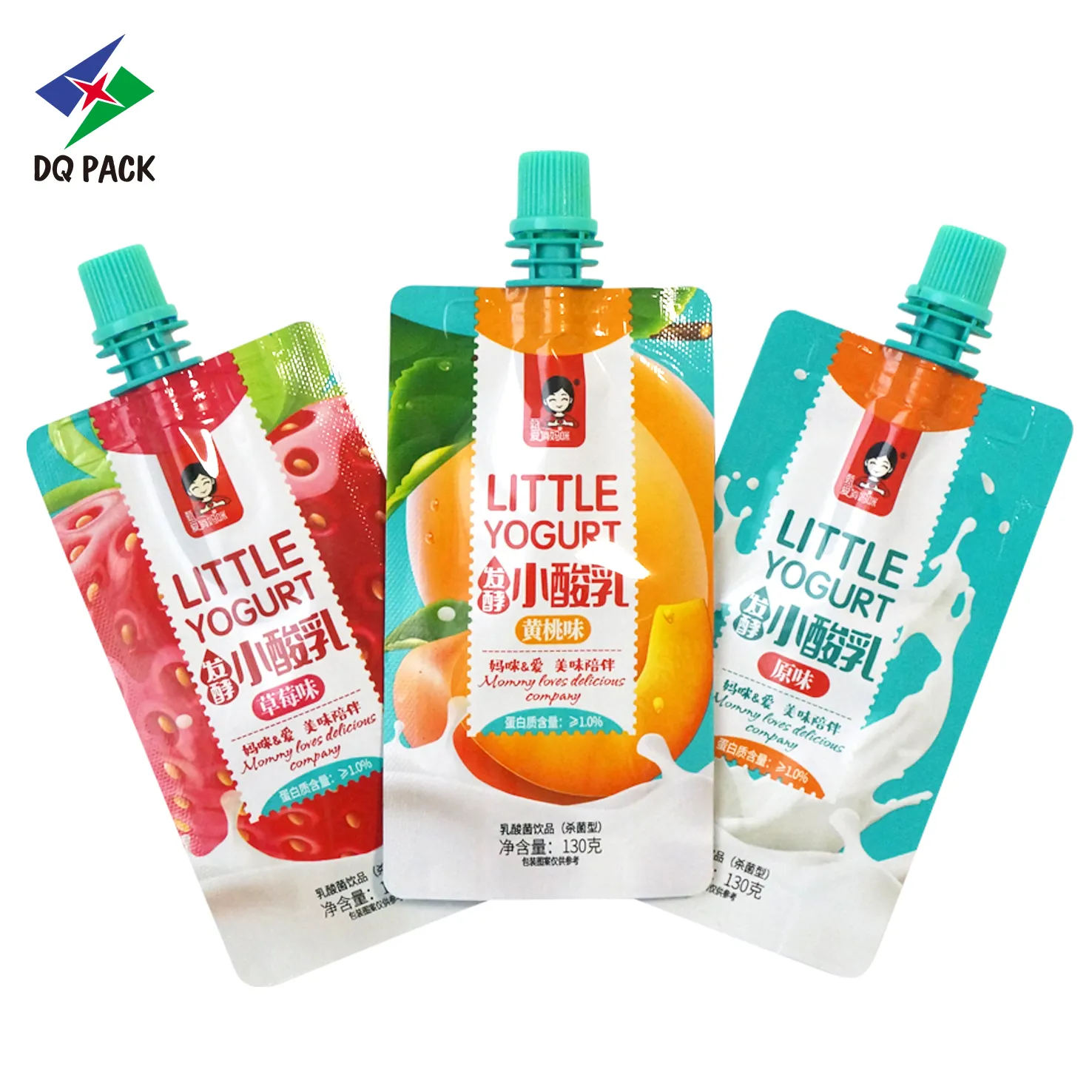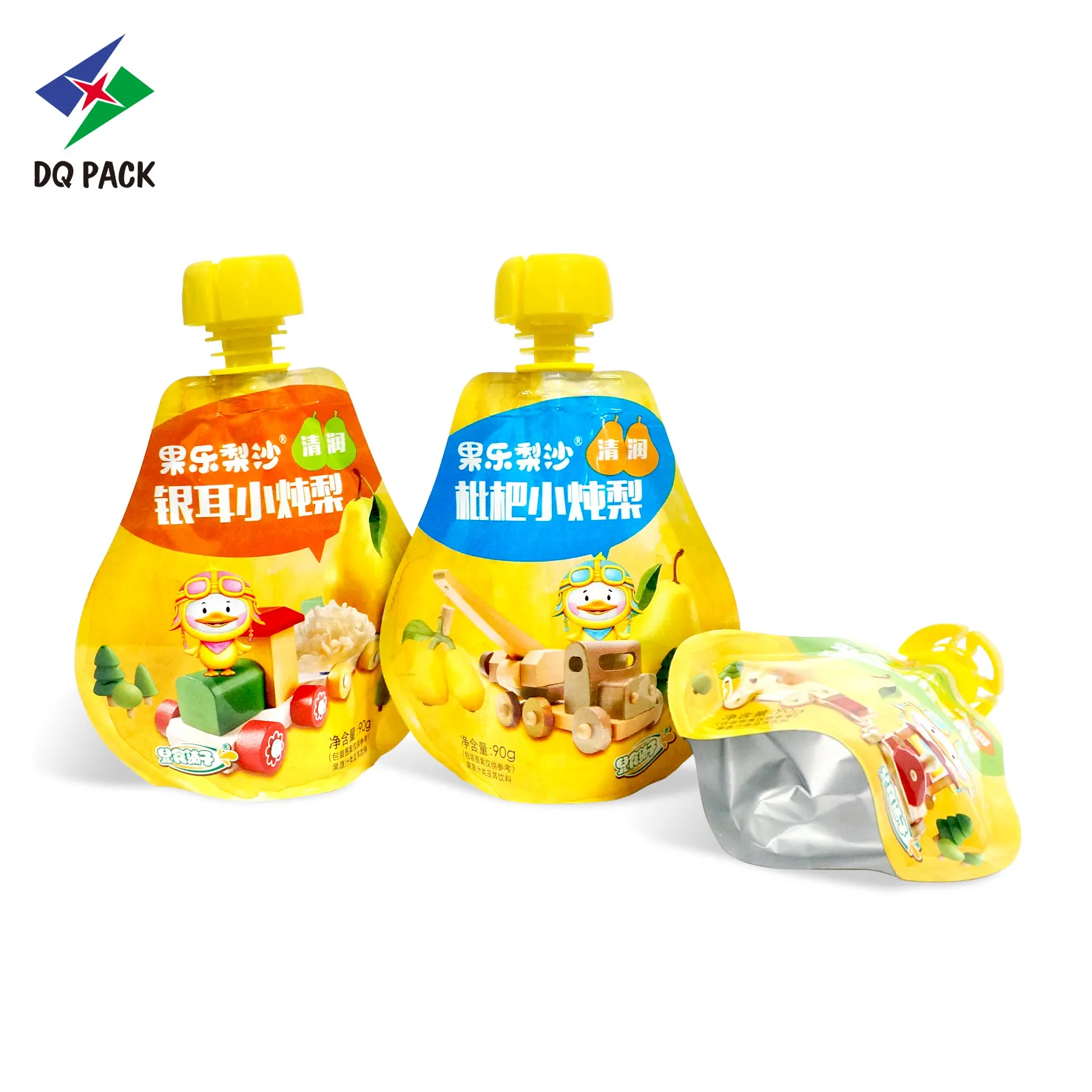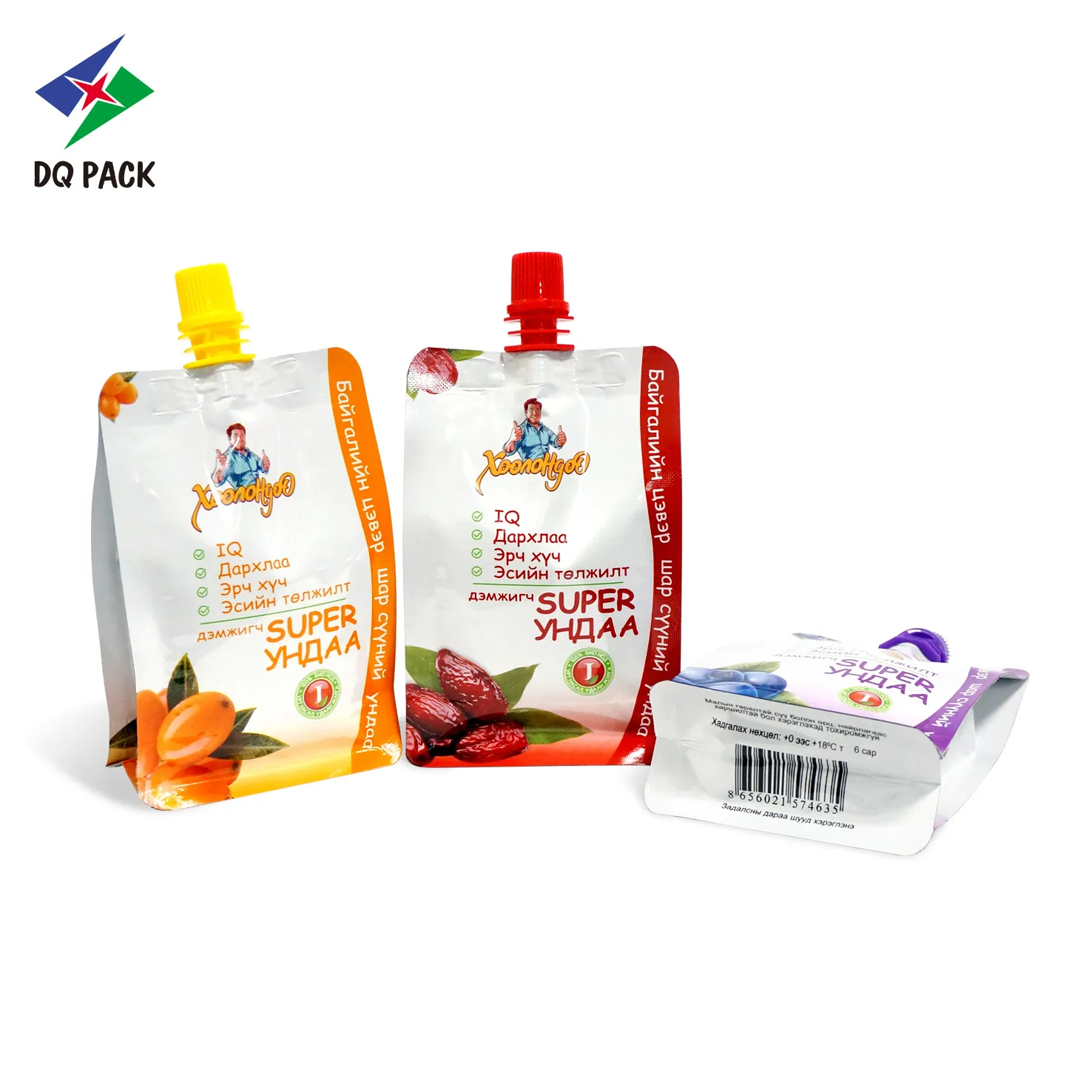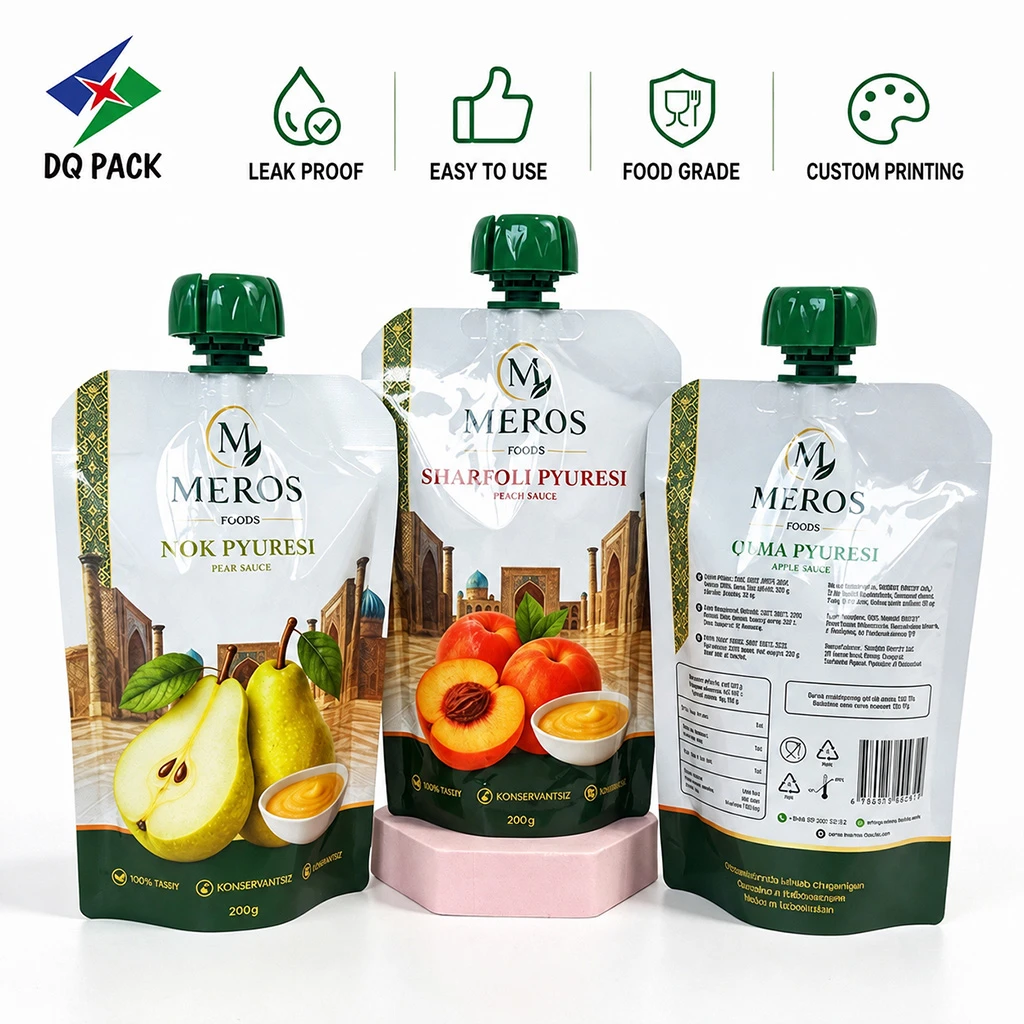


Choosing the right spout pouch filling method is critical for preventing leakage, improving production efficiency, and ensuring packaging compatibility. DQ PACK, a trusted flexible packaging manufacturer, provides customized spout pouch solutions integrating pouch structures, spout selection, film materials, and filling requirements. Helps global brands achieve reliable and scalable liquid packaging solutions.
Why Spout Pouch Filling Selection Matters for Packaging Success
For liquid product manufacturers, choosing the right spout pouch filling method is not simply an equipment decision. It directly affects packaging performance, production efficiency, product safety, and long-term operating costs.
Many packaging problems do not appear during initial trials. A pouch may look perfect during sample testing but experience unexpected issues after moving into mass production, including:
- Higher leakage rates
- Unstable filling speed
- Seal contamination
- Incorrect spout positioning
- Poor compatibility between pouch and filling equipment
When these problems occur after production begins, changing pouch structures or modifying filling machines can become expensive and time-consuming.
Although top filling and spout pouch filling may appear similar because both involve filling liquid into flexible packaging, they actually follow completely different production principles.
The filling location, pouch opening structure, spout design, sealing method, and equipment requirements all influence the final packaging performance.
For brands, importers, and packaging buyers, understanding these differences before selecting a supplier can significantly reduce production risks.
What Is the Difference Between Top Filling and Spout Pouch Filling?
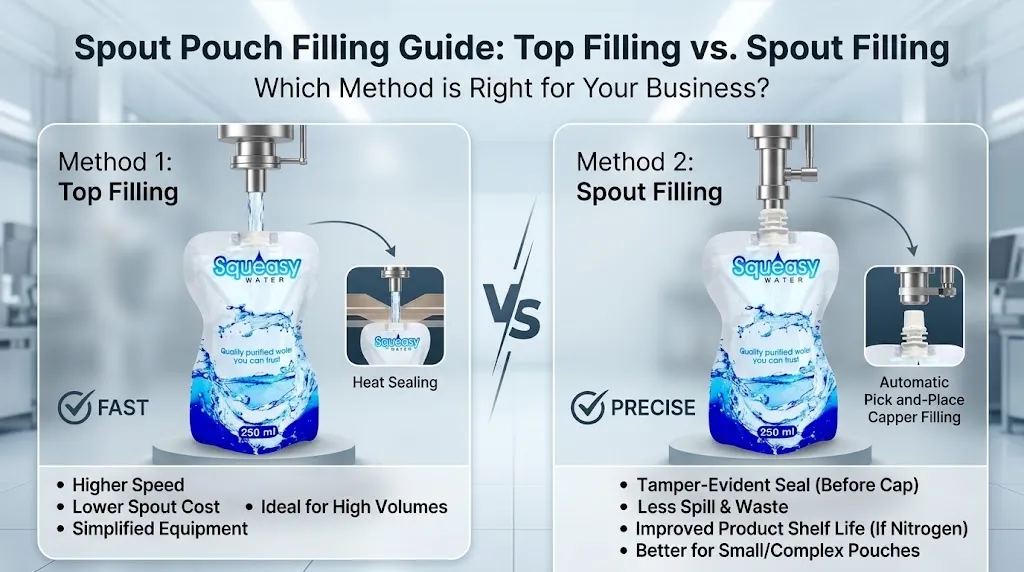
The biggest difference between top filling and spout pouch filling is where the liquid enters the pouch.
Top Filling
Top filling introduces liquid through the open top area of the pouch.
After filling:
- The pouch opening is sealed through heat sealing.
- The product becomes completely closed.
- The finished pouch relies on the top seal area for protection.
Top filling is commonly used for products requiring:
- Large filling openings
- Simple filling processes
- High-volume production
- Products with particles or thicker textures
Typical applications include:
- Large-volume sauces
- Certain food products
- Bulk liquid packaging
Spout Pouch Filling
In spout pouch filling, liquid enters through the spout opening.
The process usually includes:
- Positioning the pouch.
- Inserting the filling nozzle into the spout.
- Filling the product.
- Applying and tightening the cap.
The spout becomes the key connection point between the pouch and the filling equipment.
Important factors include:
- Spout inner diameter
- Spout position
- Cap structure
- Filling nozzle compatibility
- Product viscosity
This method is widely used for:
- Juice
- Baby food
- Fruit puree
- Yogurt
- Sauces
- Liquid detergents
- Household chemicals
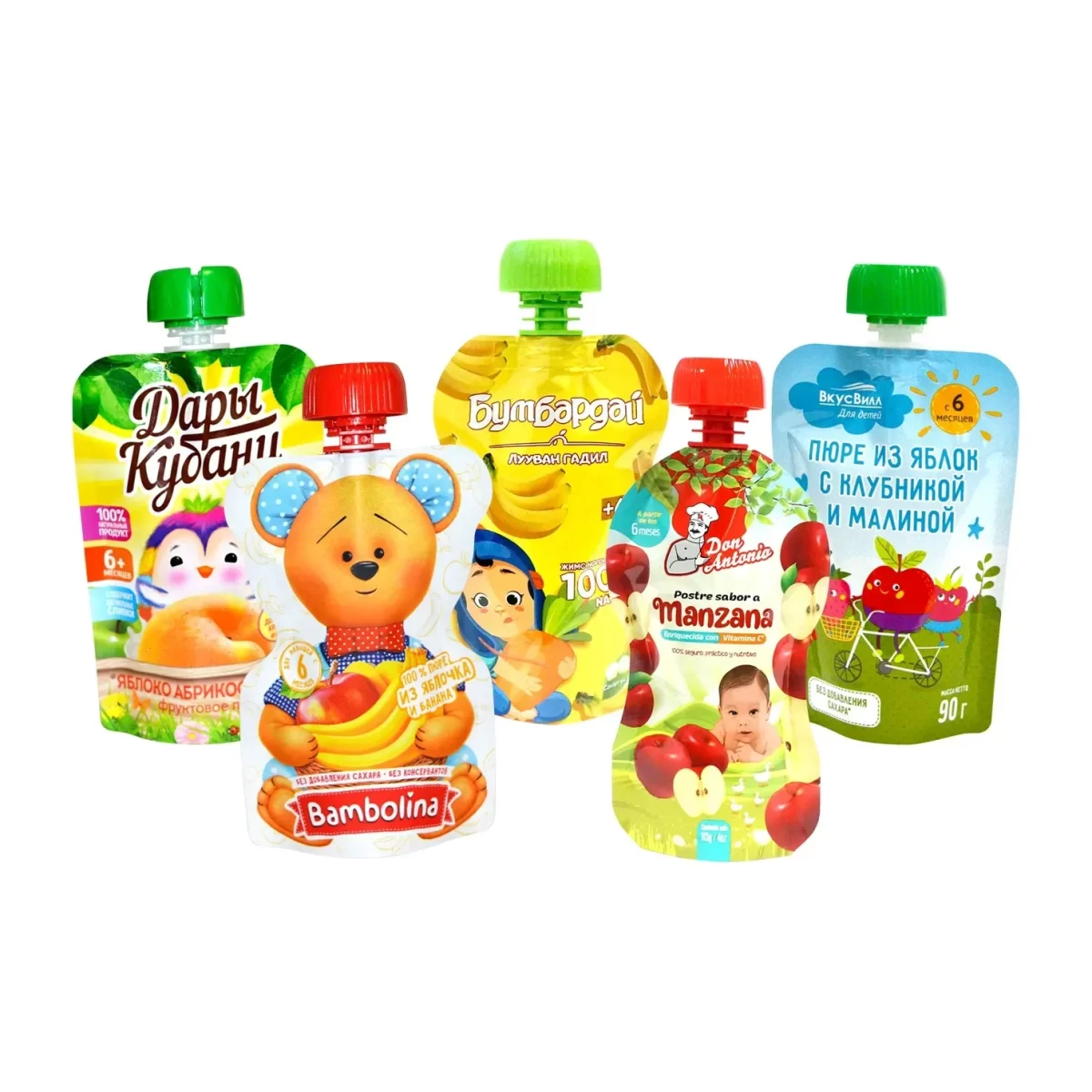
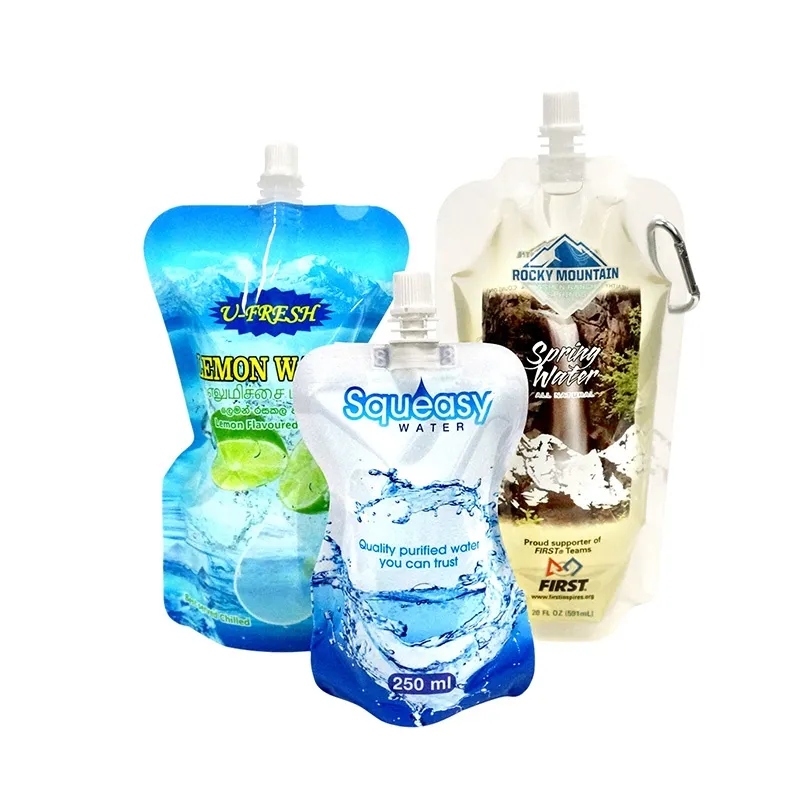
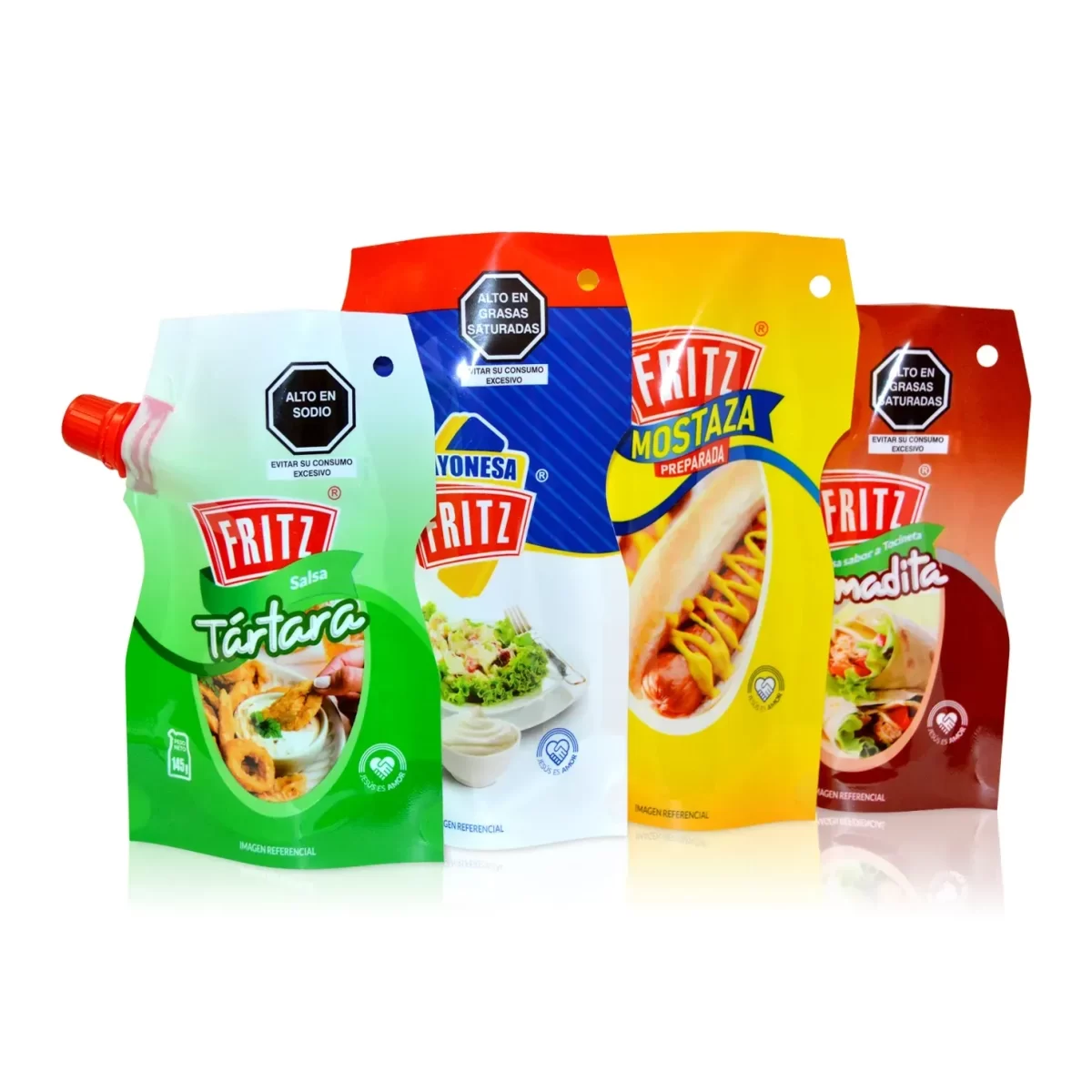
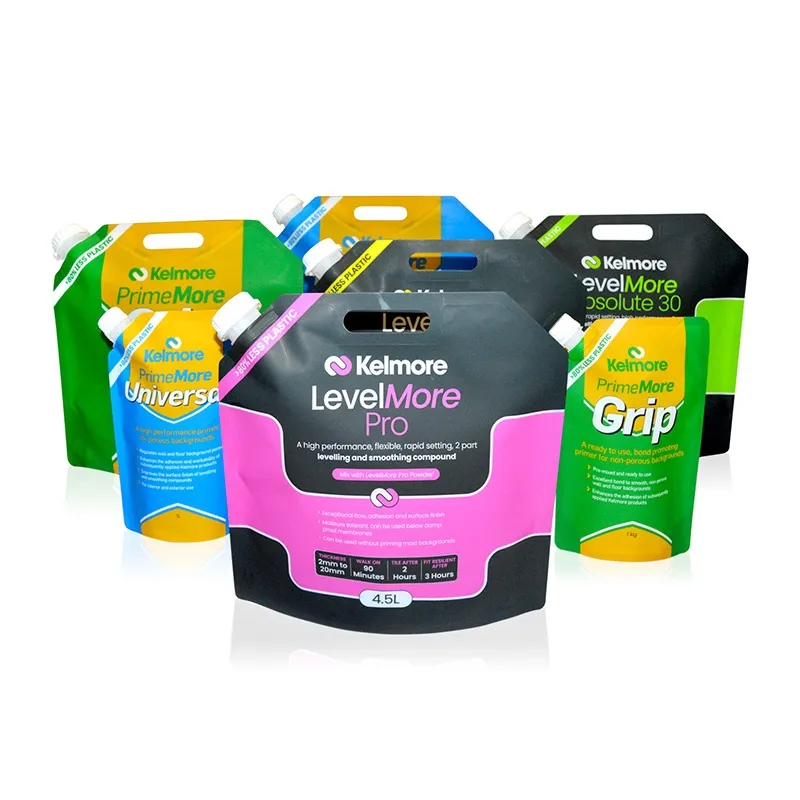
Compared with traditional rigid containers, spout pouch filling provides advantages such as:
- Lightweight transportation
- Convenient consumer use
- Reduced packaging volume
- Better storage efficiency
What Are the Design Requirements for Top Filling Pouches?
Top-fill pouches require careful structural design because the filling opening and sealing area directly influence packaging quality.
1. Opening Size Must Match Filling Equipment
A larger opening does not always mean better performance.
The opening size needs to match the filling nozzle.
If the opening is too small:
- The filling head may not enter properly.
- Liquid may spill during filling.
- Production speed may decrease.
If the opening is too large:
- The sealing area becomes longer.
- Seal consistency becomes more difficult to control.
The ideal opening size depends on:
- Filling machine design
- Product viscosity
- Bag dimensions
- Production speed requirements
2. Heat Seal Area Must Provide Reliable Protection
After filling, the pouch opening requires heat sealing.
A weak sealing area may result in:
- Leakage during transportation
- Reduced shelf life
- Customer complaints
For food and beverage applications, consistent sealing performance is especially important because packaging failure directly affects product safety.
3. Prevent Seal Contamination
High-viscosity products create additional challenges.
During filling, products such as:
- Sauces
- Honey
- Syrups
may remain on the inner sealing surface.
If product residue becomes trapped during heat sealing, it can create a false seal.
Solutions may include:
- Controlling filling nozzle position
- Adjusting filling speed
- Adding cleaning procedures before sealing
What Are the Key Design Requirements for Spout Pouch Filling?
For successful spout pouch filling, the spout is not only a consumer convenience feature. It is also a critical production component.
The spout design must match:
- Product characteristics
- Filling equipment
- Production speed
- Consumer usage requirements
Spout Inner Diameter Determines Filling Efficiency
The inner diameter of the spout directly affects liquid flow.
A larger diameter:
- Improves filling speed
- Supports higher viscosity products
- Reduces filling resistance
A smaller diameter:
- Provides better control for thin liquids
- Supports precise filling volumes
Using a small spout for thick products may significantly reduce production efficiency.
Spout Position Affects Filling Accuracy and Production Stability
The position of the spout is another important factor in spout pouch filling performance.
Different spout positions create different advantages depending on the product and production requirements.
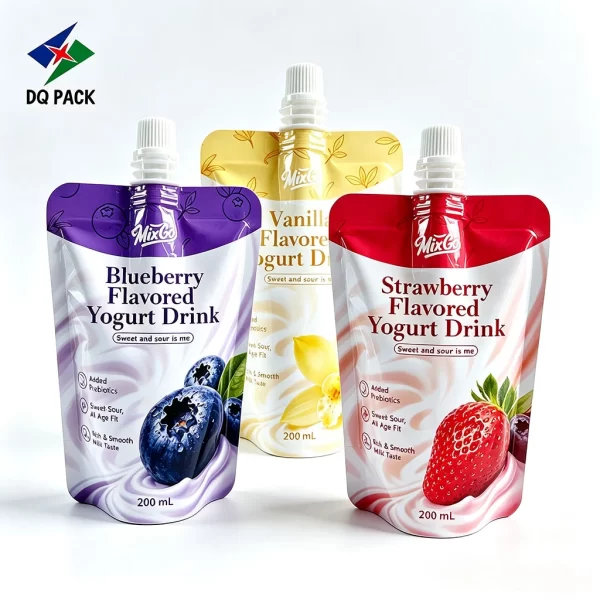
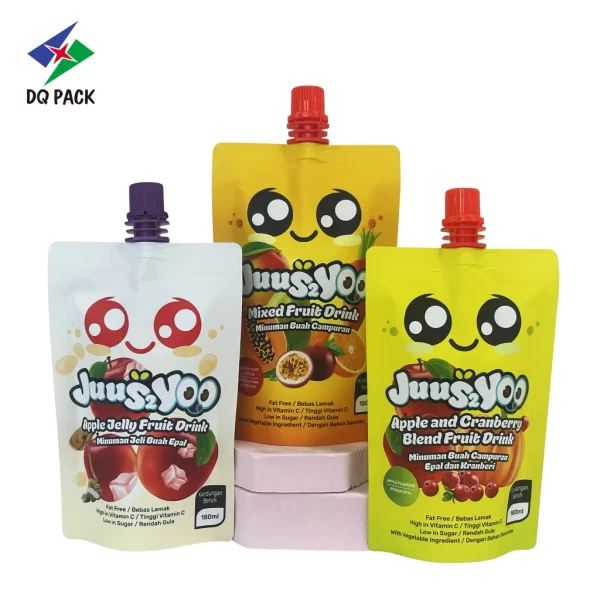
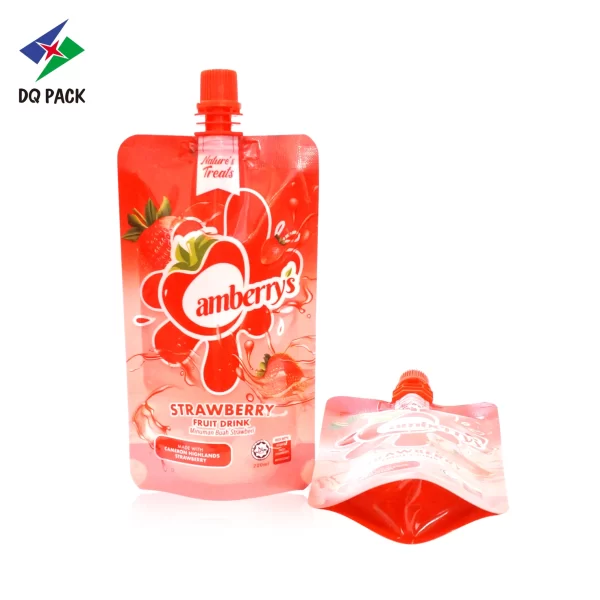
Center Spout Design
A centered spout is commonly selected for high-speed production because:
- The filling nozzle alignment is easier.
- Equipment adjustment is simpler.
- Filling stability is improved.
It is suitable for:
- Beverage products
- Milk-based drinks
- Large-volume liquid packaging
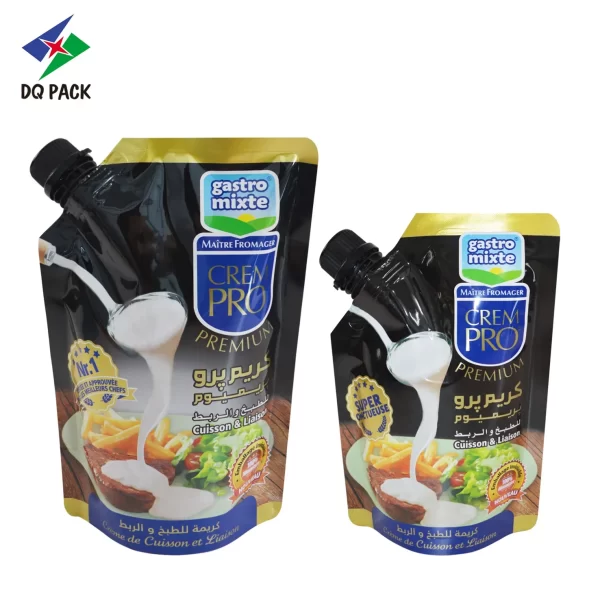
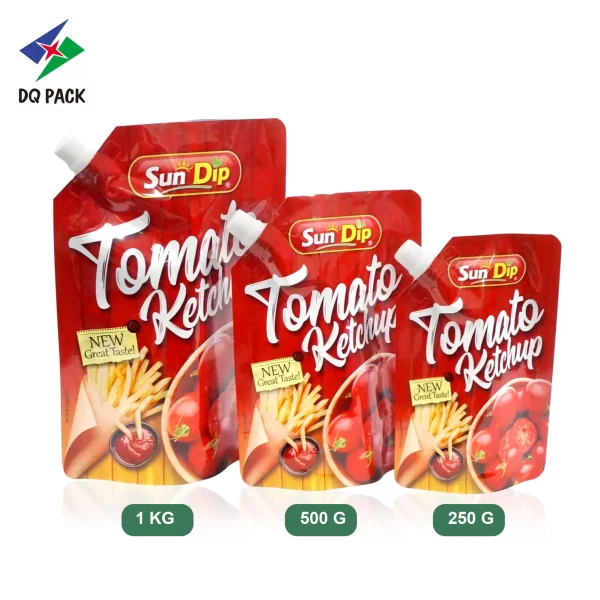
Corner Spout Design
A corner spout is often preferred for consumer convenience because:
- Product drainage is easier.
- Liquid can be poured more naturally.
- Residual product inside the pouch can be reduced.
It is suitable for:
- Sauces
- Baby food
- Condiments
- Household liquid products
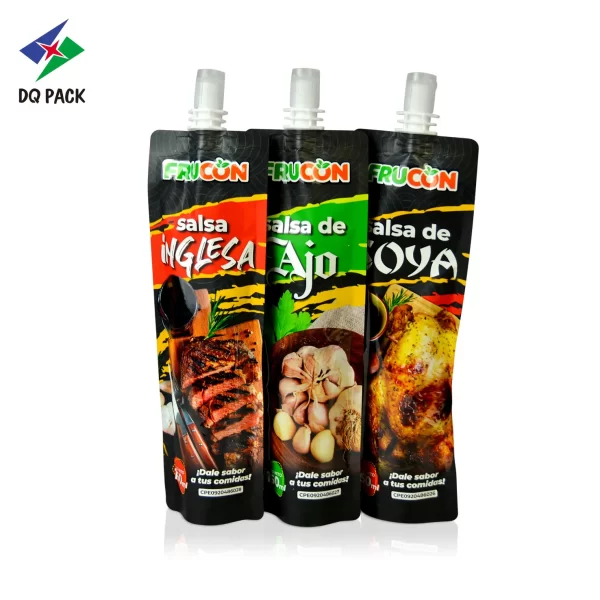
However, corner spouts require more accurate equipment positioning during spout pouch filling because the filling head needs to align precisely with the offset position.
How Does Spout Matching Affect Filling Performance?
A common mistake during packaging development is selecting the pouch first and considering filling equipment later.
In reality, the pouch, spout, and filling system must be developed together.
The following elements need to match:
- Spout inner diameter
- Filling nozzle size
- Insertion depth
- Air release space
- Capping system
- Production speed
For example, the outer diameter of the filling nozzle should normally be smaller than the inner diameter of the spout.
This allows:
- Smooth liquid flow
- Air escape during filling
- Reduced backflow
- Lower contamination risk
If the filling nozzle fits too tightly:
- Air cannot escape effectively.
- Liquid may flow backward.
- Filling speed may decrease.
If the nozzle insertion depth is insufficient:
- Liquid may flow along the outside wall of the nozzle.
- The spout area may become contaminated.
- Cap sealing performance may be affected.
Therefore, professional spout pouch filling solutions require cooperation between the pouch manufacturer and the filling equipment supplier.
How to Choose the Right Filling Method Based on Product Type?
Different products require different packaging approaches.
| Product | Recommended Filling Method | Main Reason |
|---|---|---|
| Juice | Spout pouch filling | Provides secure sealing, convenient pouring, and compatibility with high-speed production |
| Fruit puree | Spout pouch filling | Suitable for semi-liquid products and improves filling accuracy |
| Yogurt | Spout pouch filling | Reduces contamination risks compared with secondary sealing |
| Sauces | Spout pouch filling | Large spout openings support higher viscosity products |
| Laundry detergent | Top filling or spout pouch filling | Selection depends on package size and production requirements |
For buyers, the best solution depends on five key factors:
- Product viscosity
- Filling temperature
- Package volume
- Spout specification
- Existing filling equipment
A professional packaging supplier should evaluate these factors before recommending a final structure.
5 Parameters to Confirm Before Selecting Spouted Pouches
Before purchasing spouted pouches, buyers should prepare complete production information.
Providing these details helps manufacturers develop a solution that can be used directly on the production line.
1. Product Viscosity
Viscosity determines:
- Spout diameter
- Filling speed
- Pump requirements
- Flow control method
A beverage and a thick sauce may require completely different pouch structures.
2. Filling Temperature
Temperature affects material selection.
For hot-fill products, buyers should consider:
- Heat resistance of film materials
- Seal performance under high temperatures
- Dimensional stability
For cold-fill products, manufacturers should consider:
- Condensation risks
- Storage conditions
- Barrier requirements
3. Filling Volume
Package size affects:
- Pouch dimensions
- Spout position
- Material usage
- Transportation efficiency
Large-volume products may require:
- Reinforced structures
- Stronger sealing performance
- Handle designs
Smaller consumer packages may focus more on:
- Convenience
- Portability
- Easy opening
4. Spout Specifications
Important spout parameters include:
- Inner diameter
- Cap type
- Opening design
- Anti-choking structure
- Material compatibility
The correct spout specification improves both production efficiency and consumer experience.
5. Existing Filling Equipment
For companies with existing production lines, equipment compatibility is critical.
Before selecting packaging, buyers should provide:
- Filling head diameter
- Equipment station spacing
- Capping method
- Production speed
- Filling pressure requirements
This prevents a common problem:
The pouch quality is good, but it does not match the filling machine.
A reliable packaging manufacturer should evaluate equipment compatibility before mass production.
Common Mistakes When Selecting Spout Pouch Filling Solutions
Mistake 1: Choosing the Lowest-Cost Pouch Without Considering Production
Price is important, but packaging performance directly affects total production costs.
A cheaper pouch may create:
- Higher leakage rates
- More production downtime
- Increased waste
- Customer complaints
A better approach is selecting a supplier that understands both pouch manufacturing and filling requirements.
Mistake 2: Ignoring Product Characteristics
Different liquids behave differently.
A supplier should consider:
- Viscosity
- Particle content
- Filling temperature
- Shelf-life requirements
Using the same spout structure for every product can reduce filling efficiency.
Mistake 3: Developing Pouches Without Testing
Before mass production, sample testing is essential.
A proper test should evaluate:
- Filling speed
- Seal performance
- Cap tightening
- Leakage resistance
- Transportation durability
Testing before production reduces expensive modifications later.
Pros and Cons of Spout Pouch Filling
Pros
Lightweight Packaging
Compared with rigid containers, spout pouches reduce transportation weight and storage space.
Convenient Consumer Usage
The spout design supports:
- Easy pouring
- Controlled dispensing
- Resealing
Efficient Logistics
Flexible packaging requires less storage space and improves transportation efficiency.
Strong Branding Opportunities
Custom printing allows brands to create attractive shelf presentation.
Cons
Higher Initial Equipment Requirements
Compared with simple top filling, spout pouch filling may require more specialized equipment.
More Complex Design Requirements
Successful production requires matching:
- Spout
- Pouch
- Filling nozzle
- Cap system
Product-Specific Development Is Needed
Different liquids may require different materials and spout designs.
Frequently Asked Questions About Spout Pouch Filling
1. What is spout pouch filling?
Spout pouch filling is a packaging process where liquid products are filled through the pouch spout instead of an open top area. After filling, the spout is capped to create a secure package.
2. What products are suitable for spout pouch filling?
Spout pouch filling is widely used for:
- Juice
- Baby food
- Fruit puree
- Yogurt
- Sauces
- Detergents
- Liquid household products
The correct structure depends on product viscosity and production requirements.
3. How do I choose the correct spout size?
The spout size depends mainly on:
- Product thickness
- Filling speed
- Required flow rate
- Consumer usage requirements
Thicker products usually require larger spout openings.
4. Can spout pouches be customized for existing filling machines?
Yes.
A professional supplier can customize pouch dimensions and spout specifications according to:
- Filling nozzle size
- Equipment positioning
- Production speed
- Capping requirements
5. Why should buyers test samples before bulk production?
Sample testing helps confirm:
- Filling compatibility
- Seal strength
- Leakage performance
- Equipment matching
It reduces risks before large-scale manufacturing.
Conclusion: Choose the Right Spout Pouch Filling Partner for Long-Term Success
Selecting the right spout pouch filling solution is an important decision that affects packaging quality, production efficiency, and customer satisfaction.
The best packaging solution is not simply the lowest-cost option. It should consider:
- Product viscosity
- Filling equipment
- Spout design
- Material structure
- Production requirements
- Consumer experience
A professional flexible packaging manufacturer can help buyers avoid common mistakes by providing technical guidance from the early development stage.
DQ PACK has focused on customized flexible packaging and printing solutions for global customers. With advanced production equipment, experienced technical teams, strict quality control systems, and comprehensive OEM capabilities, DQ PACK provides reliable spout pouch solutions for food, beverage, pet food, and consumer product brands.
Whether you are developing a new liquid product, upgrading existing packaging, or searching for a long-term packaging partner, DQ PACK can help transform your packaging concept into a production-ready solution.
Contact DQ PACK today to discuss your spout pouch filling requirements and explore customized flexible packaging solutions designed for your market.
Related Products
-

Custom Baby Food Pouch Fruit Juice Packaging Retort Spout Pouch Supplier-DQ PACK
-
China Supply Baby Yogurt Pouches BPA Free Spout Pouch Manufacturer for Flexible Packaging-DQ PACK
-
Wholesale Best Baby Food Pouches with Colorful Pear Shaped Spout Bag-DQ PACK
-
Customized Organic Baby Food Pouches Factory Juice Packaging Flat Bottom Spout Bag-DQ PACK