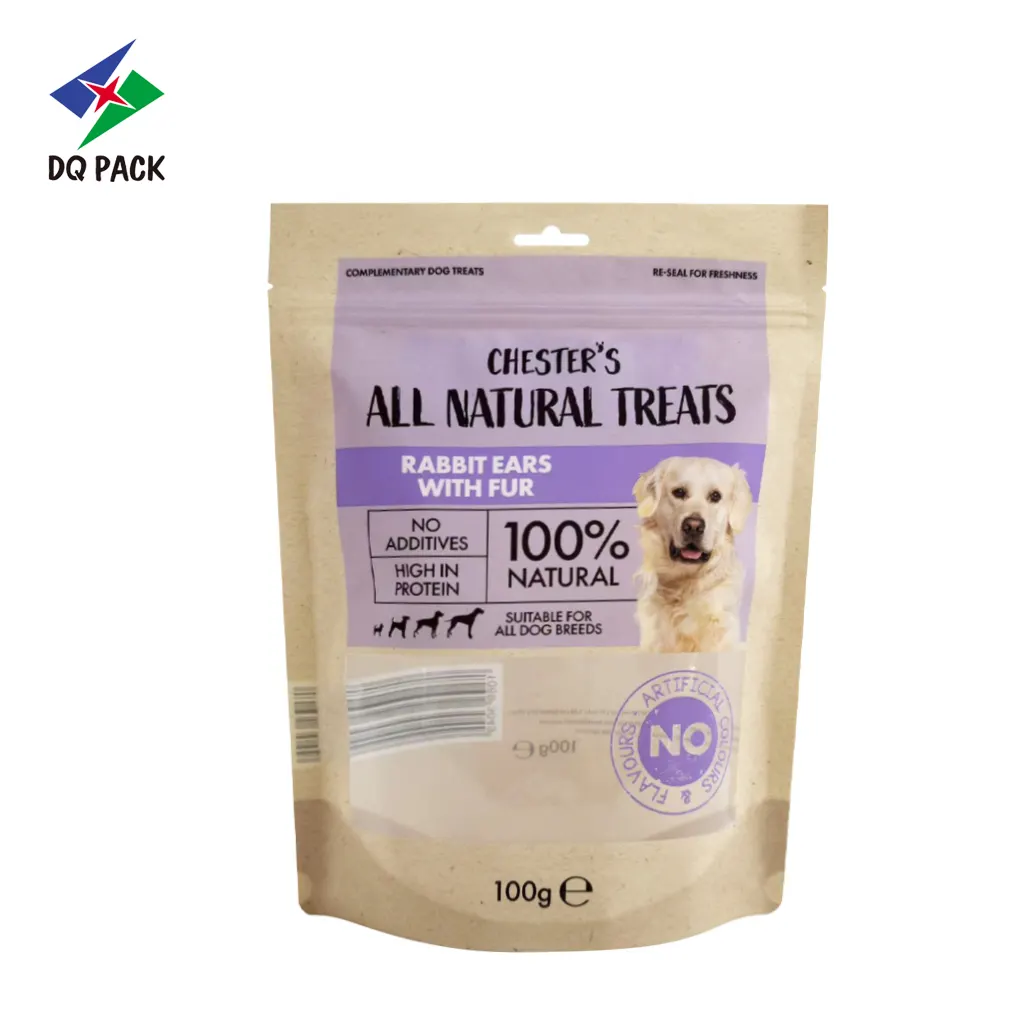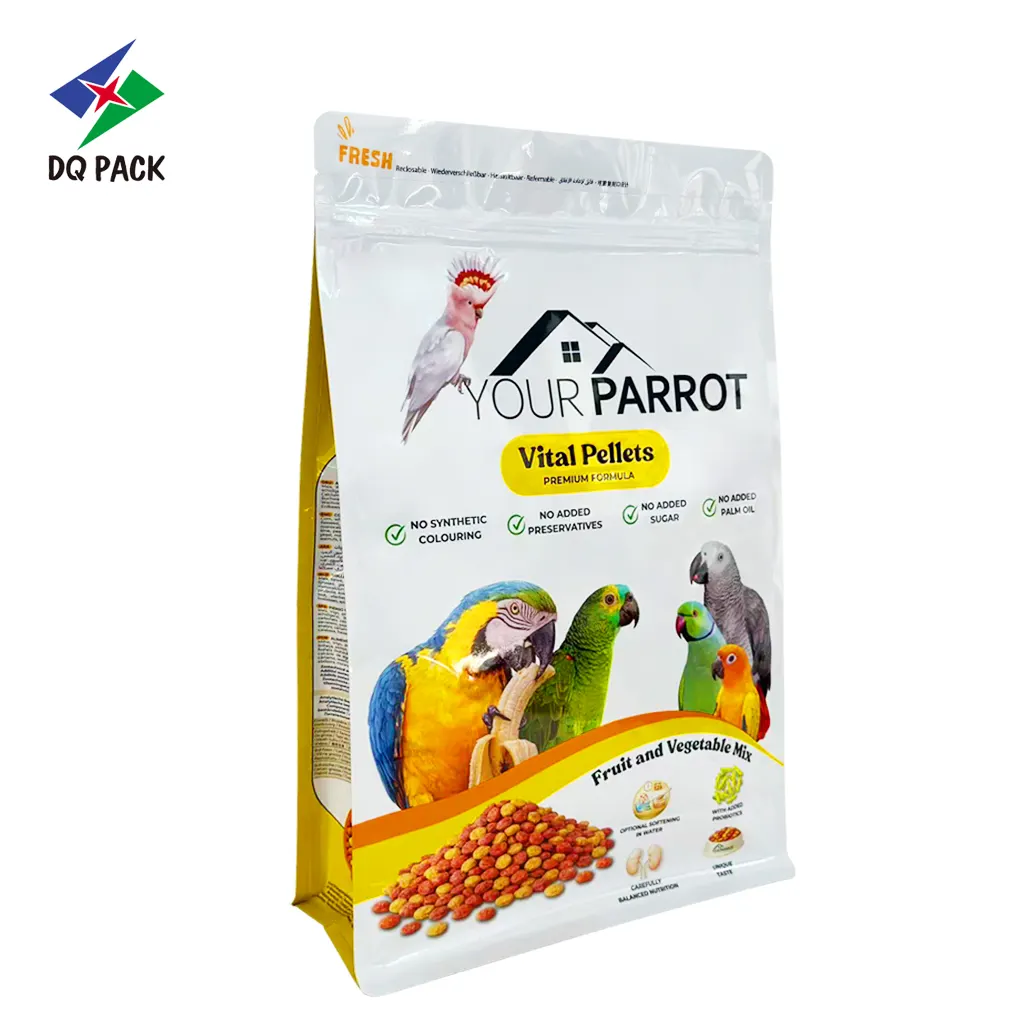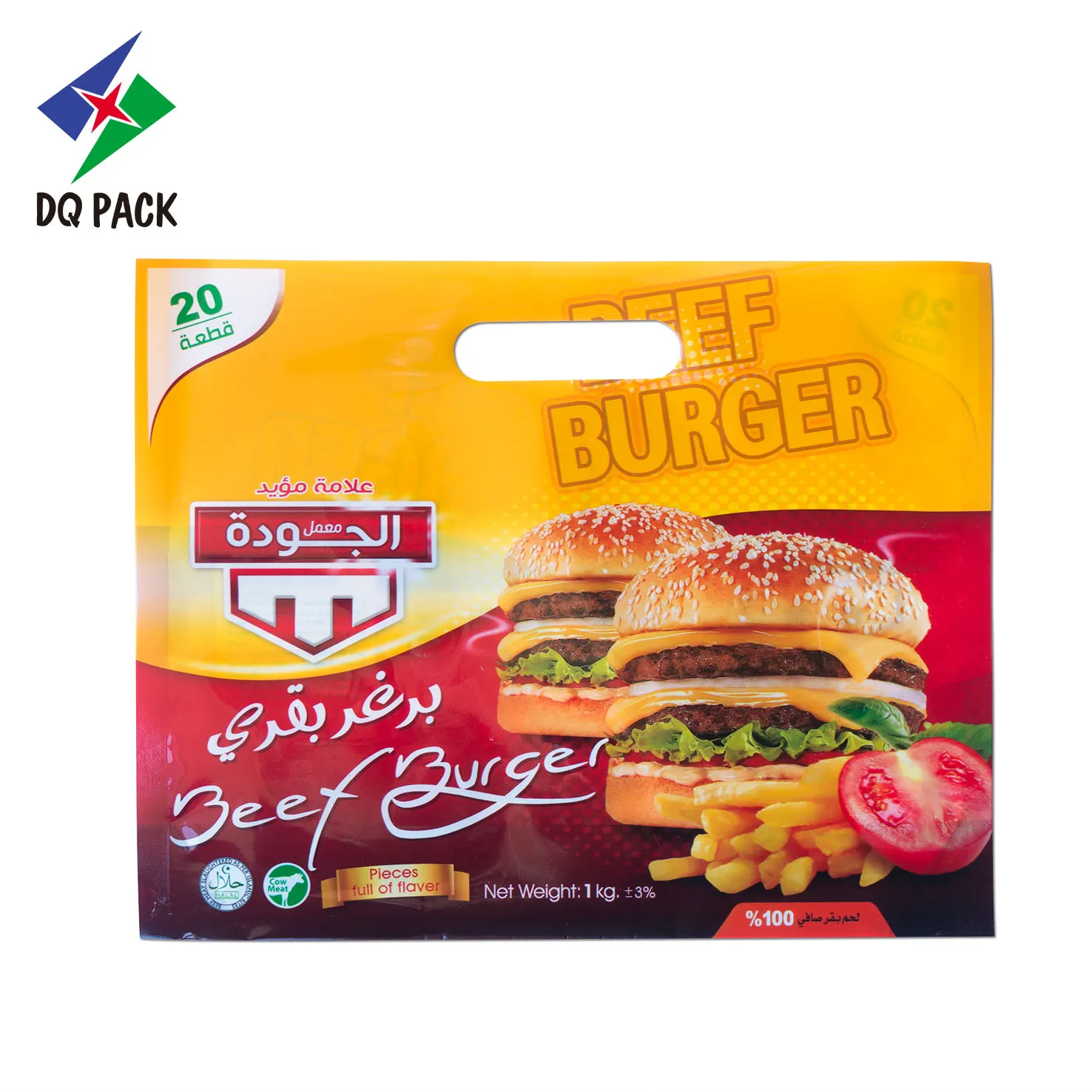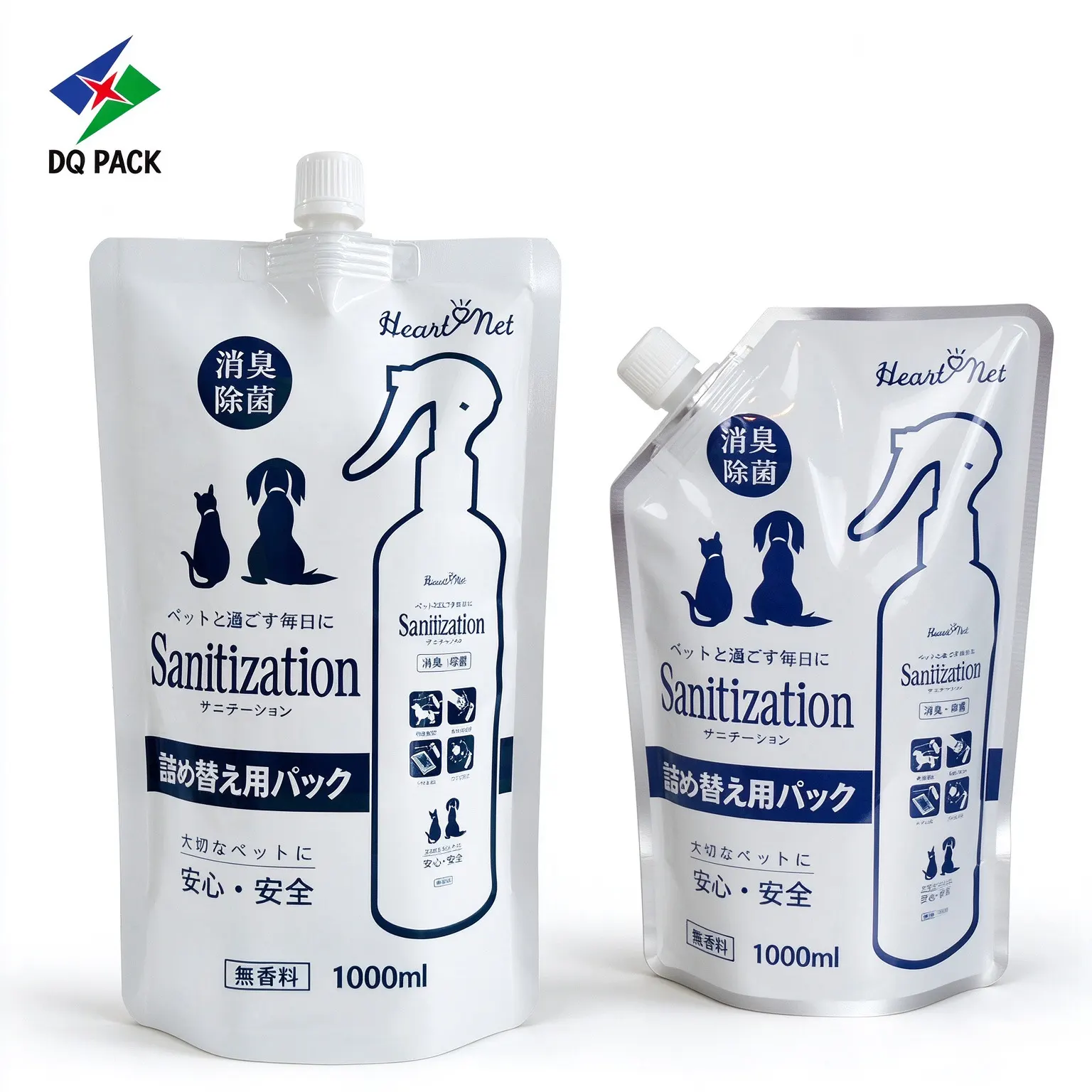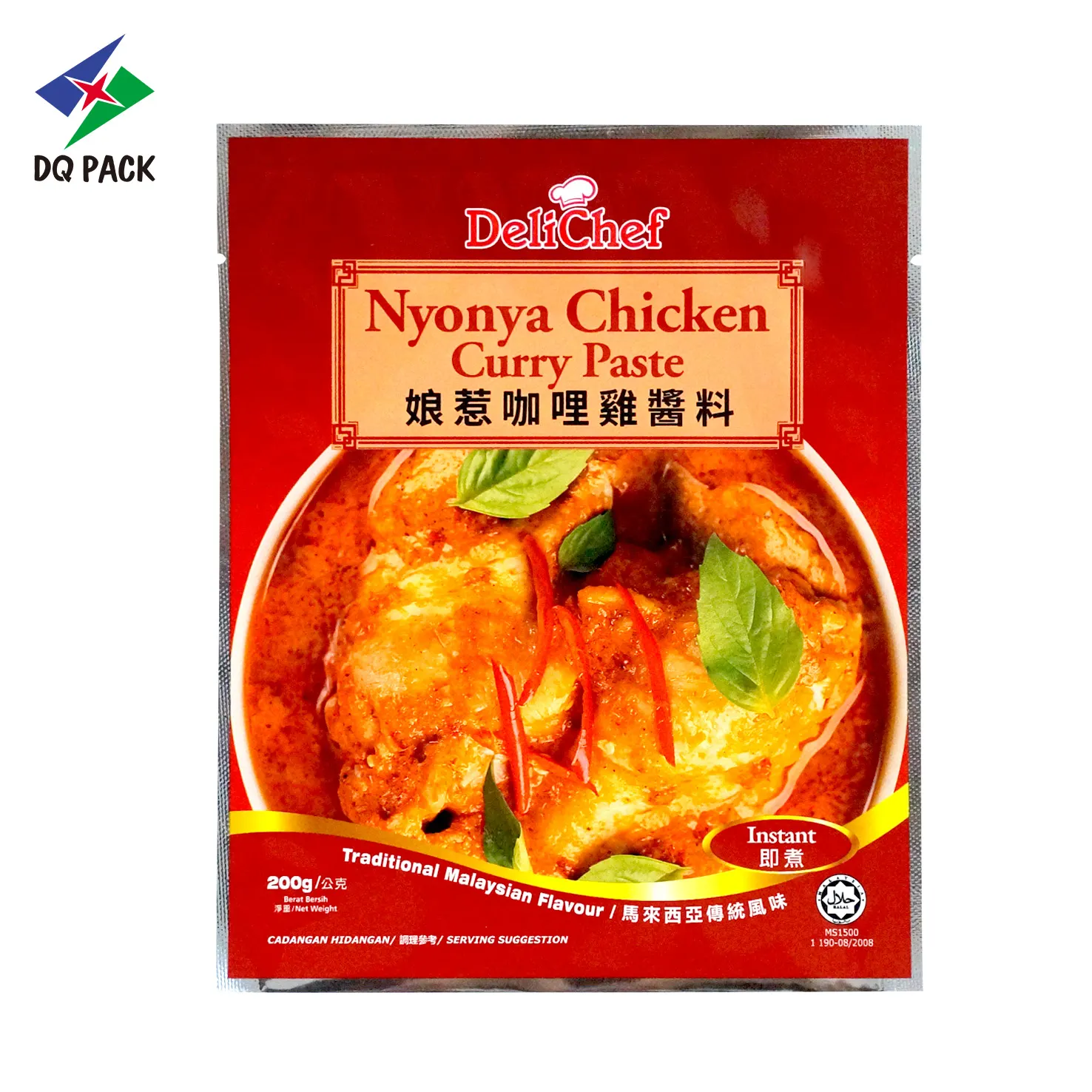


High-temperature retort pouches are ideal packaging for ready-to-eat foods, sauces, and wet pet food, but material selection involves much more than just “heat resistance.” Inadequate consideration of factors such as food characteristics, sterilization processes, sealing properties, and shelf life can easily lead to delamination, leakage, or pouch breakage after retort cooking. DQ PACK специализируется на customized flexible packaging and printing solutions, committed to providing you with high-quality, highly stable high-temperature retort packaging solutions.
What are retort pouches?
Retort pouches are flexible packaging made of multi-layer composite materials that can withstand high-temperature steaming and sterilization under validated process conditions. Compared with ordinary composite bags, retort pouches not only need to meet daily transportation and storage requirements, but also have to withstand the temperature, pressure, and mechanical stress during the sterilization process.
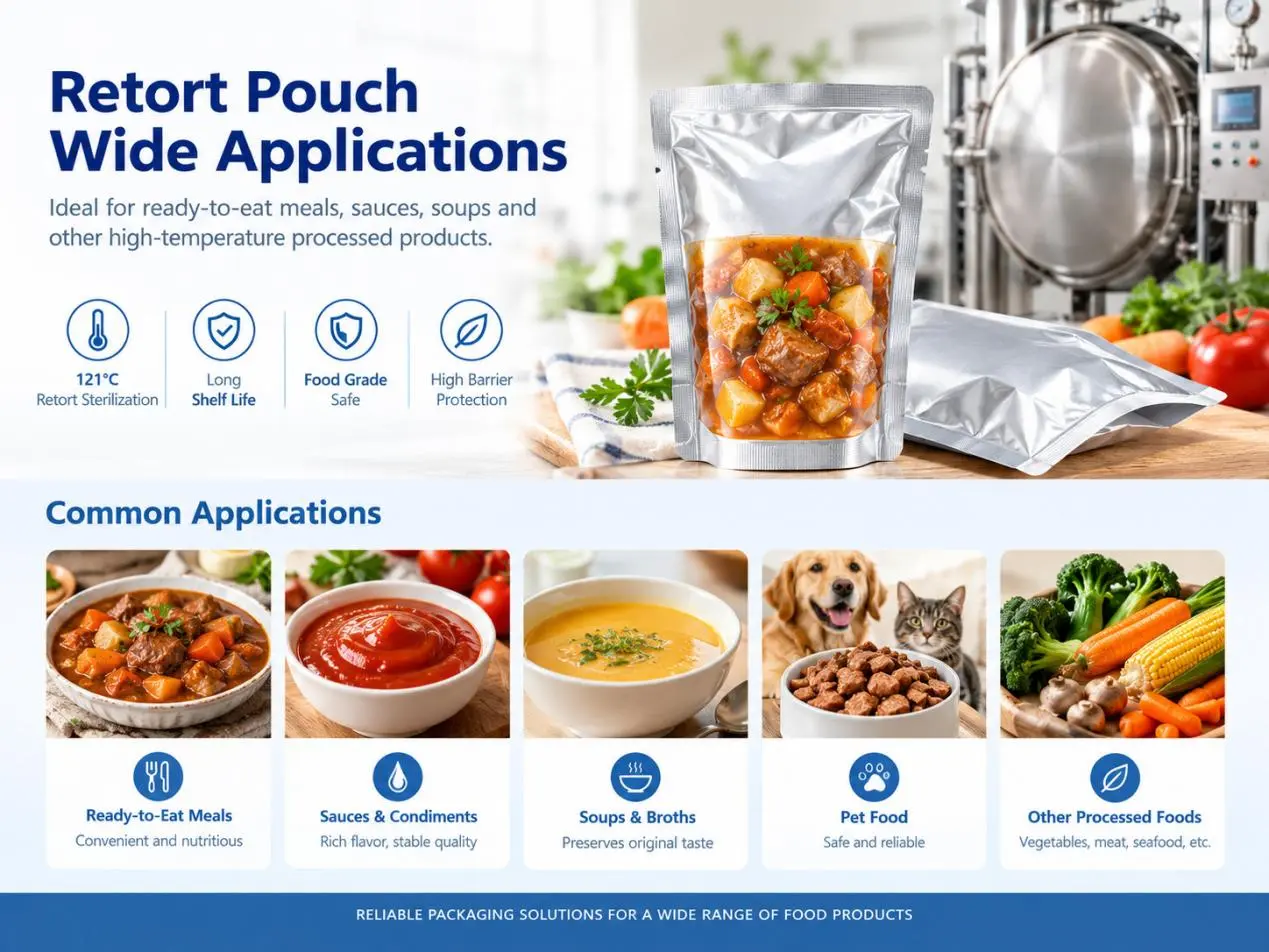
Retort pouches are commonly used for meat products, ready-to-eat meals, curry sauces, soups, as well as wet cat food and wet dog food products. For food that requires room temperature storage, packaging must be used in conjunction with validated heat treatment processes. The final shelf life depends on the food formula, sterilization effect, packaging integrity, and storage conditions, and cannot be judged solely based on material structure.
What materials and structures are commonly used for cooking bags?
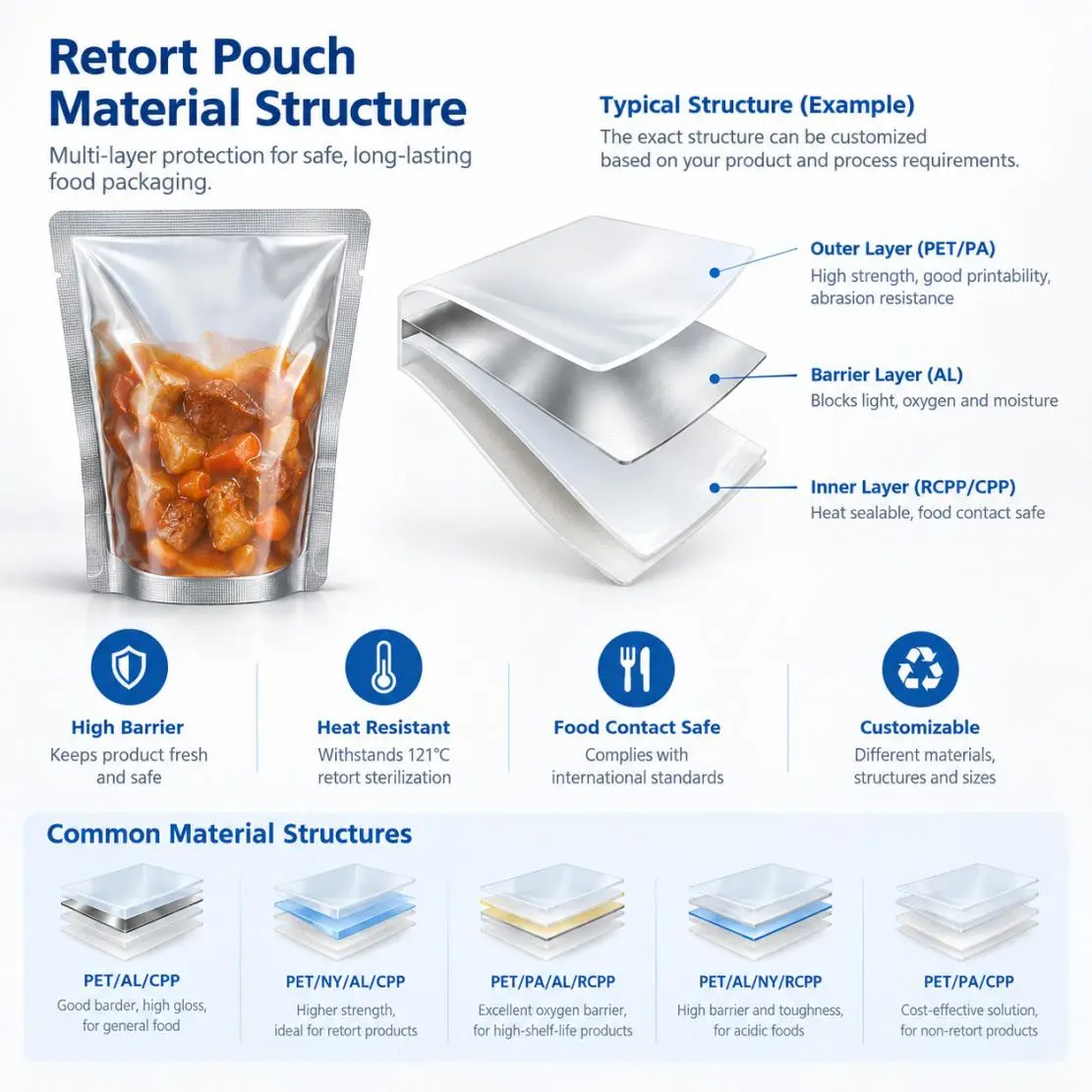
Retort pouches are generally composed of an outer layer, a middle functional layer, and an inner heat-sealing material. Different materials undertake different tasks, and the specific structure needs to be determined according to the product and processing conditions.
| Материал | Primary Function | Factors to Consider When Selecting |
| ПЭТ | Outer layer support, printing, and surface protection | Printing requirements, heat resistance, and compatibility with other materials |
| AL | Barriers against light, oxygen, and water vapor | Whether light protection and high barrier performance are required |
| NY/BOPA | Provides toughness and puncture resistance | Product form, sharp edges, and transportation risks |
| RCPP | Serves as an inner heat-sealable layer, suitable for corresponding retort processes | Heat resistance rating, heat-seal performance, and food contact requirements |
Common retort pouch structures include PET/NY/RCPP and PET/AL/NY/RCPP, but this does not mean the two structures are directly interchangeable.
Transparent structures allow consumers to see the contents, but barrier performance must be verified based on the target shelf life. Structures containing aluminum foil provide higher light-blocking and barrier capabilities, making them suitable for products that are sensitive to light and oxygen. If the product contains bones, hard particles, or sharp objects, the bag material thickness, puncture resistance, and bag design should also be evaluated.
The material structure should ultimately be confirmed jointly by the packaging supplier and the food manufacturer based on actual production processes; suitability cannot be determined solely by the material name.
Can retort pouches withstand 121°C or 135°C?
Both 121°C and 135°C may occur in food heat treatment processes, but not all retort pouches are suitable for these temperatures. Resistance depends on the inner layer resin, adhesive, lamination process, pouch structure, and actual processing conditions.
When selecting retort pouches, focus on verifying the following points:
- Inner heat-sealable material: Is it suitable for the intended retort temperature and duration?
- Laminating adhesive: Does it meet the corresponding retort resistance requirements?
- Heat-sealing parameters: Have the sealing temperature, pressure, and duration been validated?
- Bag structure: Whether the seal width, bag style, and material thickness meet actual usage requirements.
- Post-retort performance: Whether delamination, leakage, seal failure, or significant deformation occurs.
Leakage after retorting does not necessarily indicate that the film itself is not heat-resistant. Seal contamination, inappropriate heat-sealing parameters, poor adhesion between laminate layers, and mechanical stress generated by the product during the retorting process can all lead to failure.
Therefore, the suitability of the packaging cannot be determined solely based on the material specifications provided by the supplier. It is recommended to conduct filling, sealing, and retort testing using the actual contents and the planned production process, and then inspect the seal integrity, delamination, leakage, and bag condition.
What are the common retort pouch styles?
The choice of pouch style not only affects shelf display but also influences the filling method, package capacity, and seal design.
| Тип сумки | Common Applications | Key Selection Criteria |
| Three-Side Sealed Retort Pouch | Small-portion sauces, meat products, and some wet pet foods | Flatness, seal quality, and filling method |
| Stand-Up Retort Pouch | Ready-to-eat meals, soups, and some pet foods | Bottom structure, standing stability, and suitability for retort processing |
| Retort pouches with side gussets | Products requiring increased capacity | Seal integrity and stress distribution at the pleats |
| Custom-sized retort pouches | Food and pet food products of various specifications | Filling equipment, product volume, and sealing allowance |
When comparing the actual costs of retort pouches and metal cans, factors such as packaging materials, filling equipment, sterilization conditions, shipping volume, storage space, and product loss should be taken into account. While retort pouches may offer advantages in terms of empty package weight and storage and transportation, whether they ultimately result in cost savings must be evaluated based on the specific product and production scale.


How to Choose the Right Retort Pouch?
Before purchasing, it is recommended to first clarify the product and production process, and then confirm the material structure and pouch type with the supplier.
1. Identify the Characteristics of the Contents
The pH level, fat content, viscosity, particle shape, and presence of bones in food products all influence packaging design. For products containing fats or sharp particles, special attention should be paid to the compatibility of the inner layer material and its puncture resistance.
2. Confirm the Sterilization Process
Provide the planned sterilization temperature, time, pressure, and cooling conditions. Different processes have varying requirements for materials and sealing systems; packaging should not be selected based solely on a single temperature value.
3. Determine Pouch Type, Dimensions, and Thickness
Packaging dimensions must be compatible with the fill volume, the form of the contents, and the equipment. The seal design should also allow for sufficient space and account for the stress placed on the seams, bottom, and corners during the retort process.
4. Verify Packaging Performance After Retorting
Conduct filling, heat-sealing, and retort testing using actual product contents to inspect seal integrity, leaks, delamination, and bag deformation. Depending on product risk and applicable standards, corresponding tests for seal integrity, laminate bond strength, and other necessary inspections should also be conducted.
What Capabilities Should Be Verified When Selecting a Retort Pouch Manufacturer?
The quality of retort pouches depends not only on the film materials but also on the lamination, pouch-making, and quality control processes. When procuring, focus on verifying the following:
- Whether the manufacturer can provide a suitable material structure based on the product and sterilization conditions.
- Whether the manufacturer possesses the capability to control retort-grade lamination and bag-making processes.
- Whether the manufacturer can provide sample testing and quality inspection data that meet product requirements.
- Whether the manufacturer can collaborate with customers to customize bag styles, sizes, printing, and materials.
- Whether the manufacturer can specify the minimum order quantity, sample production lead time, and mass production delivery schedule.
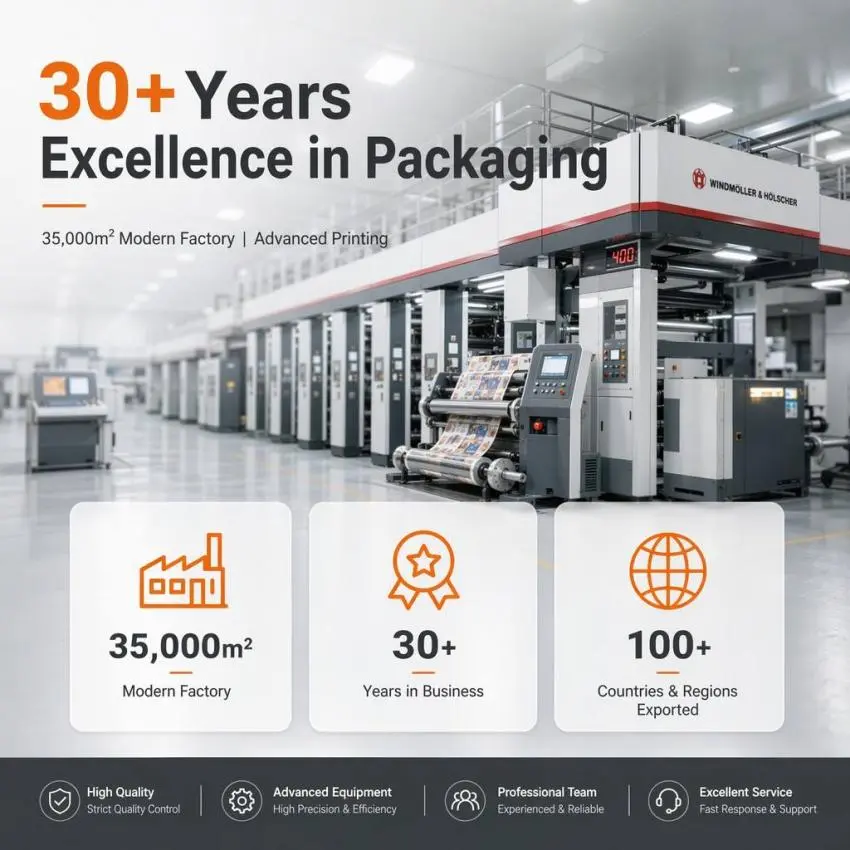
DQ PACK specializes in the R&D, production, and customization of laminated flexible packaging. We can discuss material structures and packaging solutions based on the customer’s product type, bag style requirements, and intended retort conditions. For new product development, we recommend confirming samples, actual filling conditions, and retort testing requirements prior to mass production to minimize the risk of having to adjust materials or bag styles later on.
ЧАСТО ЗАДАВАЕМЫЕ ВОПРОСЫ
1. What are retort pouches used for?
Retort pouches are used to package foods and other suitable products that require high-temperature heat sterilization. Common applications include ready-to-eat meals, meat products, soups, sauces, curry, and wet pet food. When combined with a validated sterilization process, they can support shelf-stable products without refrigeration before opening.
2. What materials are used to make retort pouches?
Common retort pouch materials include PET, aluminum foil (AL), nylon (NY/BOPA), and retort-grade cast polypropylene (RCPP). PET provides printing and structural support, aluminum foil offers strong light and gas barriers, nylon improves toughness and puncture resistance, and RCPP serves as the inner heat-sealing layer. The final laminate structure depends on the product and sterilization requirements.
3. Can retort pouches withstand 121°C sterilization?
Yes, appropriately designed retort pouches can withstand 121°C sterilization under specified processing conditions. However, suitability depends on the complete laminate structure, adhesive system, sealing performance, exposure time, pressure, and cooling conditions. Always verify performance through testing with the intended product and retort process.
4. What is the difference between retort pouches and regular food packaging bags?
Retort pouches are specifically designed to withstand validated high-temperature sterilization conditions, while ordinary food packaging bags may not tolerate the same heat and pressure. Retort-grade packaging requires suitable materials, adhesives, lamination processes, and heat seals to maintain package integrity during and after sterilization.
5. Are retort pouches suitable for wet pet food?
Yes. Retort pouches are widely used for wet cat food, wet dog food, and other pet food products that require heat processing. Material toughness, puncture resistance, seal integrity, and compatibility with fats or other ingredients should be evaluated, particularly for products containing bones or hard particles.
6. How do you choose the right retort pouch structure?
Start by identifying the product composition, filling temperature, sterilization conditions, barrier requirements, target shelf life, and packaging equipment. Then work with your packaging supplier to select suitable laminate materials, pouch dimensions, thickness, and sealing design. Actual filling, sealing, and retort testing should be completed before mass production.
7. Are retort pouches better than metal cans?
Retort pouches can offer advantages such as lower empty-package weight, reduced storage space for unfilled packaging, and flexible design options. Metal cans may offer different handling, stacking, and protection advantages. The better choice depends on product requirements, production equipment, logistics costs, packaging performance, and target market expectations.
8. What should buyers look for in a retort pouch manufacturer?
Buyers should evaluate the manufacturer’s experience with retort-grade flexible packaging, material and adhesive selection, lamination and pouch-making capabilities, quality control procedures, customization options, and sample-testing support. It is also important to confirm minimum order quantities, lead times, and the manufacturer’s ability to support consistent quality during mass production.
Заключение
Choosing the right retort pouches requires more than selecting a heat-resistant packaging material. Food characteristics, sterilization temperature and duration, laminate structure, heat-seal performance, and target shelf life must all be considered to ensure reliable packaging performance throughout processing, storage, and transportation.
For food manufacturers and pet food brands, working with an experienced flexible packaging manufacturer helps simplify material selection, pouch customization, and performance verification. Before moving to mass production, it is essential to test the packaging with the actual product and intended retort process to minimize the risk of leakage, delamination, and seal failure.
DQ PACK provides customized laminated flexible packaging solutions tailored to different product requirements, pouch styles, and processing conditions. Contact DQ PACK to discuss your retort pouch packaging requirements and request a customized solution for your next project.