

To choose pet food packaging correctly, you must first understand the product formula, moisture content, sterilization process, target shelf life, and transportation conditions—not simply select the most attractive bag. Different pet foods require different barrier materials, bag structures, and sealing performance to prevent moisture absorption, oxidation, leakage, or package failure. Since 1991, PAQUETE DQ has specialized in customized flexible packaging and printing solutions.
This guide explains how to choose pet food packaging for different pet food categories while helping manufacturers reduce packaging risks and improve product performance.
Why Pet Food Packaging Matters for Shelf Life and Quality
Envasado de alimentos para animales de compañía performs much more than a marketing function.
A properly designed package protects the product from:
- Oxygen
- Moisture
- Light
- Physical damage
- Microbial contamination
- Transportation stress
The correct packaging structure helps preserve nutritional value, flavor, freshness, and product safety throughout the supply chain.
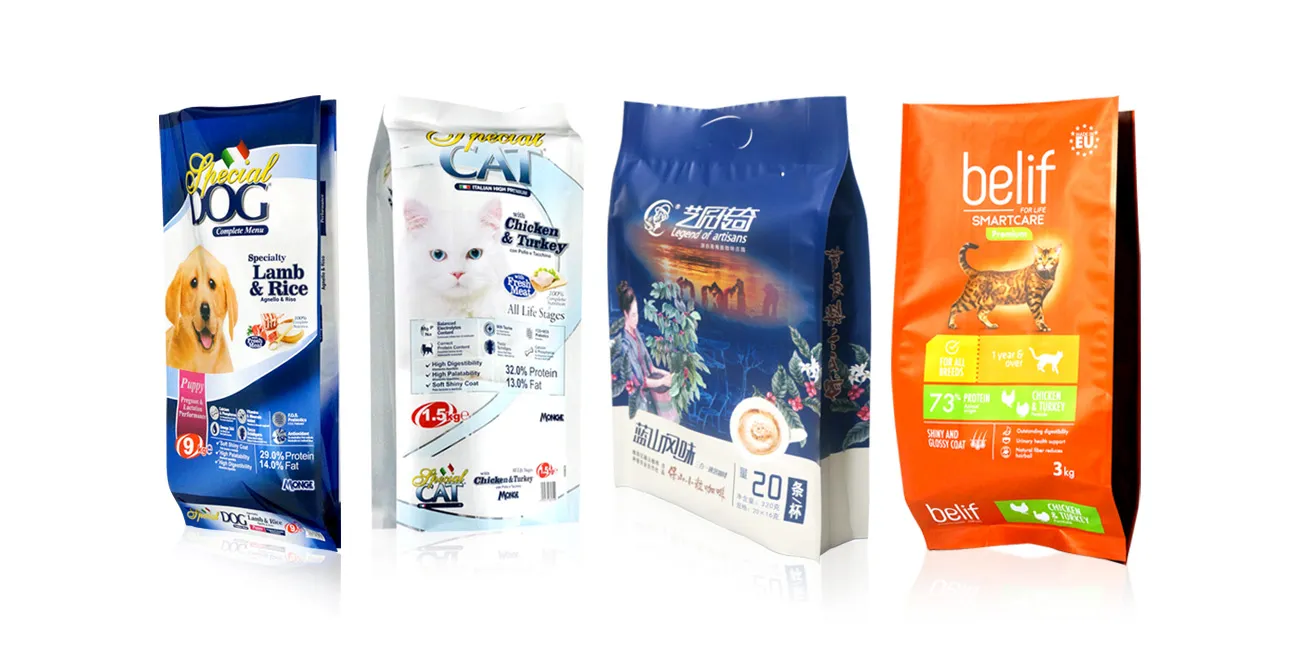
Professional Insight: The best packaging solution is determined by the food itself—not by the appearance of the bag.
Packaging Requirements for Different Pet Foods
Dry Pet Food
Dry kibble generally requires excellent moisture resistance and oxygen barrier performance.
Products containing higher fat levels are particularly sensitive to oxygen, which can accelerate oil oxidation and reduce flavor quality.
Recommended priorities:
- High moisture barrier
- Protección contra el oxígeno
- Gran capacidad de sellado
- Durable bag structure
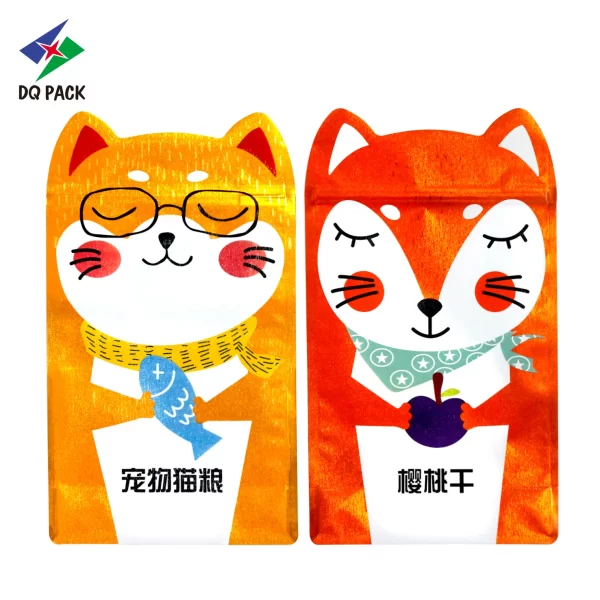
Freeze-Dried Pet Food
Freeze-dried products contain very little moisture but easily absorb humidity after opening.
When you choose pet food packaging for freeze-dried food, focus on:
- Excellent moisture barrier
- Oxygen resistance
- Resealable zipper options
- Extended shelf-life protection
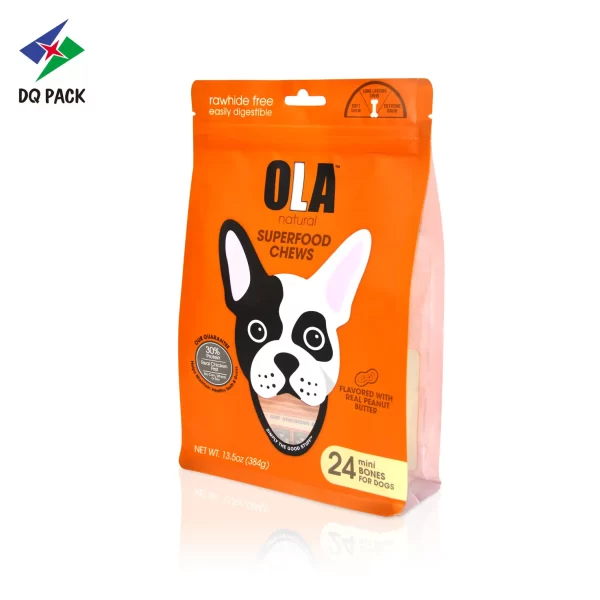
Pet Treats
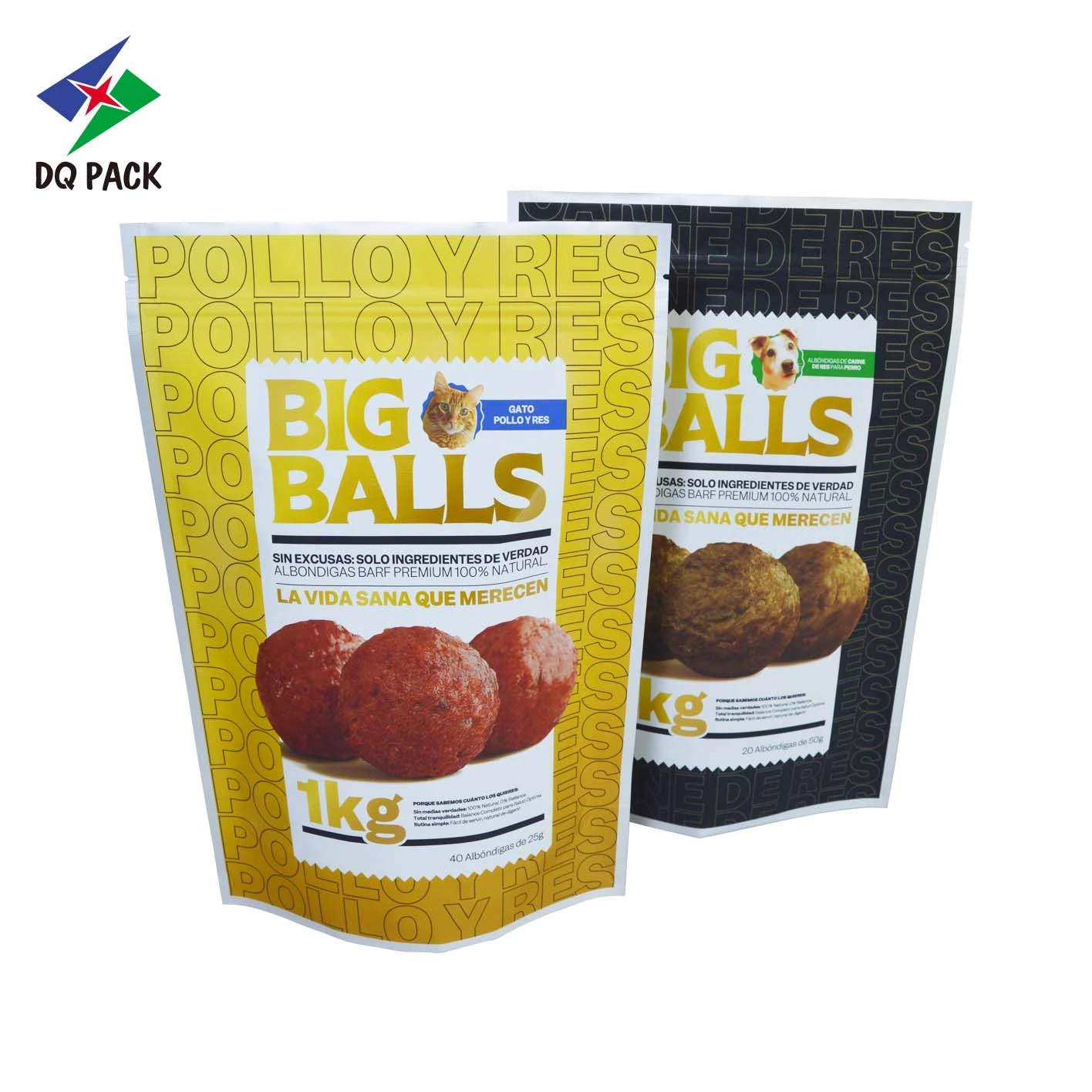
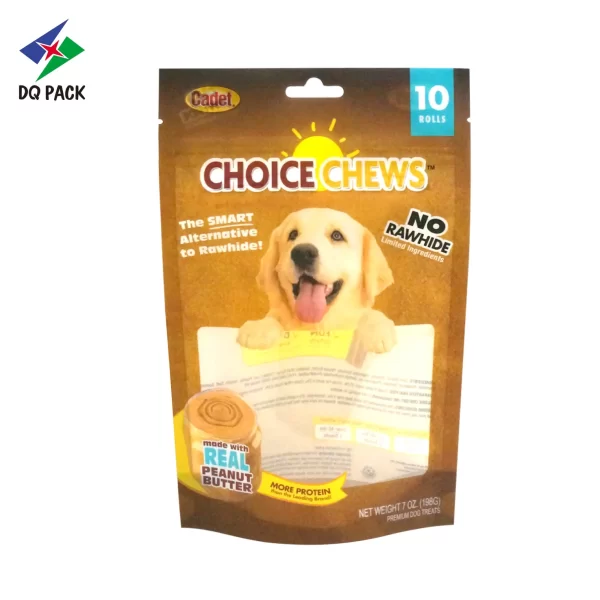
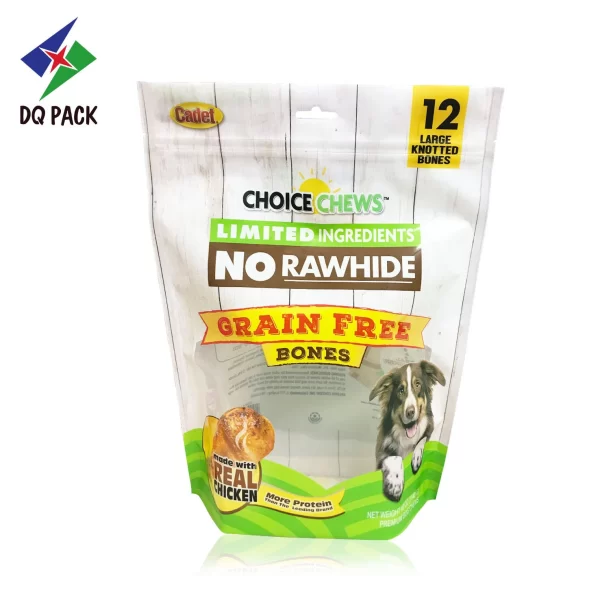
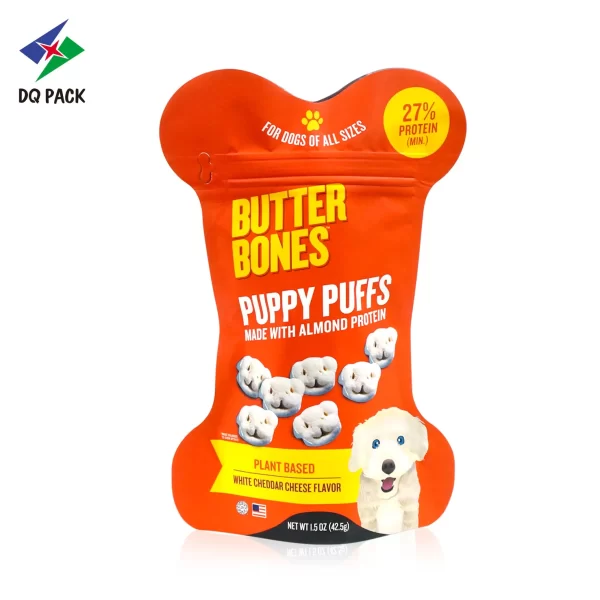
Jerky, biscuits, and freeze-dried snacks often require flexible packaging that balances product visibility with barrier performance.
Depending on the product, manufacturers may choose:
- Transparent windows
- Easy-tear openings
- Resealable zippers
- High-barrier laminates
Wet Pet Food
Wet food presents the greatest packaging challenge.
Because many wet pet foods undergo retort sterilization at approximately 121°C, packaging must withstand:
- High temperature
- High pressure
- Strong heat sealing
- Transportation impact
Ordinary laminated films are usually unsuitable without validation.
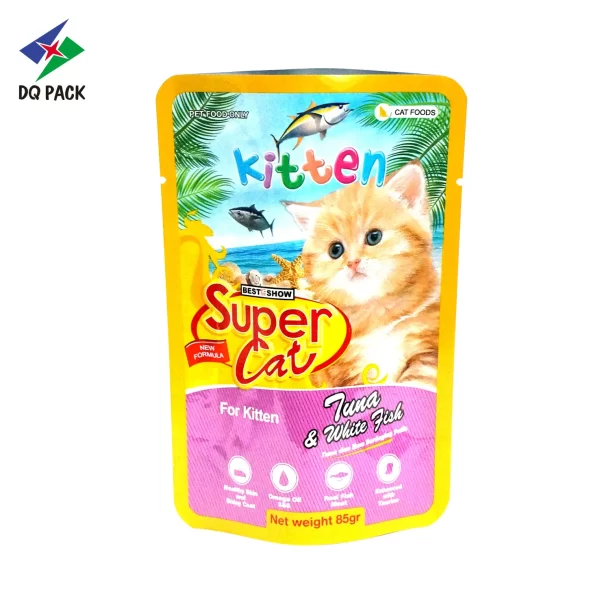
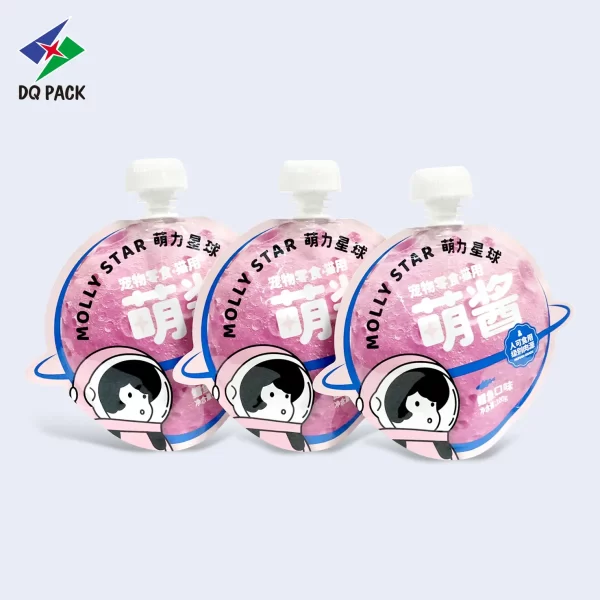
Why High-Barrier Packaging Is Essential
Most pet food packaging uses multilayer laminated structures because each material provides a different protective function.
1. Oxygen Barrier
Reduces oxygen penetration to minimize oil oxidation and preserve flavor.
2. Moisture Barrier
Prevents dry food, treats, and freeze-dried products from absorbing moisture.
3. Light Protection
Aluminum foil or metallized films reduce light exposure, helping maintain product quality for light-sensitive formulations.
When you choose pet food packaging, remember that barrier performance is determined by the material structure—not simply by bag thickness.
Recommended Packaging Structures
Standard Retort Packaging
A common structure is:
PET / AL / CPP
Functions:
- PET: Printing surface and mechanical strength
- AL: Oxygen, moisture, and light barrier
- CPP: Reliable heat sealing for retort processing
High Puncture Resistance Structure
For wet foods containing bones or hard meat pieces:
PET / AL / PA / CPP
Adding a PA (nylon) layer improves puncture resistance and helps reduce bag breakage during filling and transportation.
Best Bag Types for Different Pet Foods
| Tipo de producto | Recommended Packaging |
|---|---|
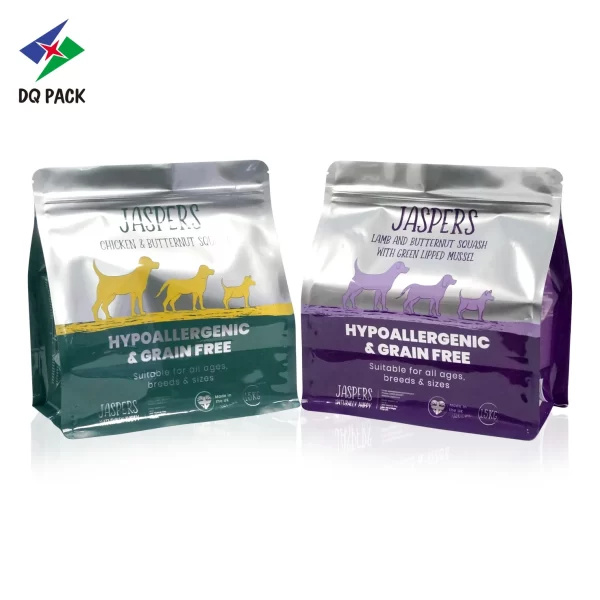
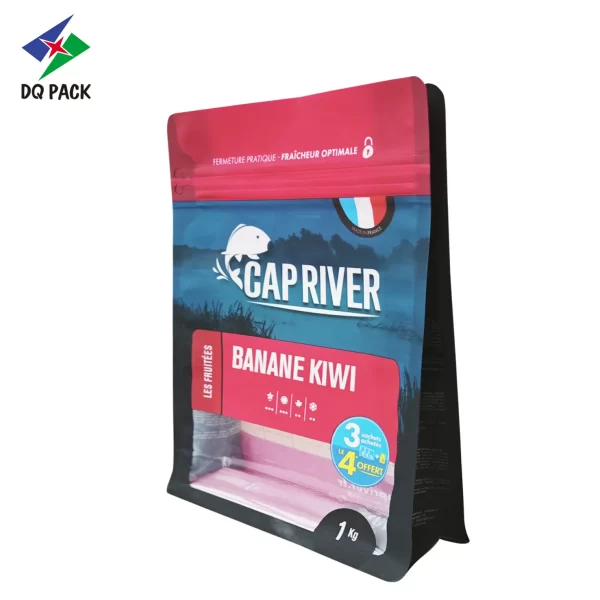
| Dry Pet Food | Stand-up zipper pouch, Flat-bottom (eight-side seal) bag |
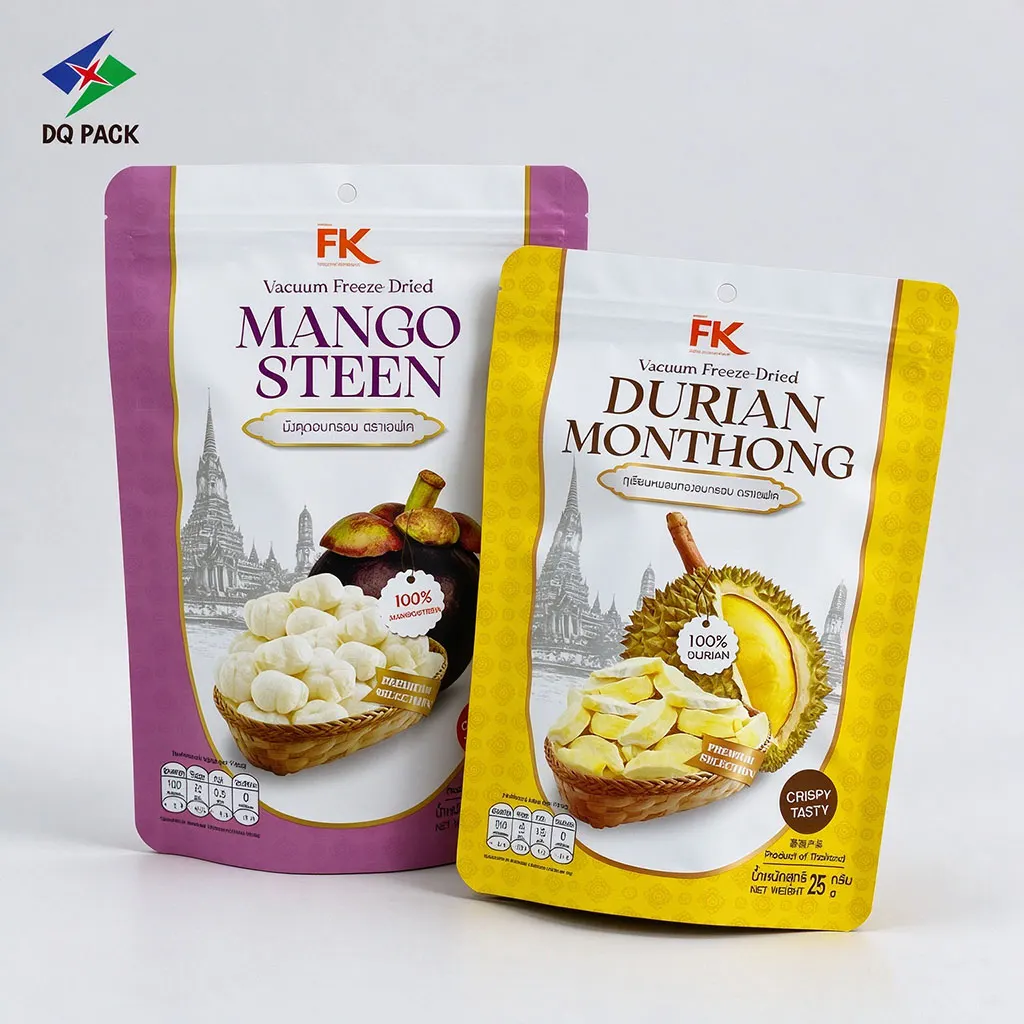
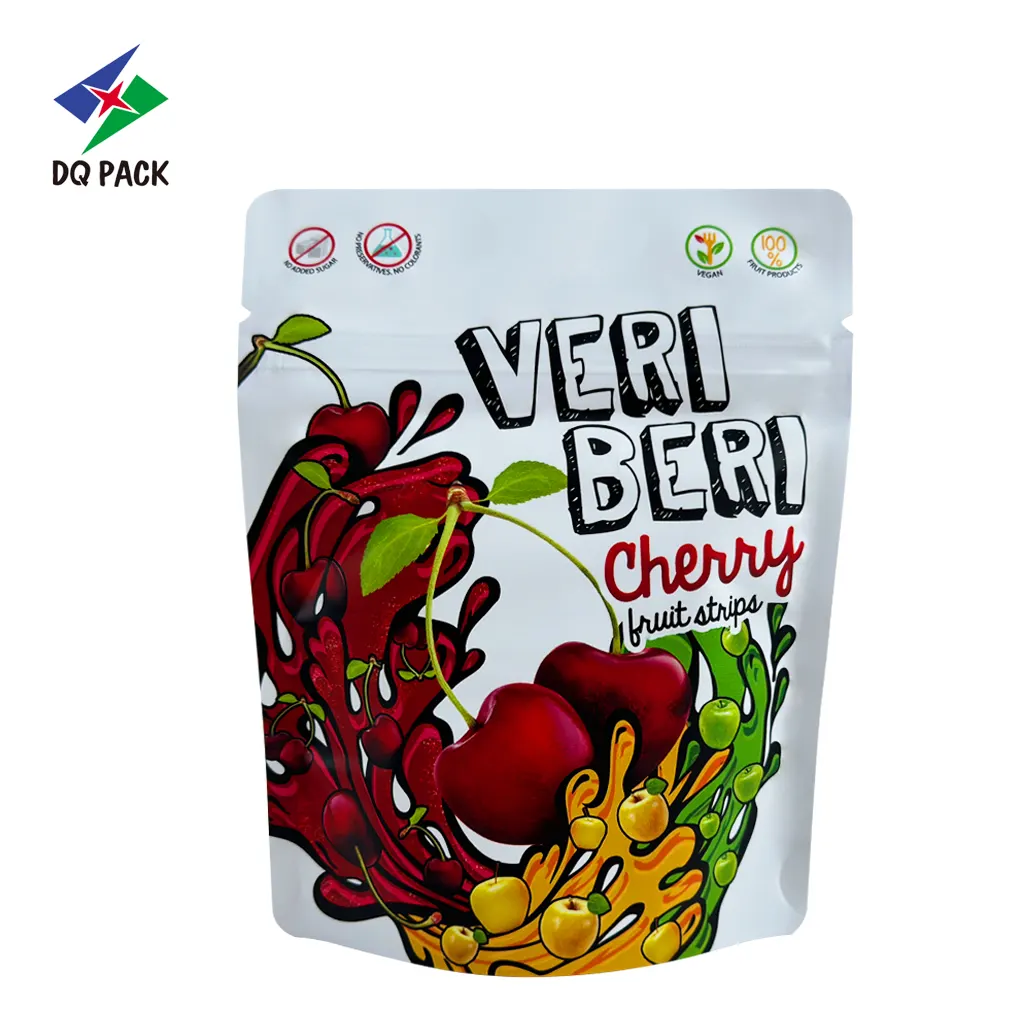
| Freeze-Dried Food | Stand-up zipper pouch |
| Pet Treats | Stand-up pouch, Three-side seal pouch |
| Wet Pet Food | Retort pouch, Retort rollstock film |
Each bag type offers different advantages depending on filling methods, shelf life, and retail presentation.
Transportation and Storage Should Never Be Ignored
Packaging performance extends beyond production.
Before you choose pet food packaging materials, ask:
- Is the product dry, freeze-dried, snack, or wet food?
- Will it undergo pasteurization or retort sterilization?
- Does it contain hard particles or bones?
- What is the required shelf life?
- Will it ship by sea, air, or land?
Long-distance export shipments require stronger:
- Heat-seal strength
- Resistencia a la perforación
- Rendimiento de la barrera
Evaluating these factors early helps reduce costly packaging failures.
Pros and Cons of Common Pet Food Packaging
High-Barrier Laminated Packaging
Pros
- Excellent oxygen and moisture protection
- Longer shelf life
- Better product freshness
- Suitable for premium products
- Strong printing quality
Contras
- Higher material cost
- More complex structure selection
- Requires experienced manufacturing
Stand-Up Zipper Pouches
Pros
- Convenient for consumers
- Resellable
- Excellent shelf display
- Suitable for dry food and treats
Contras
- Not suitable for all retort applications
- Higher production cost than simple pouches
Bolsas retortables
Pros
- Withstand high-temperature sterilization
- Excellent barrier performance
- Lightweight compared with cans
Contras
- Require validated material structures
- Higher technical production requirements
How to Choose Pet Food Packaging: Selection Checklist
Before finalizing your packaging, confirm:
✔ Product type identified
✔ Sterilization process confirmed
✔ Shelf-life target defined
✔ Transportation method evaluated
✔ Barrier requirements determined
✔ Bag type selected
✔ Packaging machine compatibility verified
✔ Export requirements confirmed
Why Global Brands Choose DQ PACK
Desde 1991, PAQUETE DQ has focused on providing customized flexible packaging and printing solutions for food brands worldwide.
Our capabilities include:
- High-barrier pet food bags
- Stand-up zipper pouches
- Flat-bottom bags
- Bolsas con cierre por tres lados
- Retort pouches
- Retort rollstock film
- Customized multilayer laminate structures
Our manufacturing advantages include:
- Over 30 years of industry experience
- 30,000 m² manufacturing facility
- Class 300,000 cleanroom production
- 6 automated printing lines
- 6 high-speed solvent-free laminating lines
- 7 cortadoras avanzadas
- 20 bag-making production lines
- ISO9001:2018-certified manufacturing
- More than 200 skilled employees
- Strong export experience across global markets
Rather than offering one standard packaging solution, we analyze your product formulation, sterilization process, filling equipment, transportation conditions, and shelf-life goals to recommend the most suitable packaging structure.
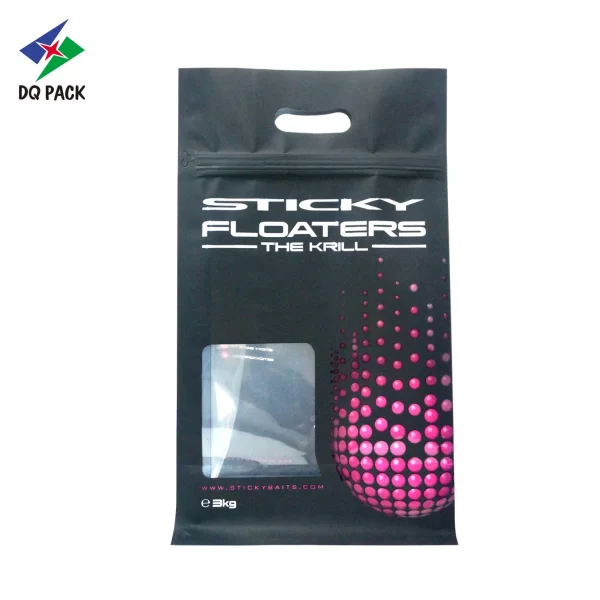
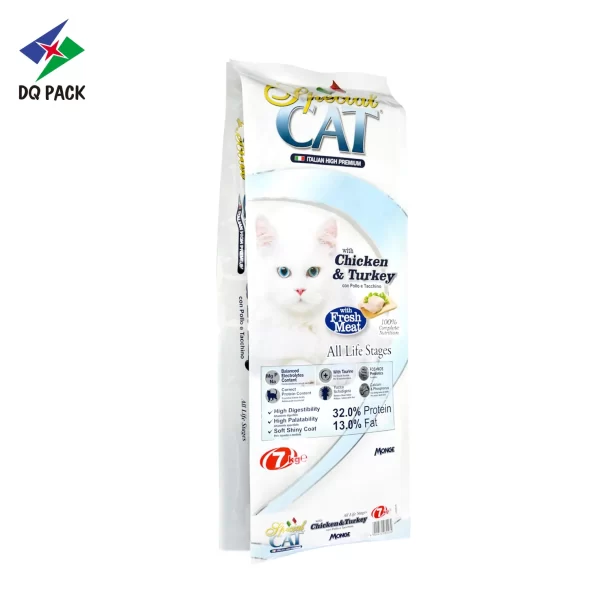
Preguntas frecuentes
1. What is the most important factor when choosing pet food packaging?
The product itself. Moisture content, oil content, sterilization method, and shelf-life requirements determine the ideal packaging structure.
2. Why is high-barrier packaging important?
It helps prevent oxygen, moisture, and light from affecting product quality, freshness, and shelf life.
3. Which packaging is best for freeze-dried pet food?
High-barrier stand-up zipper pouches are commonly recommended because they provide moisture protection and convenient resealing.
4. What packaging is suitable for wet pet food?
Retort pouches and retort rollstock films designed for high-temperature sterilization are the preferred choices.
5. Can DQ PACK customize packaging materials?
Yes. DQ PACK provides customized material structures, bag styles, printing, and packaging solutions according to your product requirements.
6. What information should I provide before requesting a quotation?
Provide your product type, filling weight, bag dimensions, sterilization process, target shelf life, packaging equipment, and annual purchasing volume for the most accurate recommendation.
Conclusión
To successfully choose pet food packaging, manufacturers must evaluate much more than appearance or material thickness. Product formulation, sterilization methods, barrier requirements, transportation conditions, and shelf-life expectations all play critical roles in selecting the right packaging solution.
The correct combination of material structure and bag type can significantly reduce moisture absorption, oxidation, puncture damage, and seal failures while improving product quality and customer satisfaction.
Partner with DQ PACK
Looking for a reliable partner to help you choose pet food packaging for your next product launch?
Desde 1991, PAQUETE DQ has helped global pet food brands develop customized flexible packaging solutions that combine high barrier performance, attractive shelf presentation, reliable manufacturing quality, and efficient production.
Whether you need stand-up zipper pouches, flat-bottom bags, retort pouches, rollstock films, or fully customized multilayer laminate structures, our experienced engineering team is ready to support your project from material selection to mass production.
Póngase en contacto con PAQUETE DQ today to request samples, discuss your packaging requirements, or receive a customized packaging solution designed specifically for your pet food products.