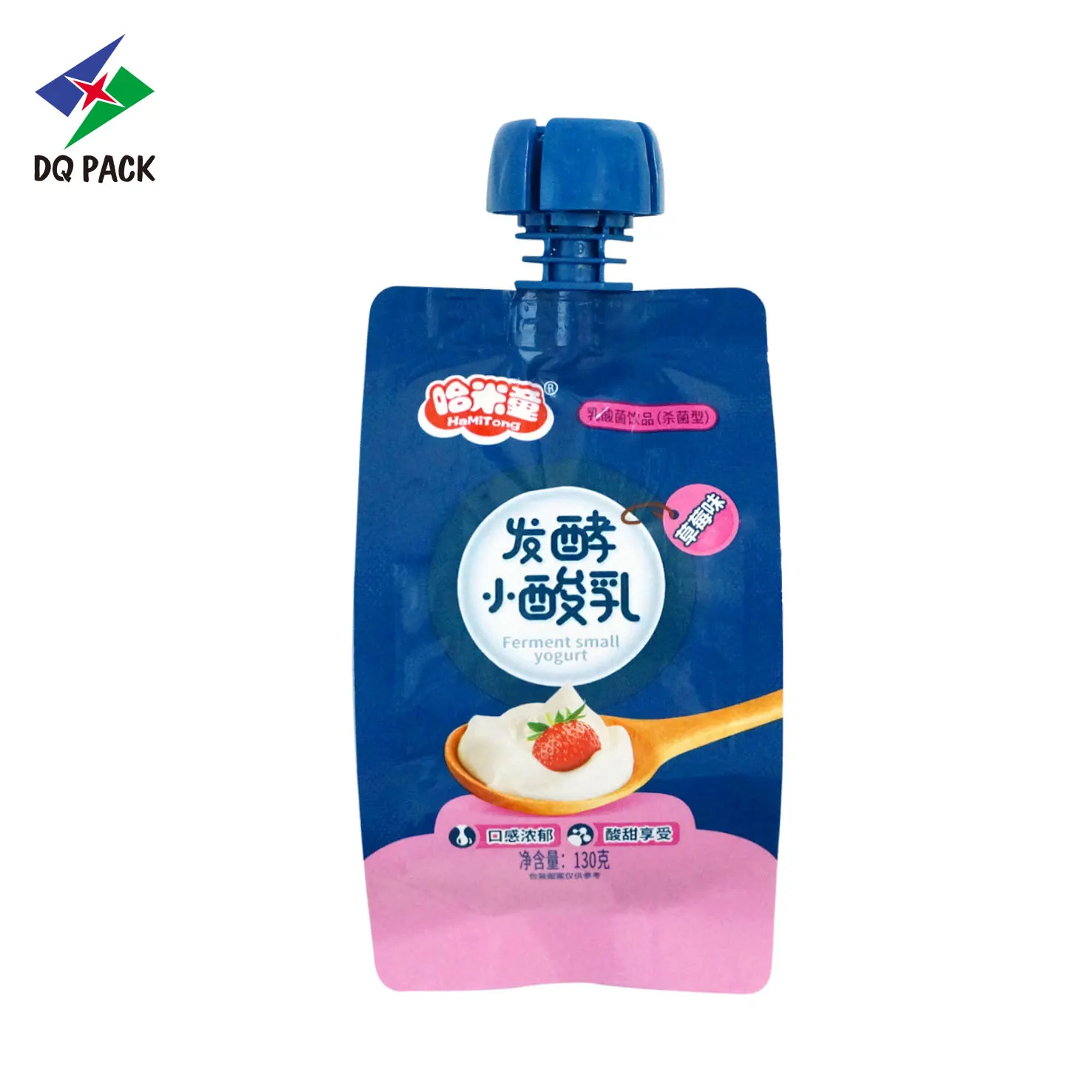


Una fuente fiable bolsa de caño guide begins with one simple principle: leak-proof performance is determined by the complete packaging system—not by film thickness alone. Material structure, spout compatibility, heat sealing, filling temperature, transportation conditions, and product characteristics must all work together to ensure packaging reliability.
PAQUETE DQ has specialized in custom flexible packaging and printing solutions for global brands. With more than 30 years of manufacturing and export experience, supported by over 200 skilled employees, PAQUETE DQ has become one of the industry’s trusted manufacturers for liquid, food, beverage, and personal care packaging.
Whether you need traditional high-barrier laminates or recyclable mono-material solutions, this spout pouch guide explains how to choose the right structure while avoiding the most common causes of leakage.
Spout Pouch Guide: Why Structure Matters More Than Thickness
Many buyers assume that selecting a thicker pouch automatically prevents leakage. In reality, experienced packaging engineers know that this is rarely true.
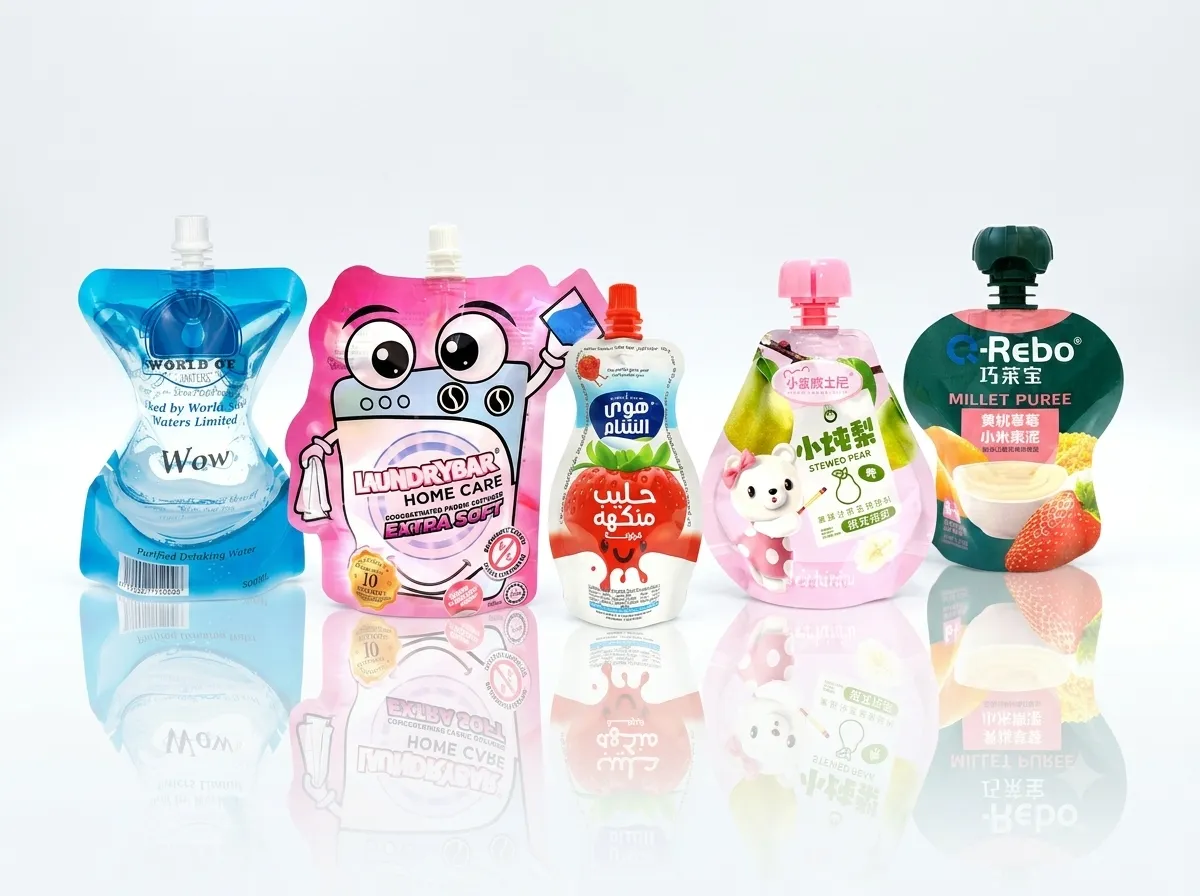
A well-designed spout pouch guide focuses on the interaction between every component of the package:
- Film structure
- Spout material
- Heat-sealing performance
- Temperatura de llenado
- Viscosidad del producto
- Condiciones de transporte
- Drop resistance
- Oxygen and moisture barrier requirements
If any one of these factors is overlooked, leakage may occur even when the pouch appears perfectly sealed during laboratory testing.
For liquid products such as laundry detergent, beverages, fruit puree, sauces, shampoo, cooking oil, and refill packaging, successful packaging design always begins with selecting the correct material structure—not simply increasing film thickness.
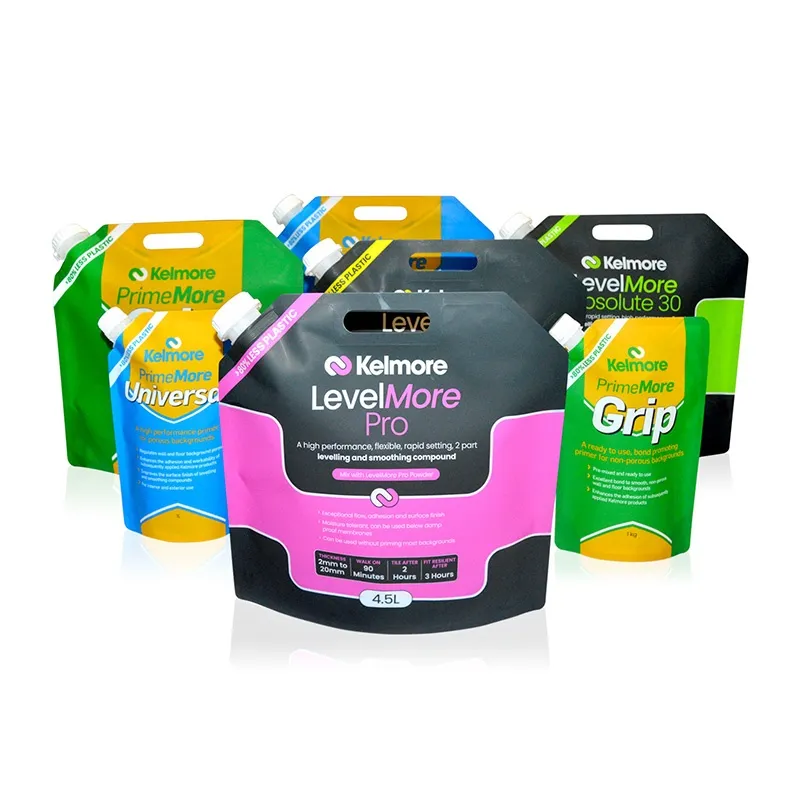
Why Spout Pouches Leak: Root Causes Beyond Material Thickness
Leakage is rarely caused by only one factor.
During filling, warehousing, transportation, and retail distribution, a pouch experiences compression, vibration, repeated impacts, and occasional drops. These external forces continuously transfer stress to the weakest part of the package.
For most bolsas de caño, the weakest locations include:
- The spout sealing area
- The bottom gusset
- Side seals
- Fold corners
- High-stress transition areas
For pouches larger than 1L, the liquid itself creates significant internal impact during transportation. Every movement generates hydraulic pressure inside the package, placing repeated stress on the sealing area around the spout.
This explains why many packages pass initial leak tests but fail after weeks of logistics or long-distance shipping.
A professional spout pouch guide therefore evaluates packaging as a complete engineering system instead of judging quality by thickness alone.
The Real Cause Often Lies at the Spout Base
One of the most common misunderstandings is believing that stronger film automatically creates stronger packaging.
In fact, leakage frequently occurs where the spout is welded to the pouch body.
Although the laminated film may have excellent tensile strength, poor compatibility between the spout resin and the inner sealing layer can prevent proper molecular fusion during heat sealing.
The result is a seal that appears intact visually but lacks sufficient bonding strength.
Once subjected to transportation vibration or repeated squeezing by consumers, micro-cracks gradually develop before visible leakage appears.
For this reason, successful spout pouch manufacturing depends on balancing two critical objectives:
- The pouch body must resist puncture, tearing, and impact.
- The spout area must achieve stable molecular fusion with the inner sealing layer.
Both are equally important.
Material & Spec Selection: Matching Structure to Product Needs
Why Different Products Need Different Structures
One of the biggest mistakes packaging buyers make is copying an existing pouch specification from another product.
A spout pouch guide should always begin with understanding the packaged product itself.
The following questions determine the optimal structure:
- Is the product water-based or oil-based?
- What is the viscosity?
- Does it contain alcohol?
- Is it acidic?
- Will it undergo hot filling?
- Will it be retorted?
- How long is the expected shelf life?
- Will it be exported internationally?
Even products with identical capacities may require completely different material combinations.
For example:
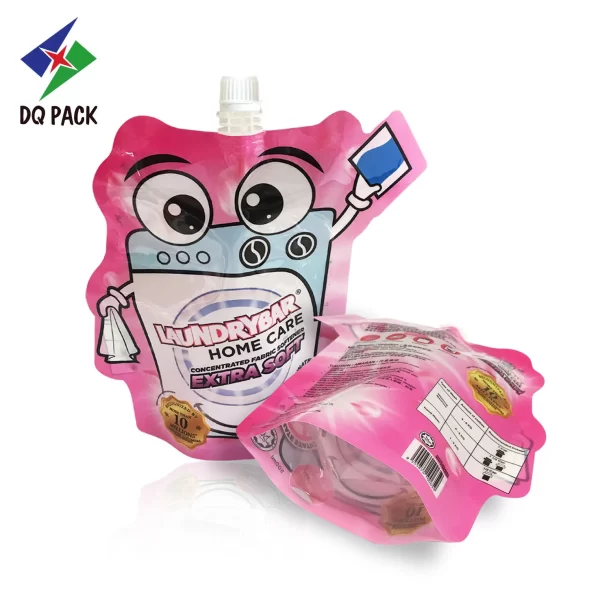
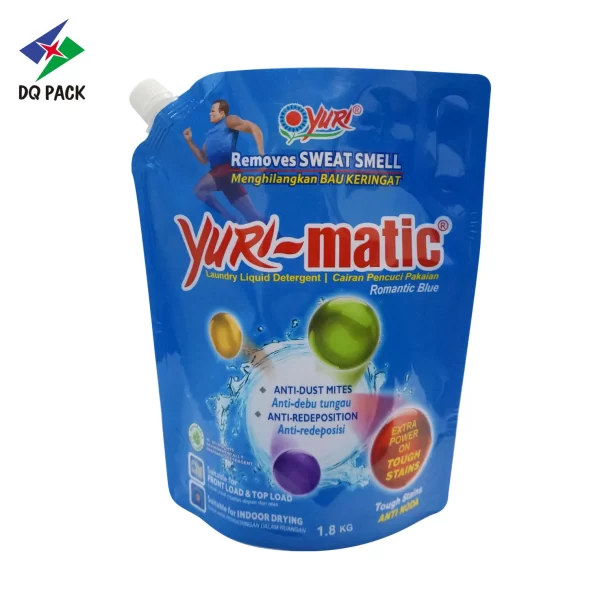
- A 1L laundry detergent mainly requires impact resistance.
- A 1L tomato sauce requires oxygen barrier and heat resistance.
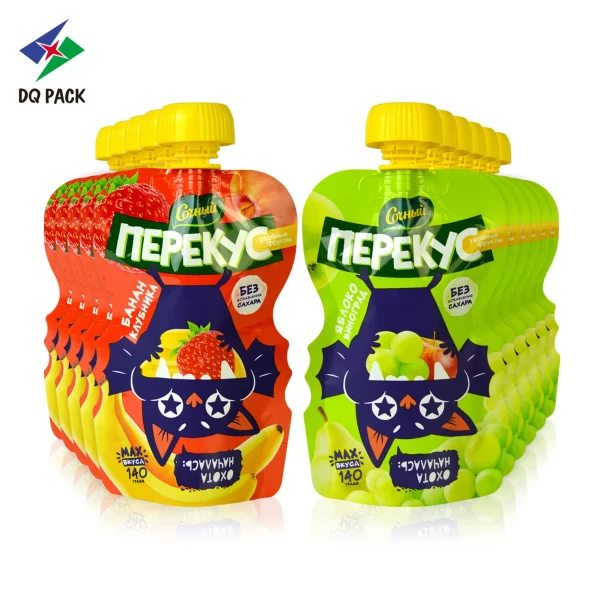
- A 1L fruit puree may require retort resistance.
- A 1L beverage concentrate requires both barrier protection and seal stability.
Selecting the wrong structure often leads to unnecessary material costs—or worse, product failure after launch.
Choosing the Right Structure for Household Cleaning Products
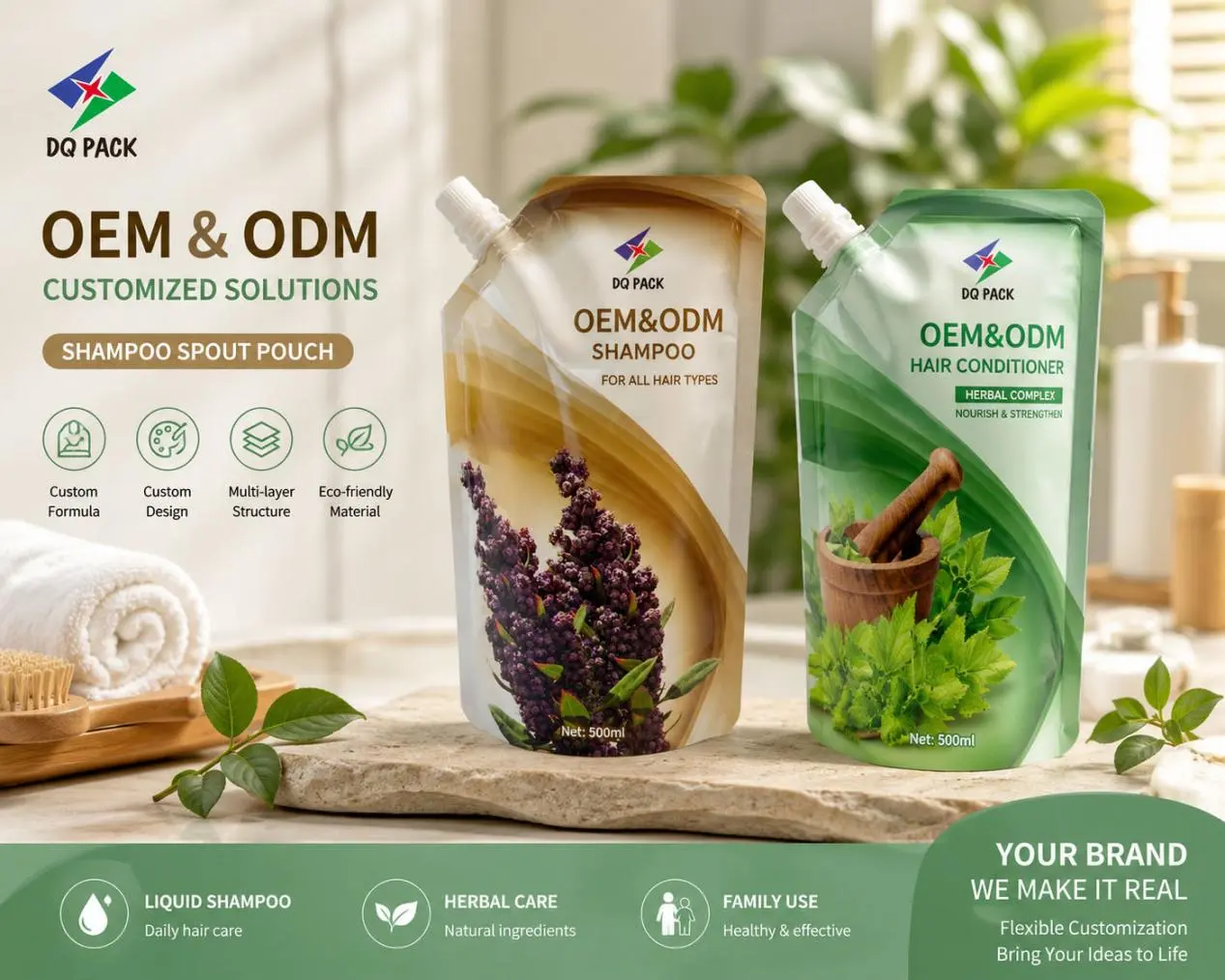
Products between 1L and 5L experience significant internal pressure during transportation.
Commonly recommended structures such as:
PET12 / BOPA15 / LLDPE110
Each layer performs a different function.
PET Layer
- Excellent printability
- Surface protection
- Estabilidad dimensional
BOPA (Nylon) Layer
- Improved puncture resistance
- Better drop resistance
- Enhanced toughness during transportation
LLDPE Inner Layer
- Reliable heat sealing
- Chemical resistance
- Good flexibility
- Direct product contact
Many buyers request thicker nylon layers, assuming they automatically improve performance.
However, this is not always true.
The appropriate nylon thickness depends on:
- Volumen del paquete
- Product weight
- Shipping distance
- Drop requirements
- Filling process
- Transportation environment
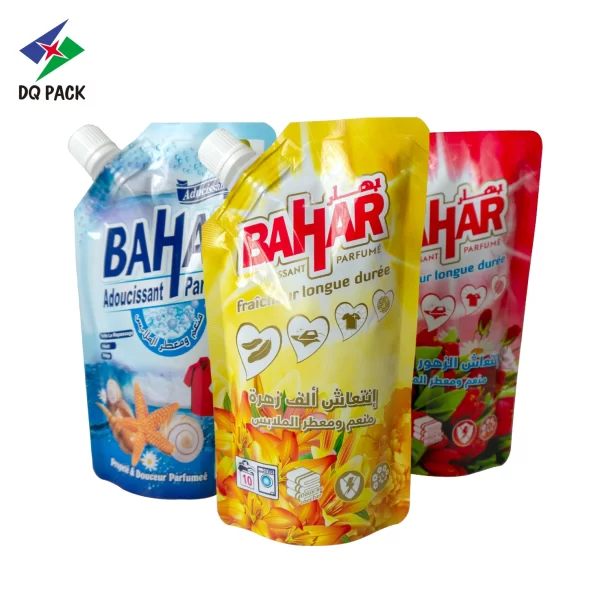
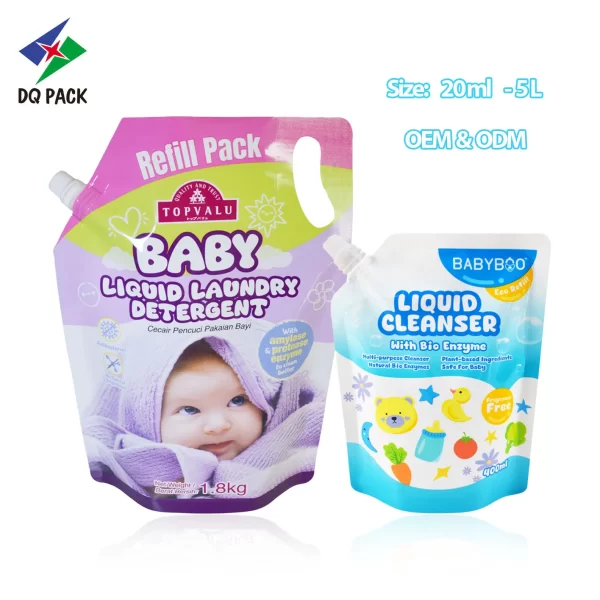
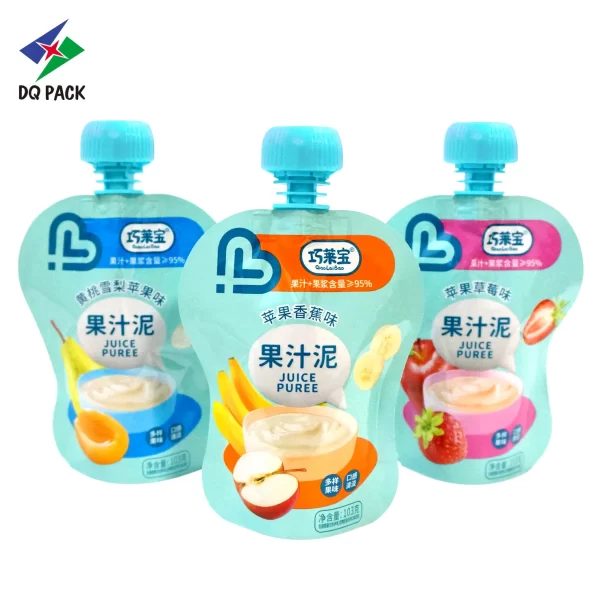
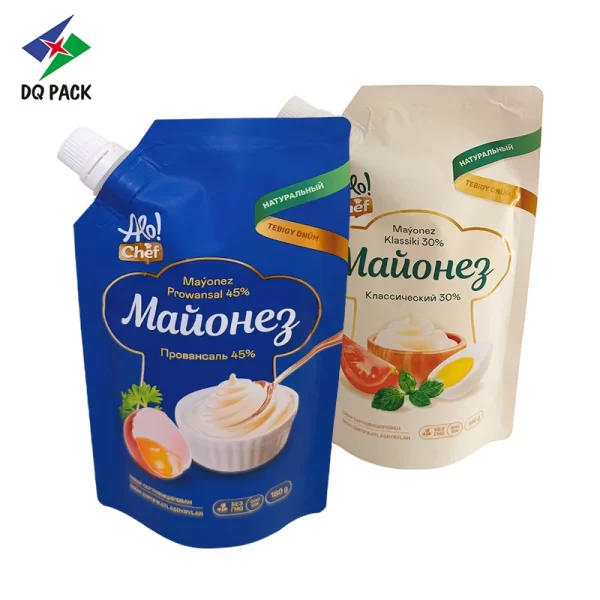
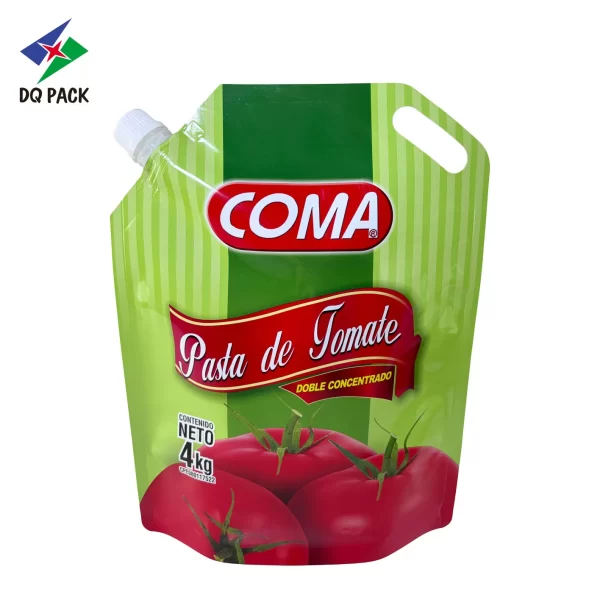
High-Barrier Spout Pouches for Sauces, Fruit Purees, and Hot-Filled Foods
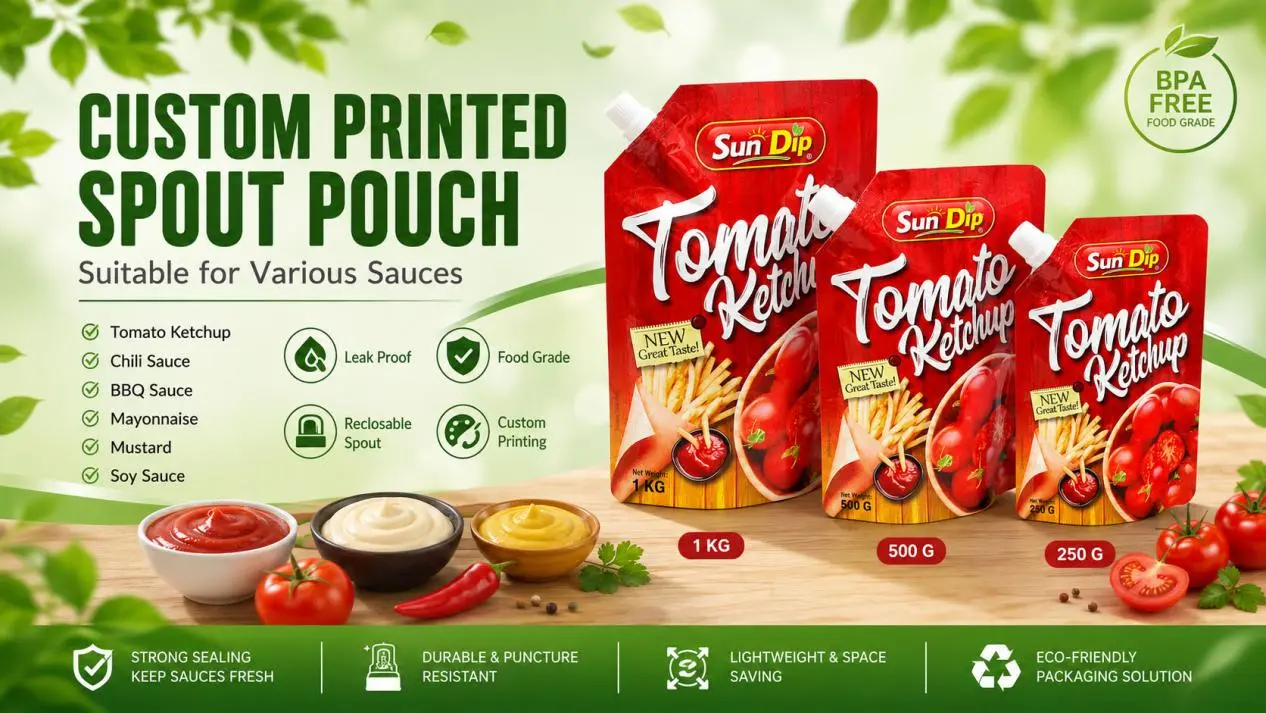
When packaging sauces, fruit purees, cooking ingredients, or other food products, mechanical strength is only one part of the equation. Oxygen transmission, moisture protection, filling temperature, sterilization conditions, and product composition can all affect package performance.
A reliable spout pouch guide should therefore consider both barrier protection and thermal resistance when selecting materials for food applications.
For products requiring strong oxygen and moisture barriers, a structure such as:
PET / AL / NY / CPP
may be considered, depending on the product, filling process, and required shelf life.
What Does Each Layer Do?
- PET: Provides printability, stiffness, and outer-layer protection.
- AL: Provides an excellent barrier against oxygen, moisture, light, and other external factors.
- NY: Improves toughness and resistance to mechanical stress.
- CPP: Provides a suitable heat-sealing layer for higher-temperature applications.
However, no material structure should be selected solely from a standard specification sheet.
If the product is hot-filled at temperatures above approximately 85°C, or undergoes retort processing around 121°C, the complete laminate and sealing system should be validated under actual processing conditions.
The FDA’s food-contact framework also emphasizes that packaging materials intended for food contact must be suitable for their intended conditions of use. Therefore, food packaging buyers should confirm that the selected materials and components are appropriate for the specific application rather than relying only on a general “food-grade” claim.
For international food brands, this is particularly important because the packaging must be compatible not only with the product but also with the filling, processing, transportation, and regulatory requirements of the target market.
How to Choose Spout Pouch Materials for Different Applications
A practical spout pouch guide should make material selection easier for buyers. The following framework can be used during the initial specification stage.
| Application | Typical Priority | Structure Direction |
|---|---|---|
| Detergente para la colada | Drop resistance, chemical resistance | PET / BOPA / PE |
| Jabón de manos | Flexibility, sealing, printability | PET / BOPA / PE |
| Shampoo | Chemical resistance, appearance | PET / PE or high-strength laminate |
| Salsas | Barrier, seal strength, food compatibility | PET / AL / NY / CPP |
| Puré de fruta | Barrier, thermal resistance | High-barrier heat-resistant laminate |
| Bebidas | Barrier, sealing, product compatibility | PET / PE or barrier laminate |
| Retort food | High-temperature resistance | Retort-grade laminate |
| Refill products | Mechanical strength, convenience | PET / BOPA / PE or mono-material PE |
These structures are examples rather than universal specifications. The final material combination should be confirmed through product compatibility testing and actual filling conditions.
Recyclable Mono-Material Spout Pouches: What Buyers Should Know
Sostenibilidad is becoming an increasingly important consideration in flexible packaging procurement.
In particular, brands selling into markets with ambitious packaging-recycling targets are increasingly evaluating mono-material PE spout pouches.
Typical structures may include:
MDO-PE / HDPE
o
BOPE / LLDPE
The objective is to simplify the material composition while maintaining sufficient mechanical strength, printability, sealing performance, and product protection.
However, a mono-material pouch is not simply a conventional PET/PE pouch with PET replaced by PE.
Changing the outer structure can affect:
- Rigidez
- Tensile strength
- Resistencia a la perforación
- Heat-sealing behavior
- Coefficient of friction
- Printing performance
- Machine handling
- Overall pouch appearance
Therefore, a good spout pouch guide must look at the entire packaging system when discussing recyclability.
Pros and Cons of Mono-PE Spout Pouches
Pros
- Supports packaging-design strategies focused on material simplification
- Can provide a PE-based packaging structure
- Potentially improves compatibility with PE recycling streams where accepted
- Maintains the flexible format and convenient dispensing of spout pouches
- Suitable for brands seeking recyclable packaging alternatives
Contras
- May have lower stiffness than some conventional laminates
- Requires careful material engineering
- Heat-seal performance must be validated
- Spout and cap material compatibility must be considered
- Not automatically recyclable in every local recycling system
This last point is important.
“Mono-material” does not automatically mean “recyclable everywhere.”
Actual recyclability depends on the package design, local collection infrastructure, sorting technology, recycling system, and applicable regulations.
For brands targeting the European market, buyers should also review applicable EU packaging requirements and market-specific recycling rules before finalizing a mono-material specification.
Engineering Zero-Leak Spout Pouches: Spout, Geometry, and Sealing
Preventing Leakage Around the Spout Base
The spout base is one of the most critical areas in a spouted pouch.
A pouch may have excellent film strength and still fail if the spout-to-film seal is insufficient.
This is why a professional spout pouch guide should always include heat-sealing parameters.
Key Heat-Sealing Parameters
1. Heat-Sealing Temperature
The temperature must be high enough to activate the sealing layer but controlled carefully to prevent deformation, shrinkage, or damage.
2. Heat-Sealing Pressure
Insufficient pressure can create incomplete contact between the spout and film.
Excessive pressure, however, may cause material deformation or uneven sealing.
3. Pressure Hold Time
The sealing interface needs sufficient time under pressure for a stable seal to form.
4. Heat-Sealing Jaw Design
The geometry of the sealing jaw affects how force is distributed around the spout.
5. Spout and Film Compatibility
The resin used for the spout should be compatible with the pouch’s inner sealing layer.
This is one of the most important considerations for achieving reliable fusion.
Why Spout Compatibility Matters
Suppose the inner layer of the pouch is made from a PE-based sealing film while the spout uses a material with significantly different melting and flow characteristics.
The equipment may still create a visible seal.
But a visible seal does not necessarily mean a strong seal.
During transportation, the package may experience:
Drop → Compression → Vibration → Localized Stress → Seal Failure → Leakage
This is why the spout material should be evaluated together with the inner film rather than treated as a separate purchasing decision.
For automatic filling and capping lines, buyers should also confirm:
- Diámetro de la boquilla
- Spout height
- Cap dimensions
- Opening dimensions
- Compatibilidad de las boquillas de llenado
- Capping torque
- Machine handling requirements
A small mismatch can create production problems even when the pouch itself performs well in laboratory testing.
Spout Design and Pouch Geometry Also Affect Leakage
Material selection is only part of the solution.
The physical design of the pouch determines how forces are distributed during handling.
For larger-volume pouches, the transition between the spout and pouch body can become a concentrated stress point.
A carefully engineered spout pouch guide therefore considers:
- Posición del pico
- Diámetro de la boquilla
- Ancho de la junta
- Pouch width
- Bottom-gusset design
- Corner geometry
- Fill volume
- Headspace
- Overall pouch shape
For certain large-format applications, a 45° bevel or curved sealing geometry can help distribute mechanical stress more effectively than a sharply concentrated sealing configuration.
The correct design depends on the pouch format and manufacturing process, so it should be validated using actual filled samples.
Validation: Critical Leakage & Strength Testing Before Mass Production
Key Lab Tests for Spout Pouches
No spout pouch guide can replace real-world testing.
Laboratory inspection of an empty pouch is useful, but it does not fully reproduce the conditions the package experiences after filling.
A professional validation program should test the finished pouch with the actual product whenever possible.
Recommended Spout Pouch Tests
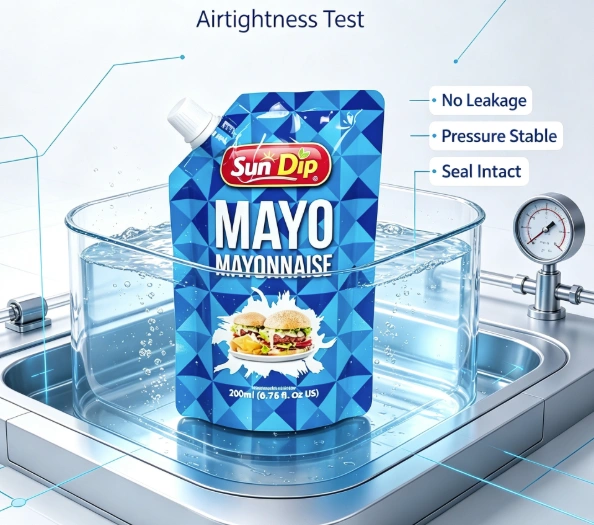
1. Airtightness Test
Checks whether the finished package maintains its seal without air leakage.
This is particularly useful for identifying micro-leaks around the spout and sealing areas.
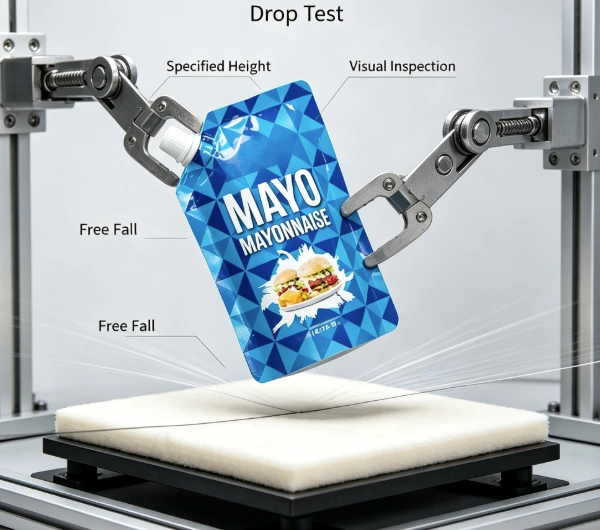
2. Drop Test
Evaluates whether the filled pouch can withstand impacts from realistic handling and transportation.
For large-volume liquid pouches, this is especially important because the liquid creates significant impact forces during a drop.
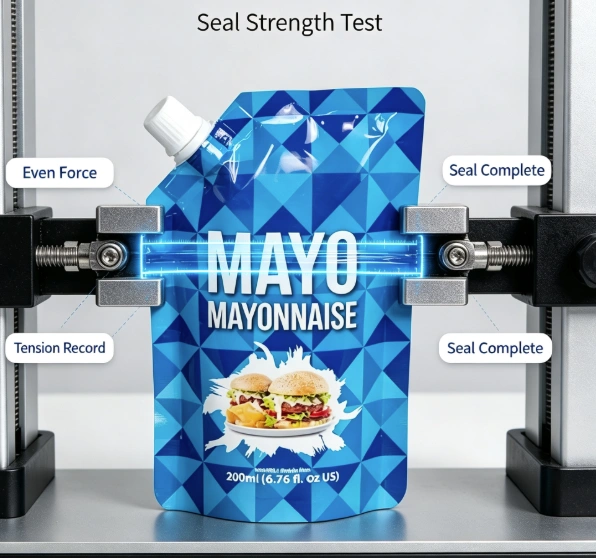
3. Seal Strength Test
Measures the strength of the heat-sealed area and helps identify weak points in the package.
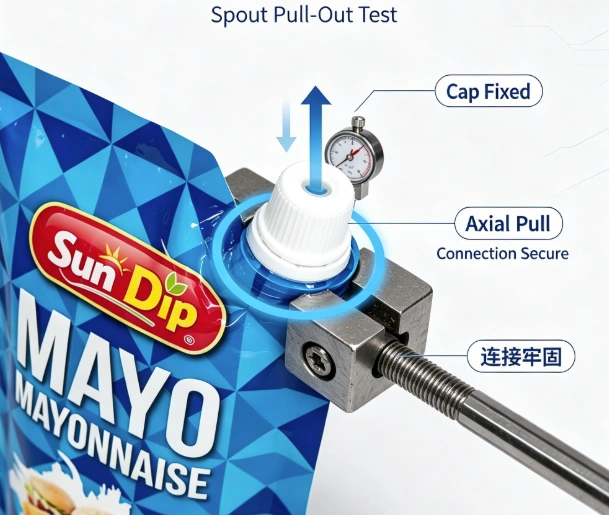
4. Spout Pull-Out Test
Evaluates the bonding strength between the spout and pouch body.
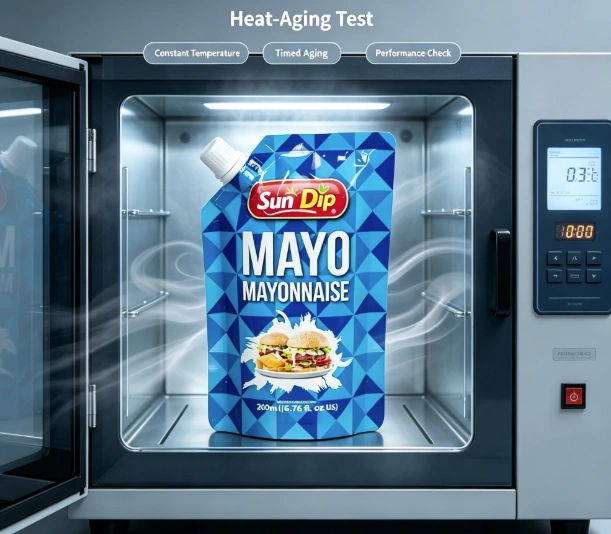
5. Heat-Aging Test
Useful when the package is exposed to elevated temperatures during filling, storage, or transportation.
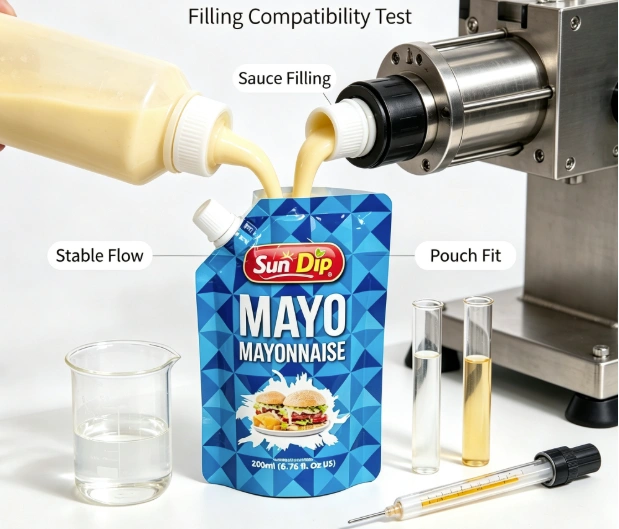
6. Filling Compatibility Test
Confirms that the pouch works correctly with the customer’s filling and capping equipment.
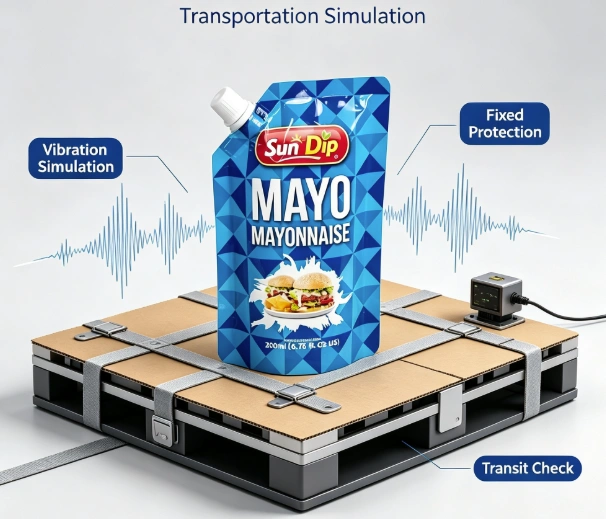
7. Transportation Simulation
For export-oriented products, simulated vibration, compression, and impact testing can provide additional confidence before commercial production.
A Practical Pre-Production Checklist for Buyers
Before approving a new spouted pouch, buyers should confirm the following:
- Product type and chemical characteristics
- Viscosidad del producto
- Fill volume
- Temperatura de llenado
- Sterilization or retort conditions
- Plazo de conservación exigido
- Oxygen and moisture barrier requirements
- Spout diameter and position
- Tipo de tapón
- Filling equipment compatibility
- Transportation distance
- Drop-test requirements
- Applicable market regulations
- Recyclability requirements
- Final pouch dimensions and tolerances
This checklist can help prevent a common procurement mistake: finalizing the material structure before understanding the complete application.
How DQ PACK Helps Buyers Build a Reliable Spout Pouch
Selecting a spout pouch manufacturer is just as important as selecting the material itself.
PAQUETE DQ has been providing customized flexible packaging and printing solutions since 1991. With more than three decades of manufacturing and export experience, the company supports customers from initial packaging design through material selection, printing, lamination, bag making, and final production.
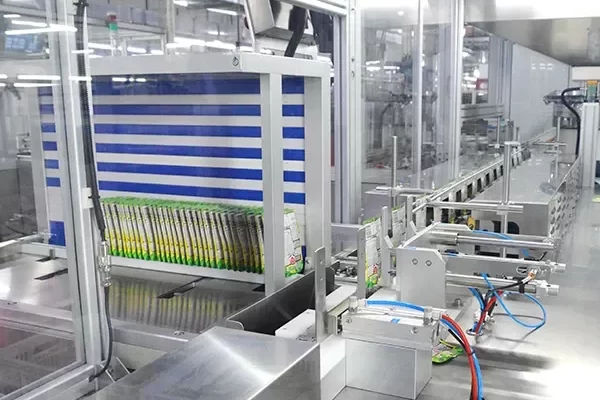
Its 30,000㎡ facility includes a Class 300,000 cleanroom and advanced production equipment, including:
- 6 automated packaging printing lines
- 6 high-speed solvent-free laminating lines
- 7 cortadoras avanzadas
- 20 bag-making production lines
These capabilities support production processes aligned with ISO9001:2018 quality management requirements.
With more than 200 skilled employees, serves both domestic and international markets.
For buyers, this integrated manufacturing capability means that spout pouch development can be evaluated as one complete system instead of managing the film, printing, lamination, pouch production, and spout components through disconnected suppliers.
FAQ: Spout Pouch Guide for Buyers
Q1. What is the best material for a spout pouch?
There is no single best material for every application. PET/BOPA/PE is often suitable for liquid products requiring strong impact resistance, while aluminum-containing laminates provide higher barrier protection. Mono-PE structures may be considered when material simplification and recyclable packaging objectives are important.
Q2. Are spout pouches leak-proof?
They can provide excellent leak resistance when the film structure, spout material, sealing process, and pouch geometry are correctly matched. However, leak-proof performance should always be confirmed through testing using the actual product and filling conditions.
Q3. Why does a spout pouch leak from the spout base?
Common causes include insufficient heat-sealing strength, incompatible sealing materials, incorrect temperature or pressure, inadequate sealing area, and excessive mechanical stress around the spout.
Q4. Can spout pouches be used for hot filling?
Yes, but the packaging structure must be specifically designed for the required filling temperature. The laminate, inner sealing layer, spout, cap, and sealing process should all be validated under actual hot-filling conditions.
Q5. Can spout pouches be recyclable?
Some spout pouches can be designed with recyclable-oriented mono-material structures, such as PE-based configurations. However, recyclability depends on the complete package and the recycling infrastructure available in the target market.
Q6. What tests should be completed before mass production?
At minimum, buyers should consider airtightness, drop resistance, seal strength, spout pull-out strength, filling compatibility, and transportation simulation. Hot-filled or retort products also require thermal validation.
Q7. How should I choose the right spout size?
Spout diameter should be determined by product viscosity, required pouring speed, filling equipment, consumer usage, and cap design. Thick sauces and viscous products may require a larger opening than low-viscosity liquids.
Conclusion: Choose the Complete Packaging System, Not Just a Thicker Film
The most important lesson from this spout pouch guide is simple: reliable leak-proof packaging comes from structural compatibility, not excessive material thickness.
The right solution combines:
Film Structure + Spout Material + Heat-Sealing Process + Pouch Design + Filling Conditions + Transportation Testing
For detergent and personal care refills, impact resistance and seal durability are critical. For sauces and food products, barrier performance and thermal resistance become equally important. For recyclable packaging projects, the complete PE-based structure and end-of-life requirements must be evaluated together.
Working with an experienced manufacturer can significantly reduce the risk of costly packaging failures after mass production.
PAQUETE DQ has provided customized flexible packaging and printing solutions since 1991. With more than 30 years of manufacturing and export experience, advanced printing, laminating, slitting, and bag-making capabilities, and more than 200 skilled employees, we help global brands develop spout pouches around their actual products, filling equipment, transportation conditions, and market requirements.
Whether you are sourcing custom spout pouches for laundry detergent, personal care products, sauces, fruit purees, beverages, or other liquid products, contact PAQUETE DQ to discuss your packaging requirements and develop a structure that balances leak resistance, product protection, production efficiency, and cost.
Productos relacionados
-

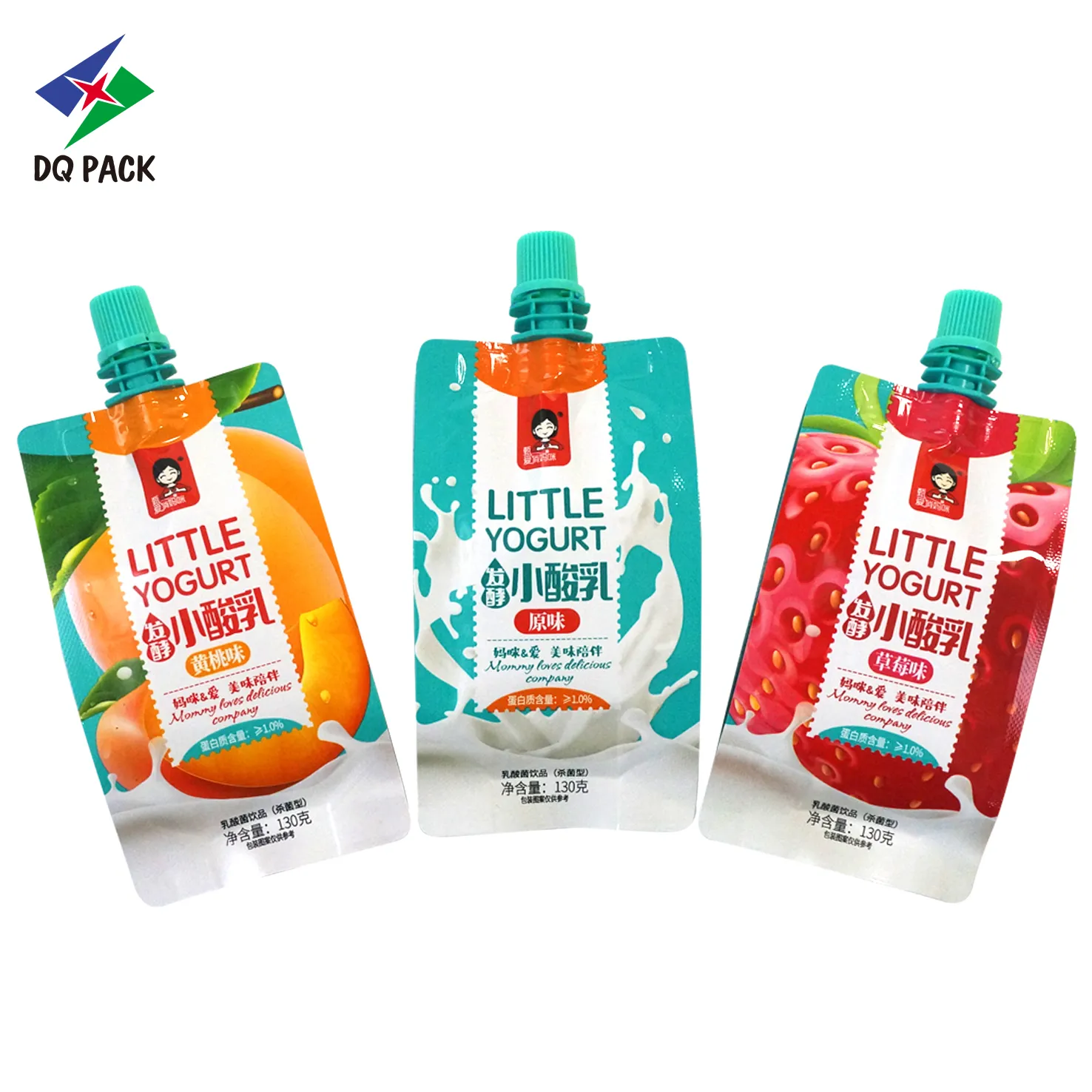
Mayorista Yogurt Envasado en Bolsa, Bolsa Reutilizable para Yogurt con Boquilla para Niños
-
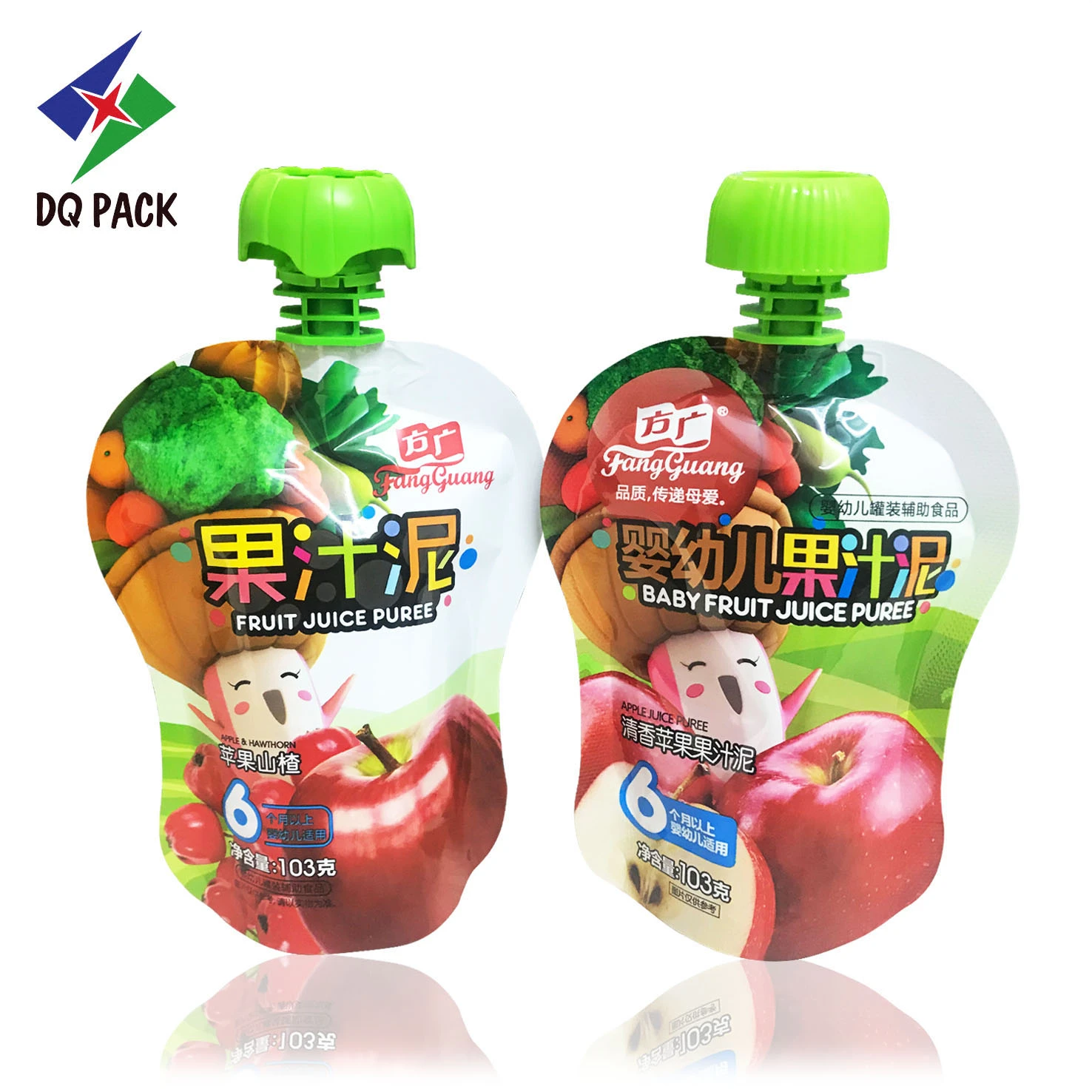
Fabricante de envases para bebidas al por mayor: bolsitas de puré de fruta con boquilla para bebés de 3,5 oz
-
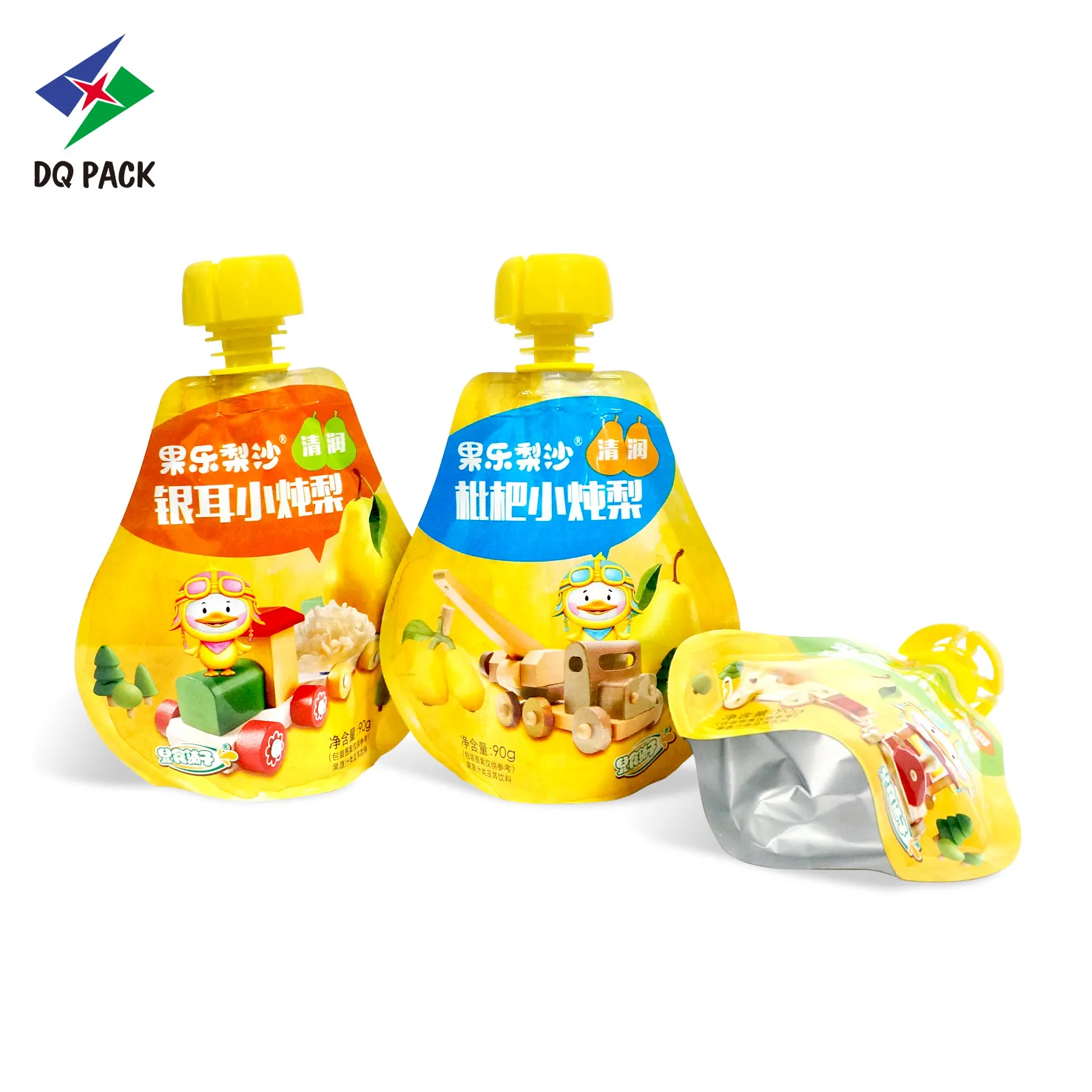
Venta al Mayor Las mejores bolsas de comida para bebés con colorido pico en forma de pera Bolsa-DQ PACK
-
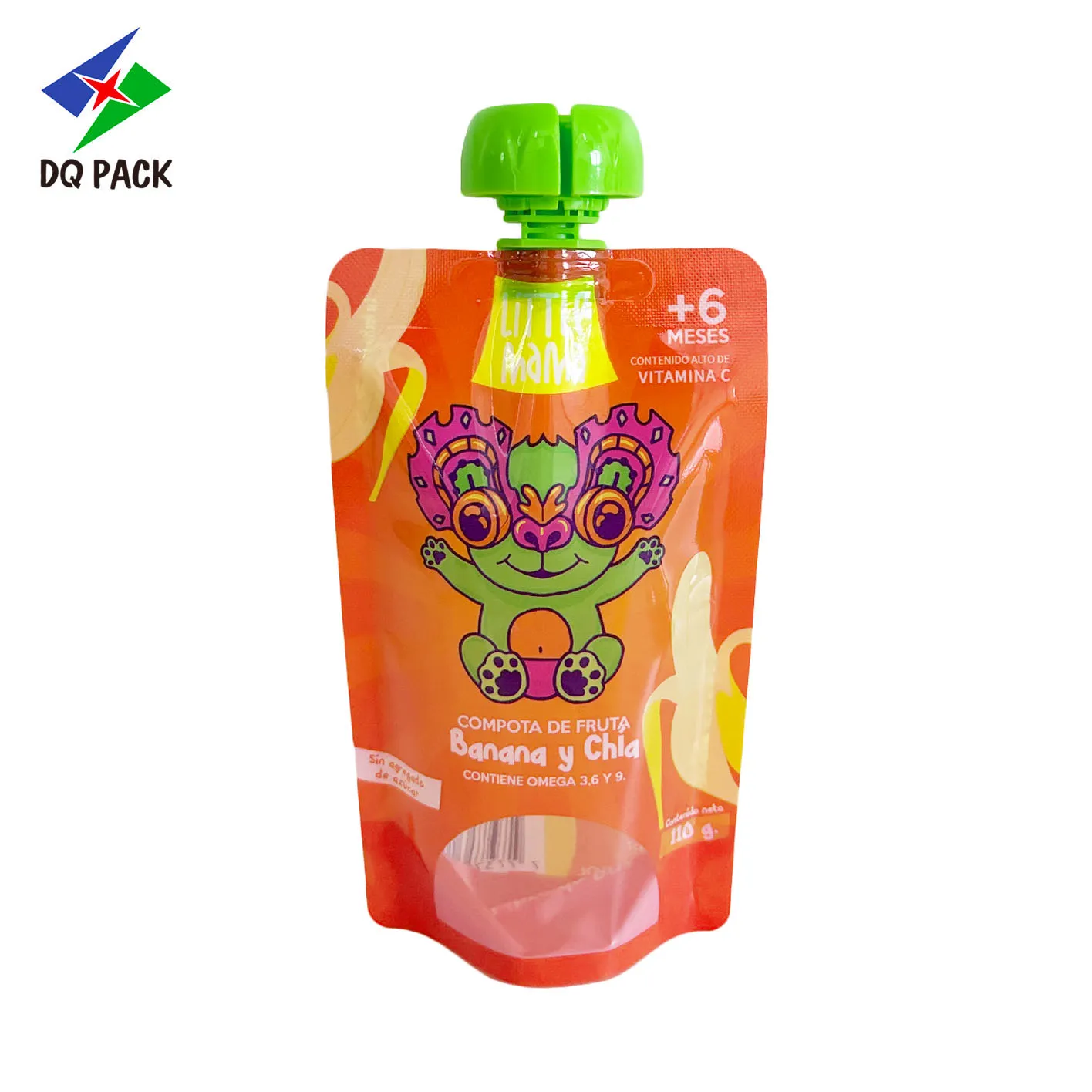
Fábrica de bolsas con boquilla reutilizables, 121℃ Bolsa de pie para envasado de alimentos para puré de líquidos